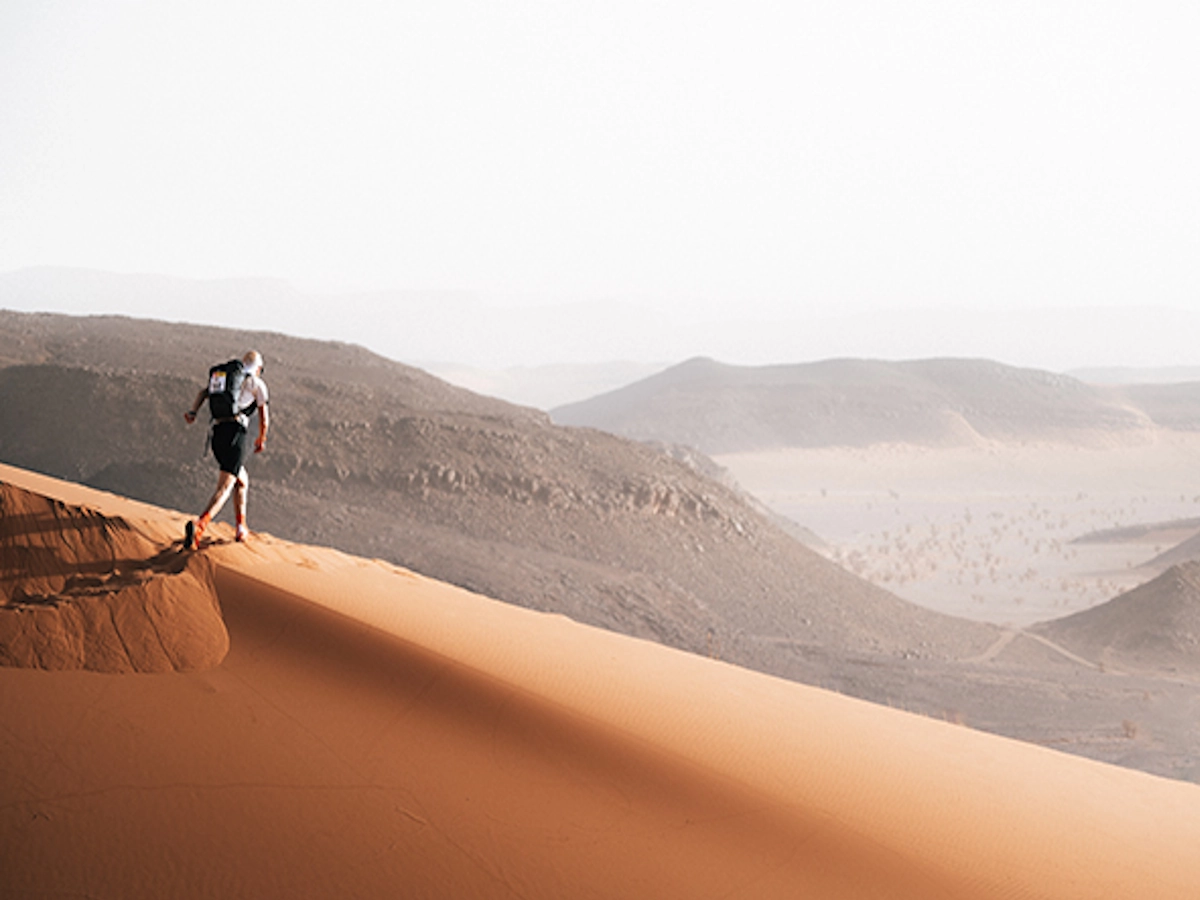
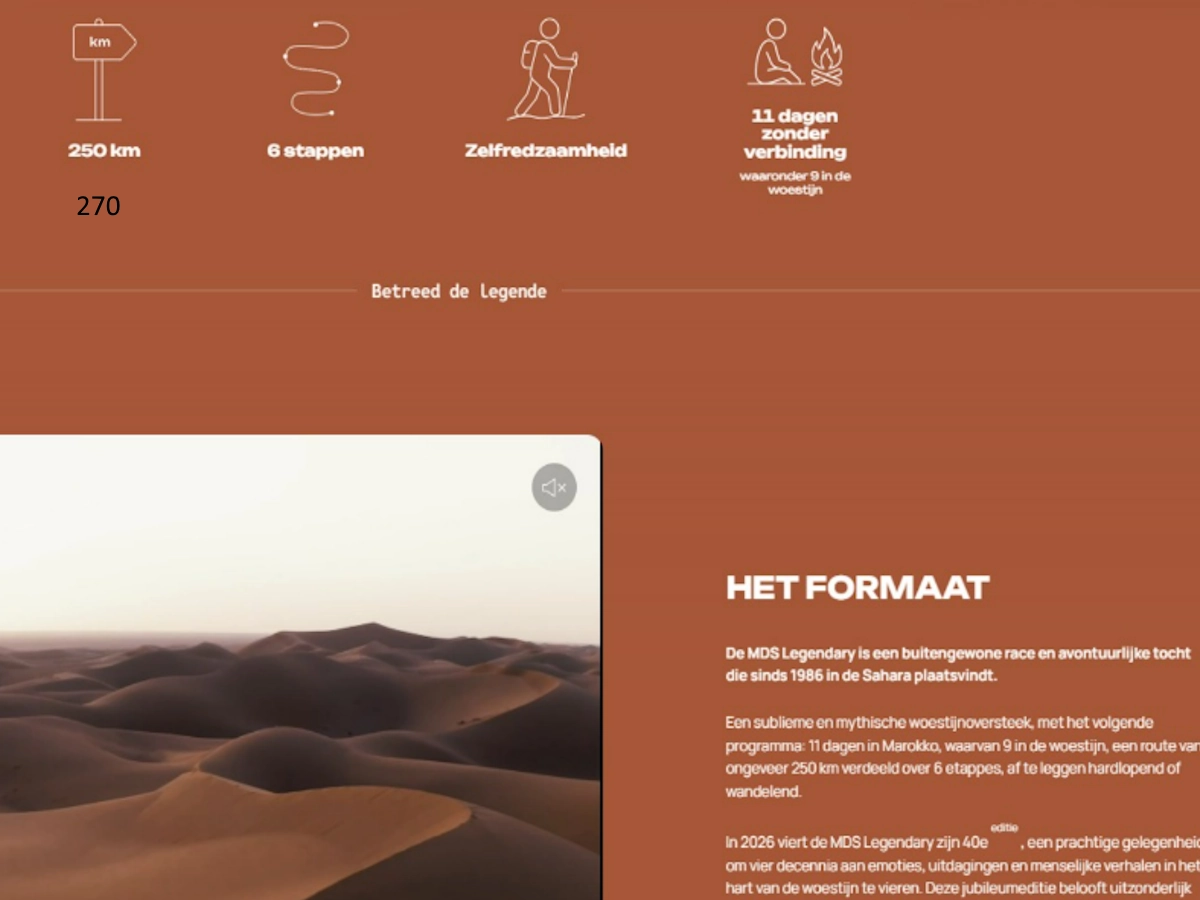
The Marathon des Sables, or MDS, is often called the toughest footrace on earth. For us at HRDLPN, that description feels absolutely right. In six days you run a legendary ultramarathon of around 250 kilometres through the Sahara Desert. For this special 40th edition, the MDS organisation had even extended the famous long stage from 80 to 100 kilometres 😉. In total, we covered 270 kilometres across dunes, singletracks, tyre tracks, endless Hamada plains full of sharp dolomite stones and the occasional brutal climb over a sand mountain. This Legendary Marathon des Sables was the most beautiful race I have ever done, and it cannot really be compared to a normal marathon, UTMB, another ultra or anything else.
What exactly is the Marathon des Sables?
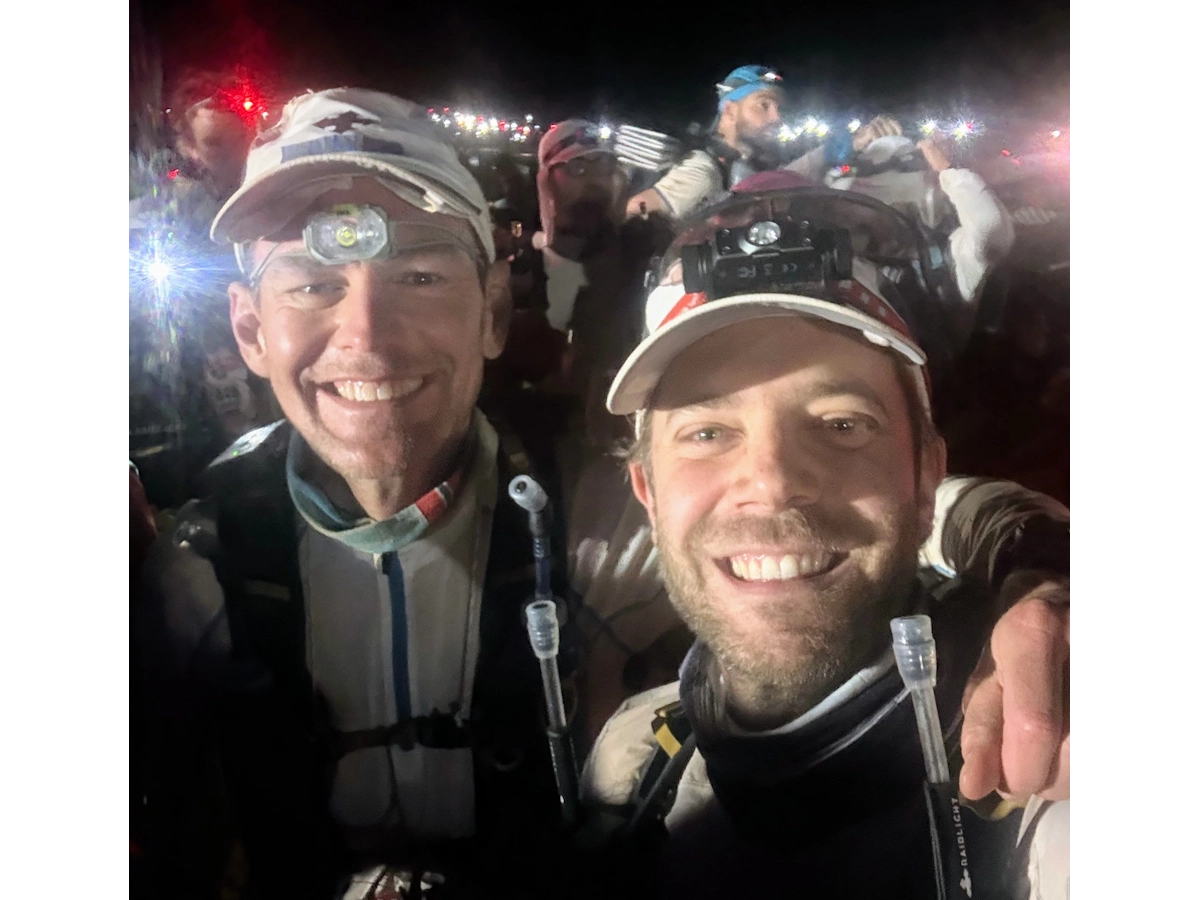
Most marathon runners have heard of the Marathon des Sables. This race in Morocco is infamous for its extreme heat, sandstorms, long desert stages and demanding dunes. Luckily, water is provided along the route by the amazing blue jackets, but apart from that you carry all your own equipment and food. Every morning starts in the dark with a headlamp on your head, carefully packing your bag and checking that you have not forgotten anything. Then you tighten the backpack properly, because nothing can move around. If it does, you feel it immediately in the form of extra pain, friction and raw marks on your back. After that, the eight of us from our tent walk towards the start.
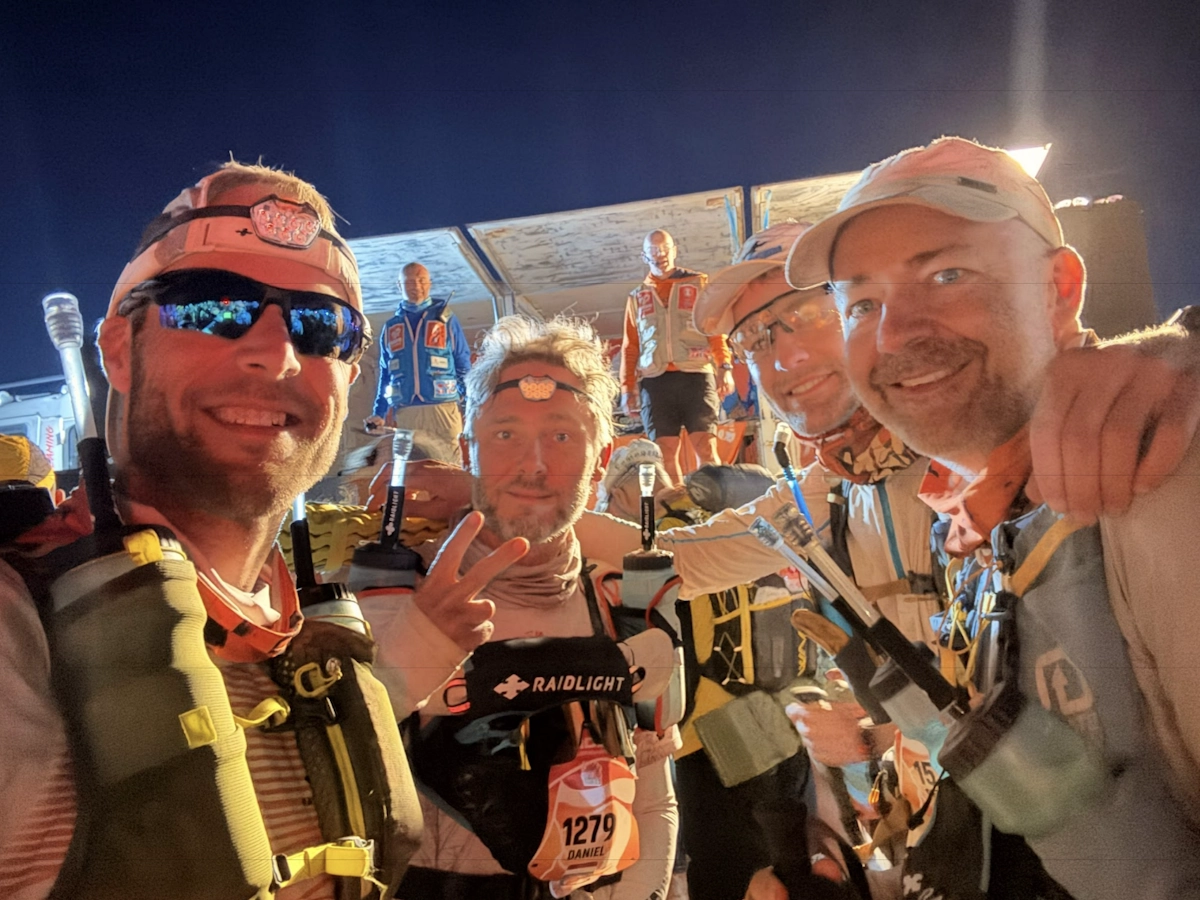
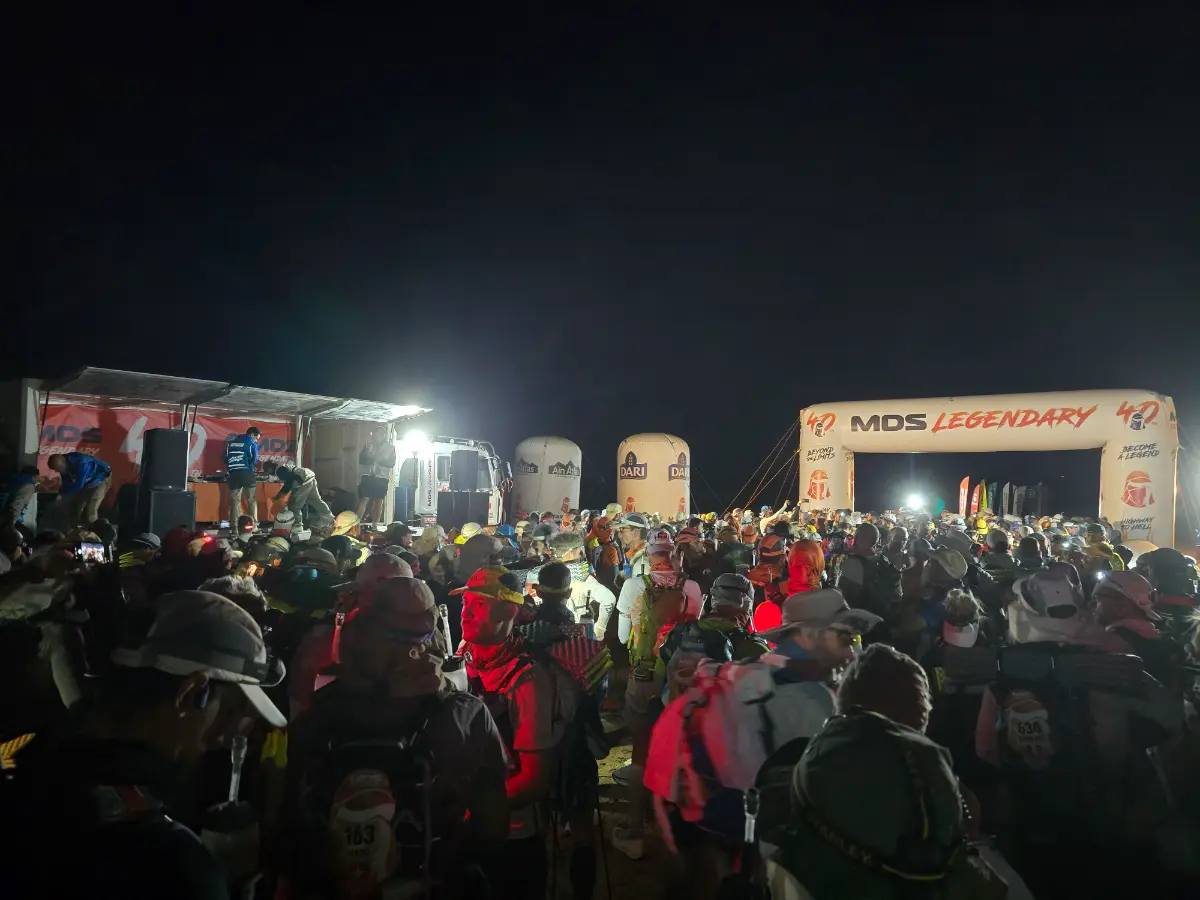
Standing together at the start gives confidence for the stage ahead. Even though everyone soon runs their own race, listening to the speech and the music together before the start makes you feel even more like a team.
Self-sufficient in the Sahara
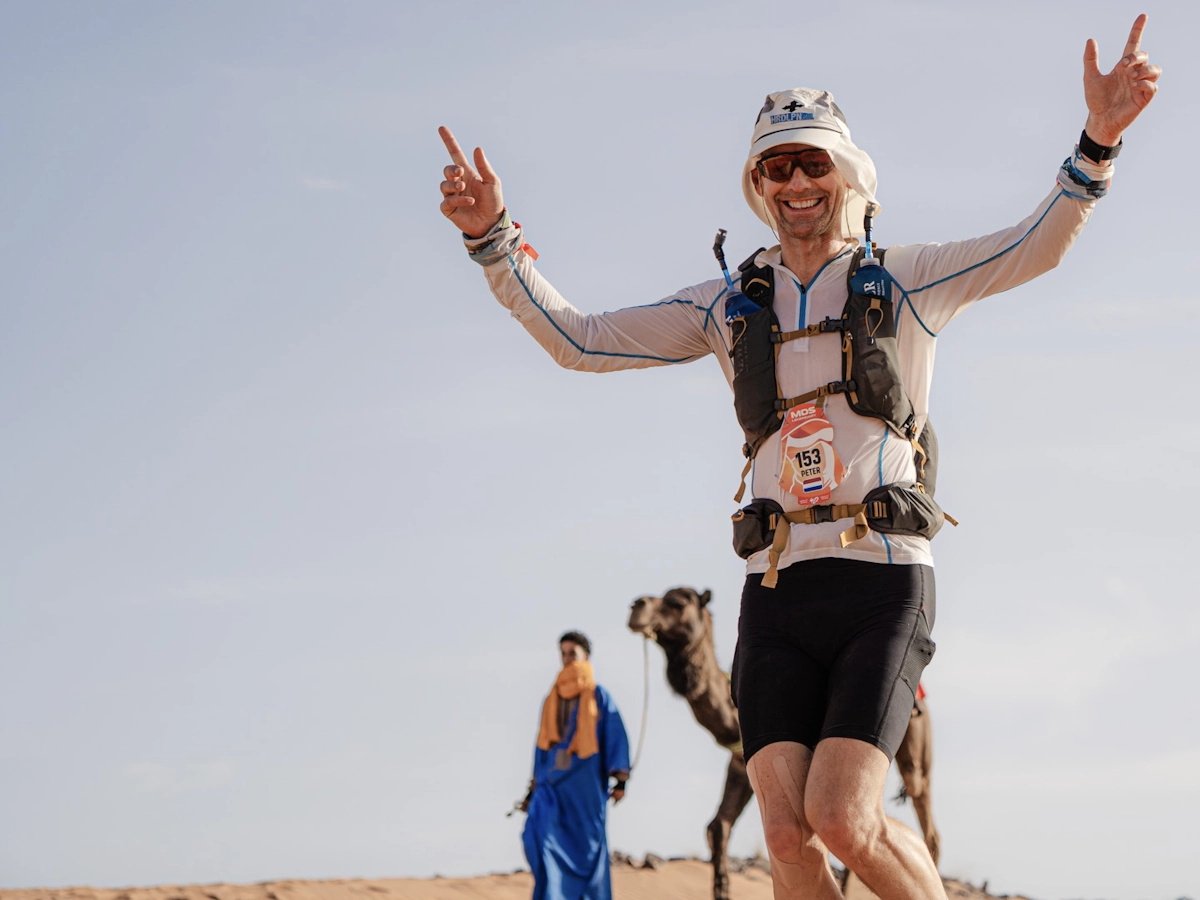
Once the stage starts, it is every runner for themselves, although everyone still keeps an eye on each other. That is the unique self-sufficient element of the MDS. You are completely dependent on yourself in one of the most inhospitable places on earth. It is you, the sand, the burning sun and, if you are lucky, a camel 😉
 Inhoudsopgave:
Everything for a week in your backpack, crossing the Sahara without filters
The combination of ultrarunning, sleeping outside, being self-sufficient, daytime heat and cold nights creates a unique experience that tests you, touches you and gets under your skin for seven days. Personally, the lack of a shower, phone connection and, yes unfortunately this is true, my laptop, was something I had not experienced for the last 25 years. And on top of that, we also had to cover 270 kilometres through the desert.
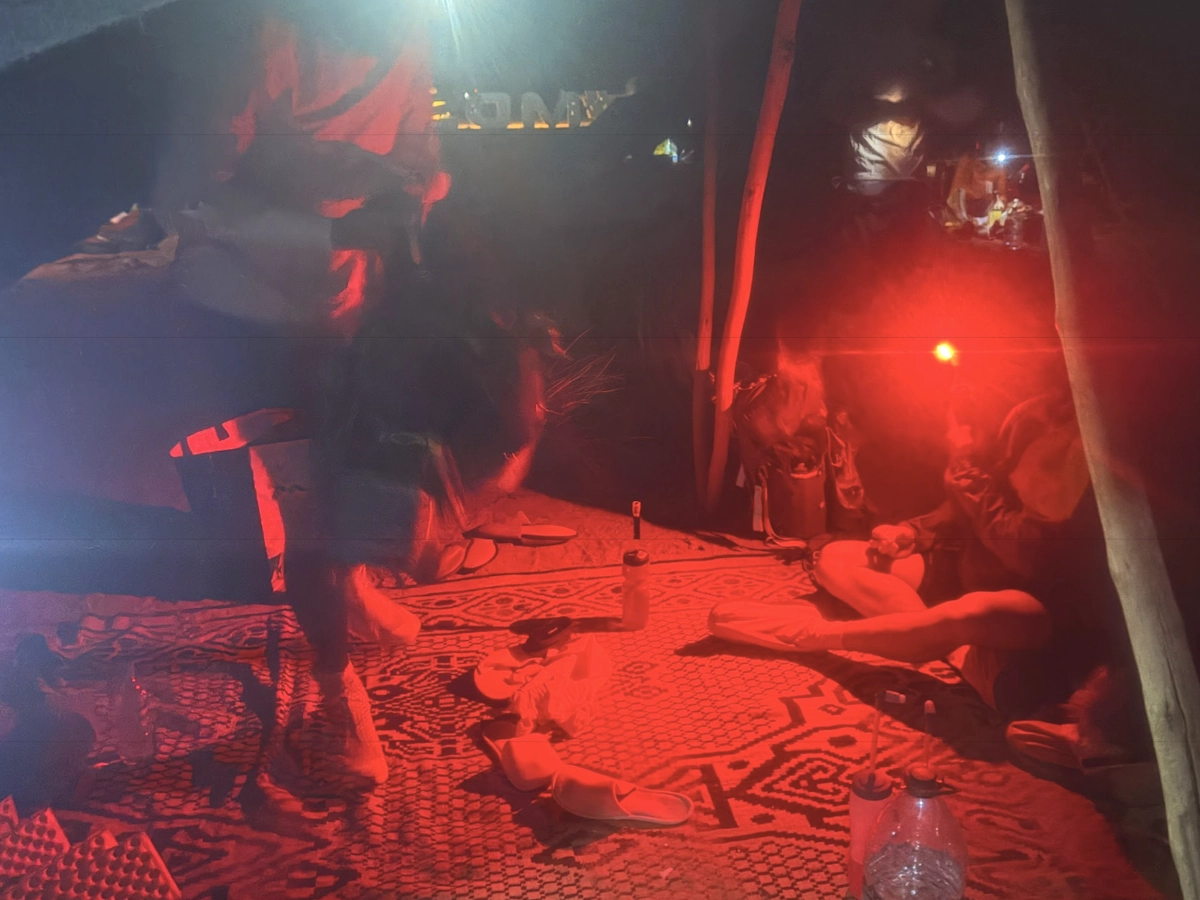
In the evening, everything in the camp happens by little lights, which somehow makes the whole experience even more special.
You can see the full route of all stages on Strava:
Feel free to follow me on Strava for new adventures 🙂
This is raw, real and intense
The Marathon des Sables is raw, real and absolutely beautiful to do and experience. If you are thinking about entering, try to imagine what all these elements would mean for you. No normal luxuries, no proper comfort, no connection to the outside world and day after day of covering huge distances in the heat. That combination does something to you. And yes, the finish feels even better than the finish of a normal ultra.
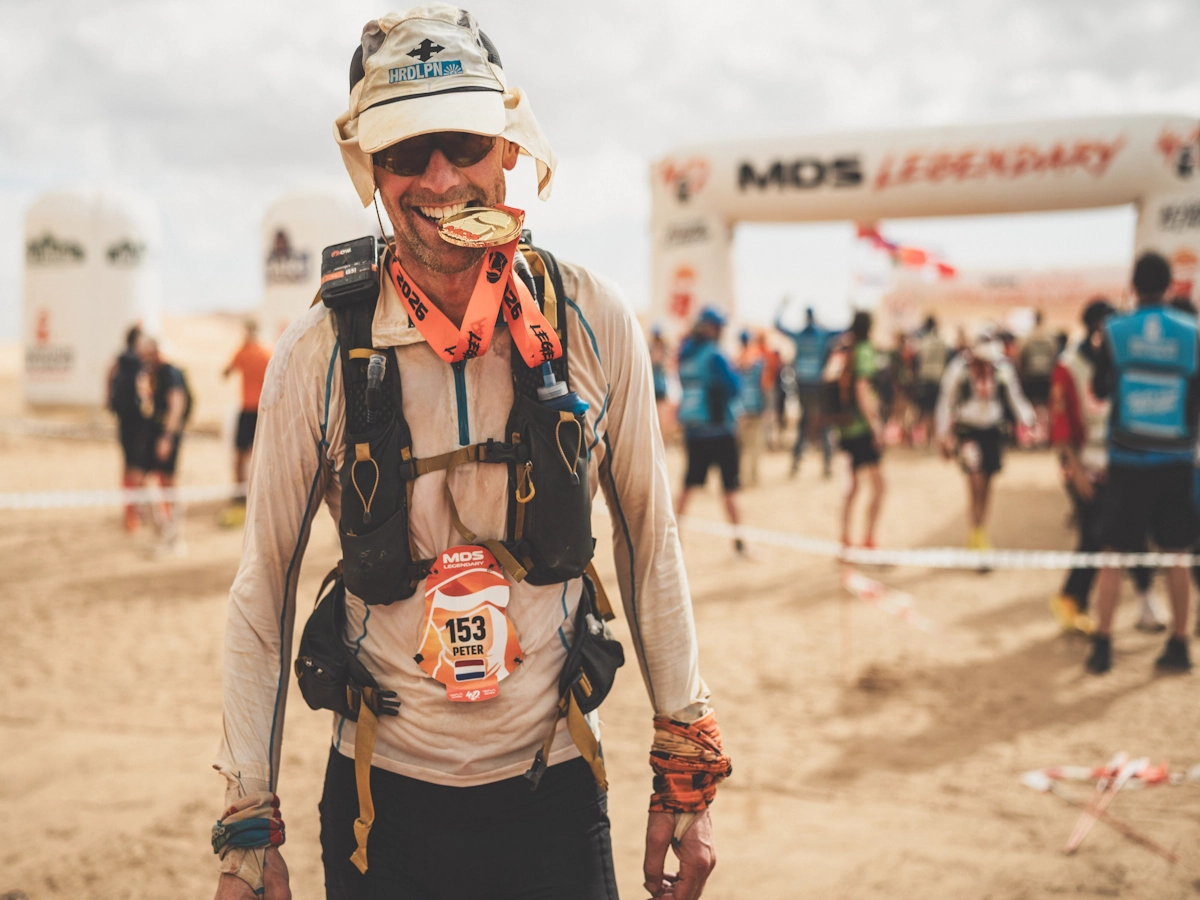
I met myself before the race had even started
On the bus ride into the desert, I already met myself. At the first stop I stepped out of the bus and the heat hit me straight in the face. I literally stood sweating in the thin strip of shade next to the bus while others were happily chatting in the sun. Sh#t, this is hot! And we still had to travel further south, deeper into the oven of the Sahara. And yes, the second stop was even hotter. I stood there with sweat on my forehead, still in the shade, holding my phone in my hand. I also knew I would have to hand that phone in a day later, around the moment I saw our bags being taken away from camp in a large open truck.
There is no Wi-Fi in the Sahara, so I knew I would miss all online life for a full week. And yes, I have that phone addiction too.
But I am getting ahead of myself here, because my first blister still had to arrive. And blisters I would get. Plenty of them. I also still had the 100 kilometre stage ahead of me. How on earth was I going to get through that?
So yes, I definitely met myself out there. Below you can read what it is really like to take part in something like this.
The 100 kilometre long stage brings tears
The race is divided into stages, including the brutal long stage, which this time was 100 kilometres. And yes, there were tears at several finishes, including when we ran under the finish arch in complete darkness. At some of the starts in the dark, the music and the speech also caused quite a few people to choke up. For many runners, this race is extremely hard, and many have trained for years just to be allowed to stand at the start.
At the same time, the race is incredibly beautiful. I often had moments where I wanted to sit down on a small mat for an hour and just enjoy the landscape, the animals and the experience. I never actually did that, because 270 kilometres in one week is simply a huge distance.
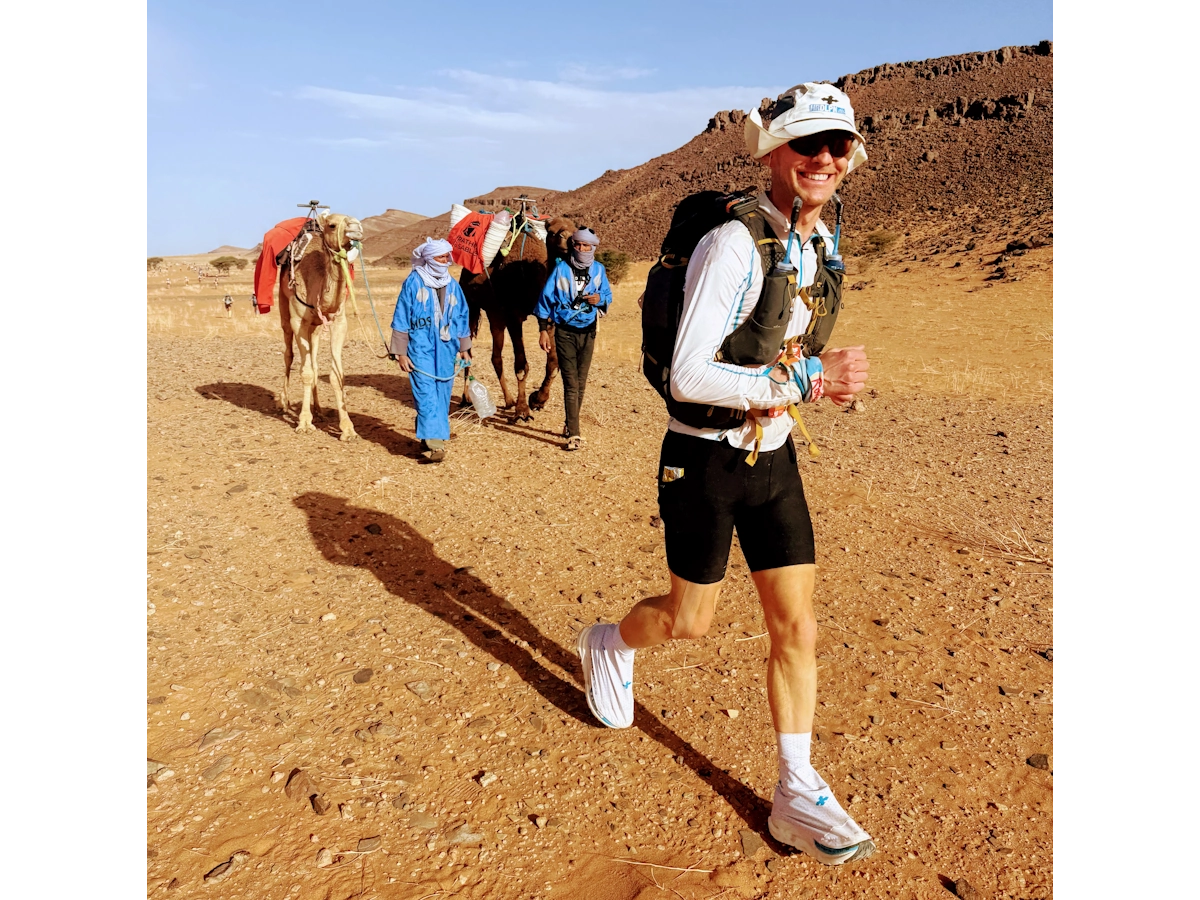
Disconnect to connect
Are you reading this on your phone? You probably are, and I often do the same. But during this week, I had no phone and no reception. That is when you realise how often you normally grab your mobile. Because there is no Wi-Fi, it really is just the field of runners, the organisation and nothing else. Disconnect to connect. For me, that made the experience extra special, although at certain moments it was also difficult. Let us now go through the race step by step with photos of me and the others.

The bus journey to the first camp
It all starts with the journey from Ouarzazate in Morocco, also known as the gateway to the desert, to the bivouac. On the bus I sat next to Lars, a very kind Dane with whom I immediately clicked. We talked, laughed and enjoyed the 6.5 hour bus ride into a landscape that became emptier and emptier.
The Atlas Mountains, complete with snowy peaks, slowly made way for brown and grey houses. The roads became worse, the population density dropped further and further and we stopped twice along the way. After the long trip, we arrived to a big welcome from the race crew, dromedaries, one of which immediately spat on Lars, and lots of music and dancing from local people who help build the camp and move it to the next location.
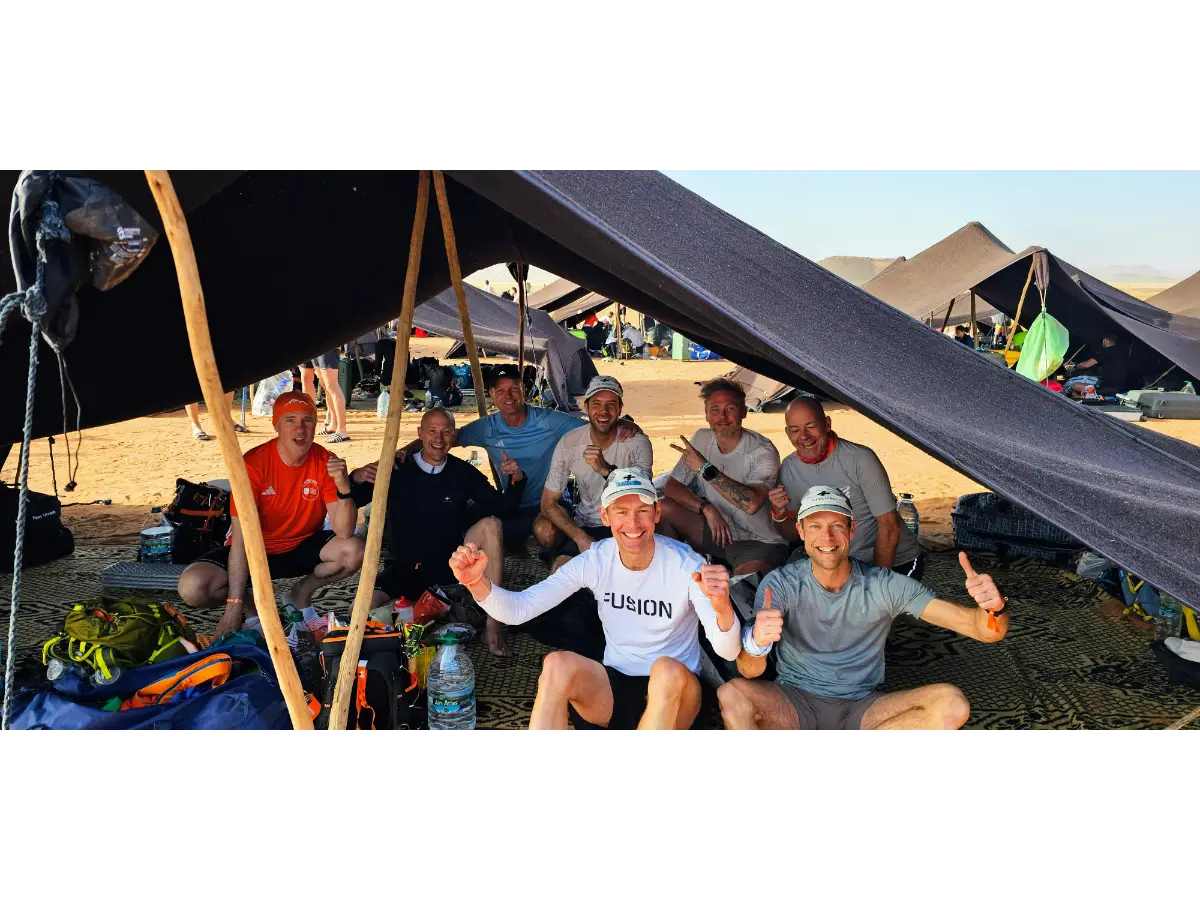
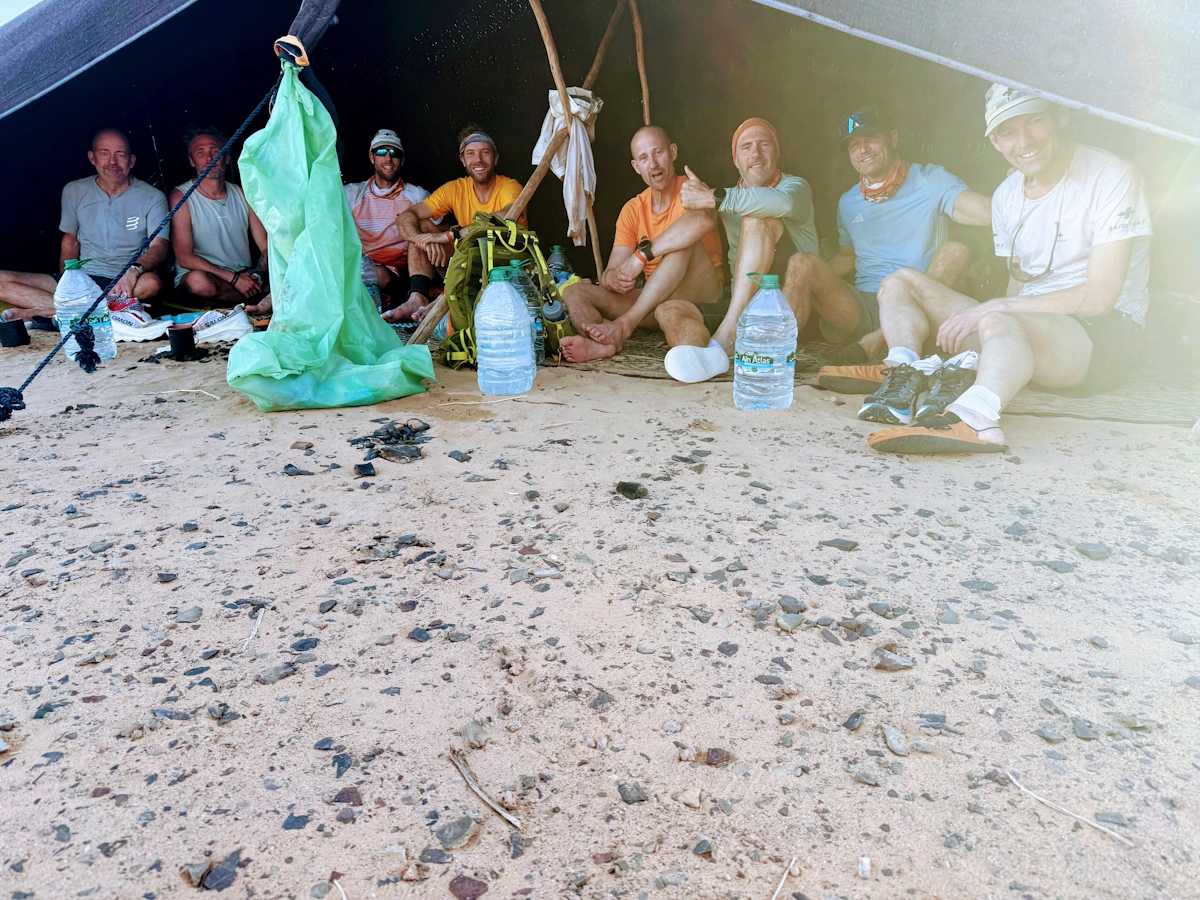
Our tent 136, the best tent of all
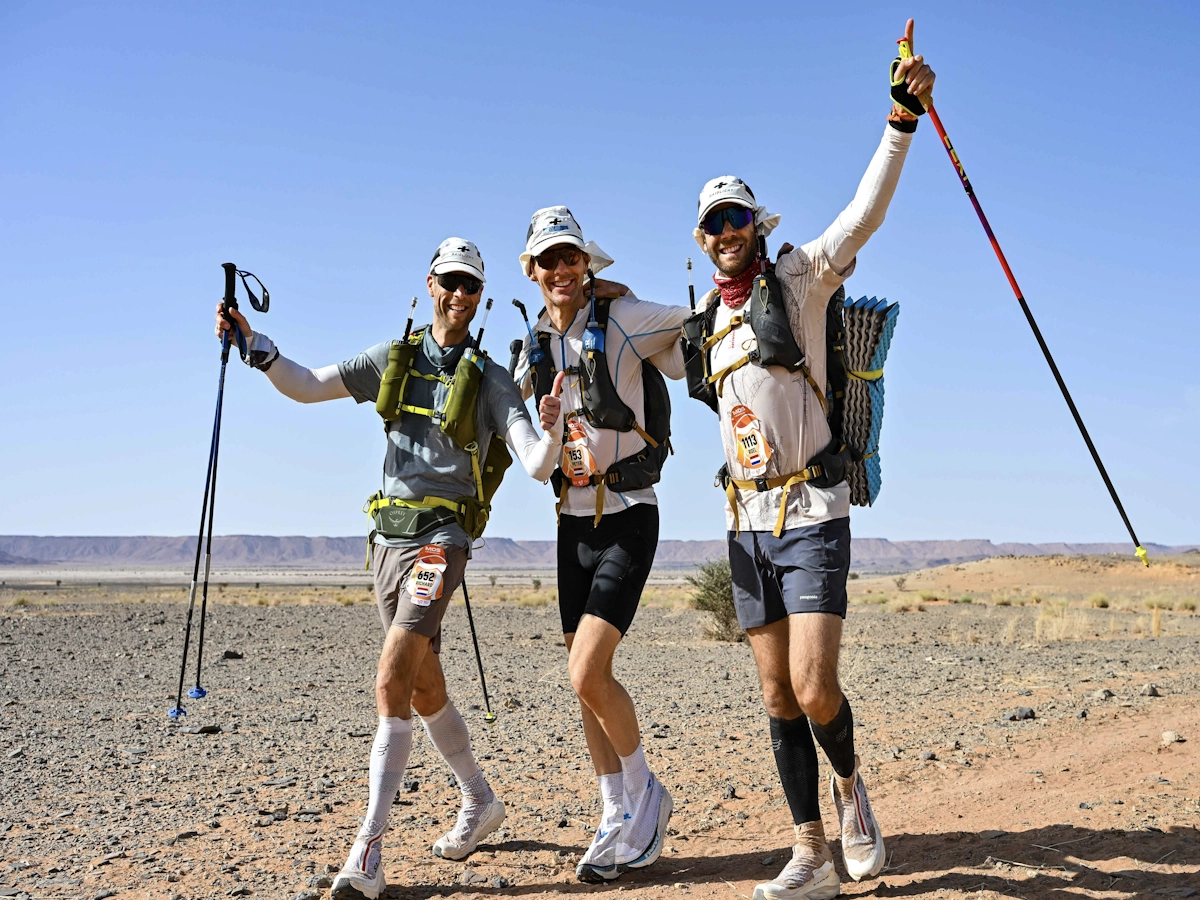
Of course we took group photos of our tent 136. Daniel, Richard, Roel, René, René, Eric, Evert and I formed a diverse group with one shared ambition: to take part in and finish the mythical Marathon des Sables, also known as the MDS. It was and still is a fantastic group. Even long after the plane landed back in the Netherlands, we stayed in touch, because strangely enough, after all the hardship, many participants really miss the desert. Including me.
The start of the Marathon des Sables
The journey and the technical checks: The adventure started with that long bus ride. For some people, the 6.5 hour journey was already a challenge in itself. The desert immediately teaches you its own rules. The next day is all about the technical check. Do I have everything with me? Is my backpack within the rules? Is the weight right? Getting the official stamps feels like a huge relief for all of us.
You do the MDS together
You actually do a lot together at the MDS. Whereas an ultra, an Ironman or even a marathon can often feel like a one-person show, this super ultra is something you tackle together. That creates camaraderie, help and support. Even the contents of backpacks are shared. It goes much further than simply throwing someone a lighter. I gave my spare back patches to my tent mates because mine still seemed to be firmly stuck to my back. I thought so, at least. When it came loose a day later, I had to improvise, and with a few extra raw marks on my back I still managed to complete every stage. It feels good to have that team spirit in the tent and to experience camp life together. We also ran together quite a bit. Running together gives rhythm and motivation during the hard sections.

Stage 1: The race finally begins
On the first real race day, we are all allowed to start. Tent 136 is no longer a group of strangers but already something close to a team. We head to the start after Evert’s alarm has gone off early. We eat something, roll up our sleeping bags and mats and put everything into our backpacks. Everything you leave behind is taken away. If you forget something, you will have to do without it for the rest of the week.
When we leave, the tent has to be empty. No mess, empty water bottles to the central point and absolutely nothing left behind.
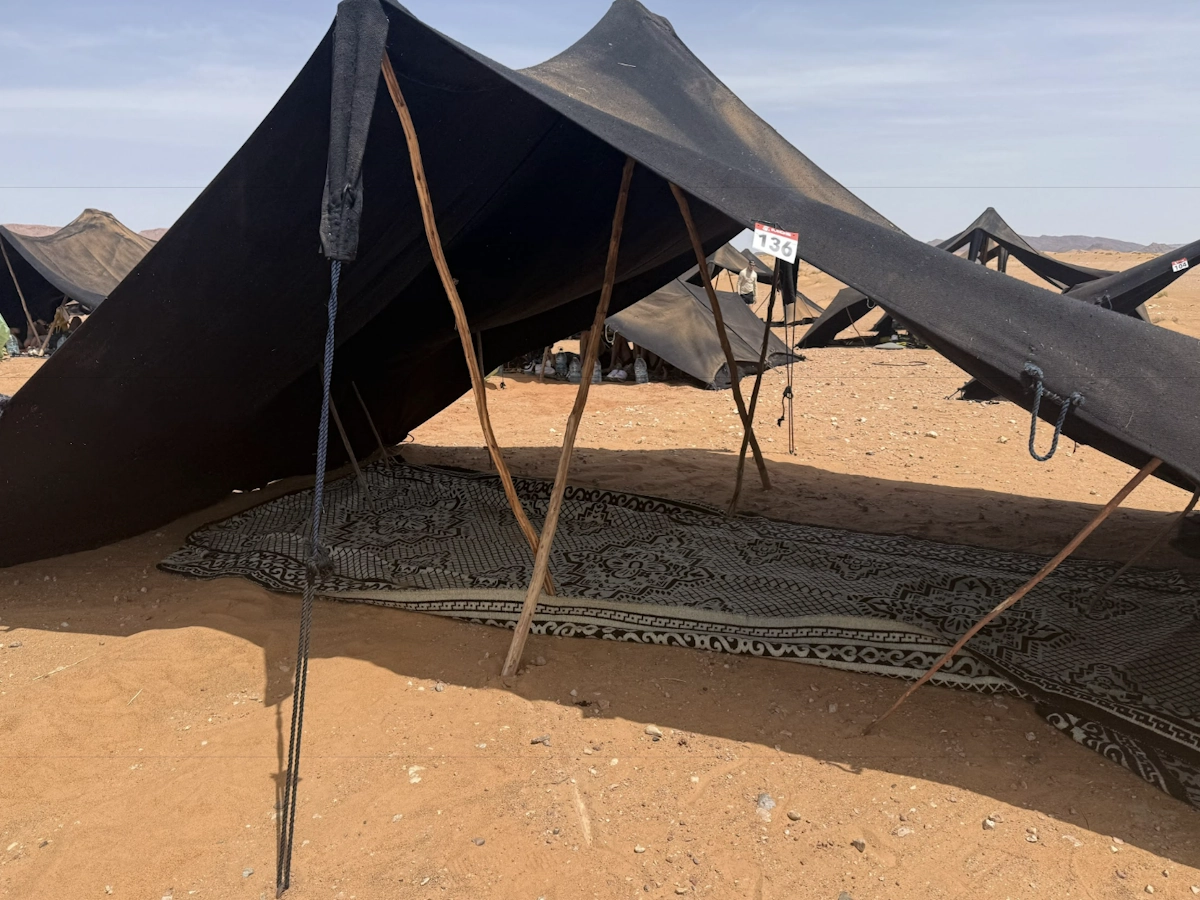
The tent is temporarily empty while everyone is out on the stage.
This sounds easy, but in the morning it is still dark and everyone is in a hurry. Sunscreen, sports nutrition, food, water, toilet, first aid, compulsory safety gear on top of your bag, and so on. A few days later I hear that someone has lost his sleeping mat, and that is certainly not the only thing that goes missing. The eight of us walk to the start and arrive very early. We move all the way to the front, stand on the start line and take an enthusiastic photo while we are still fresh 🙂
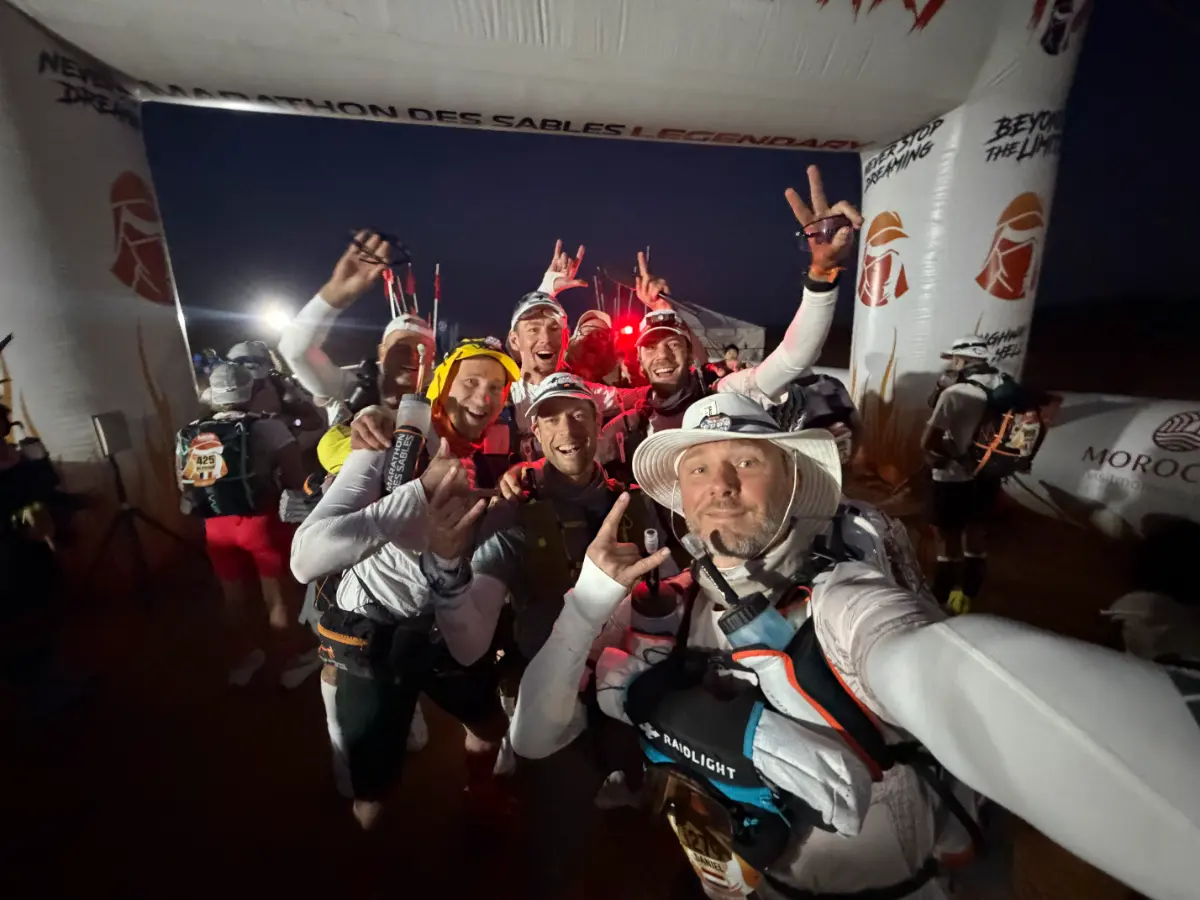
Together on the route
Every stage starts with energy and healthy nerves, and here we are, standing together with our tent 136 before the start. We realise that this is the unique moment we have been working towards. Yesterday we had to wait for all the checks, the day before that we had made the long journey deep into the desert, and before all of this every single one of us had spent months preparing. But now we are here. The big adventure is about to begin.
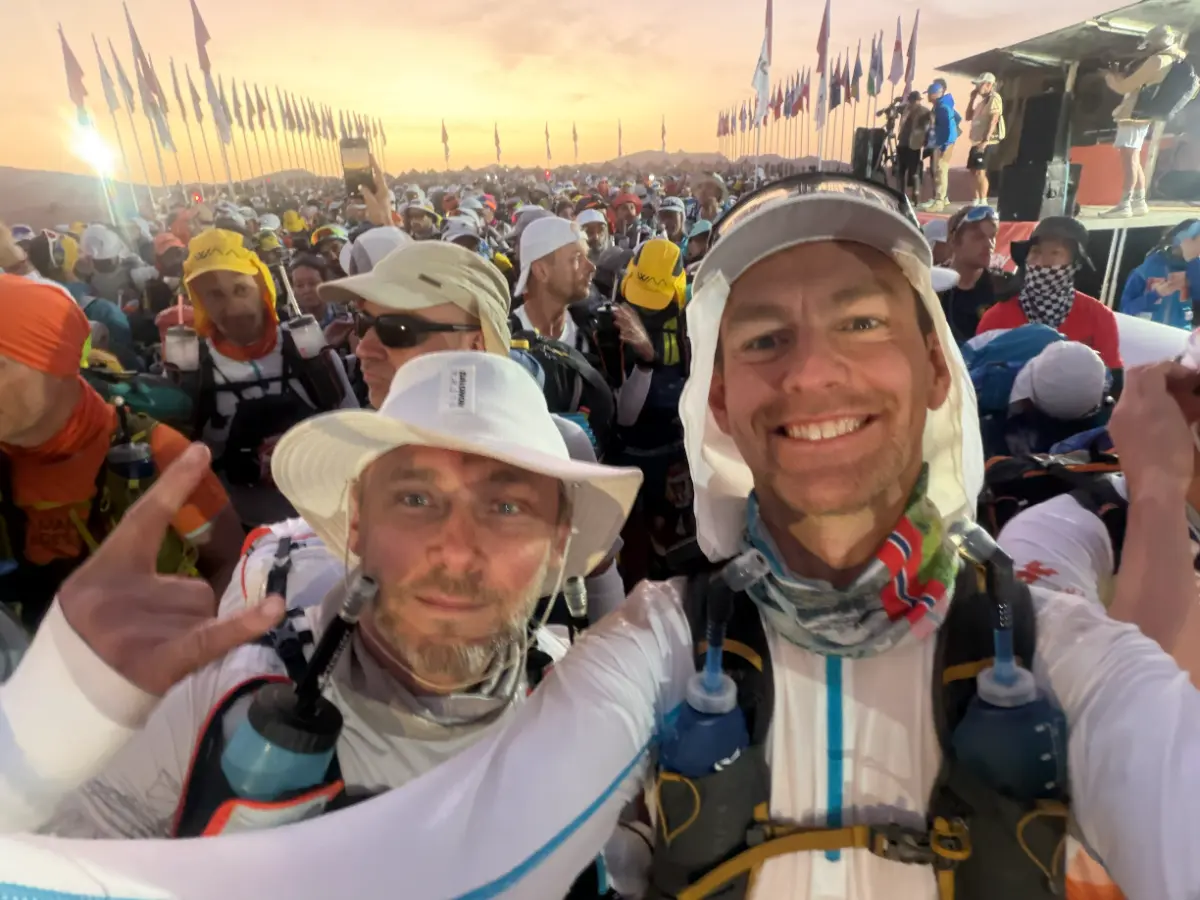
The first running day is hot, hotter, hottest. Like you probably are now, I had read a lot about the MDS beforehand. I quickly realised that, apart from the front runners, almost nobody runs everything. A lot of the course is walked, often at a high pace, but it is certainly not standard running all the time. It is almost impossible to run up every dune again and again through soft sand.
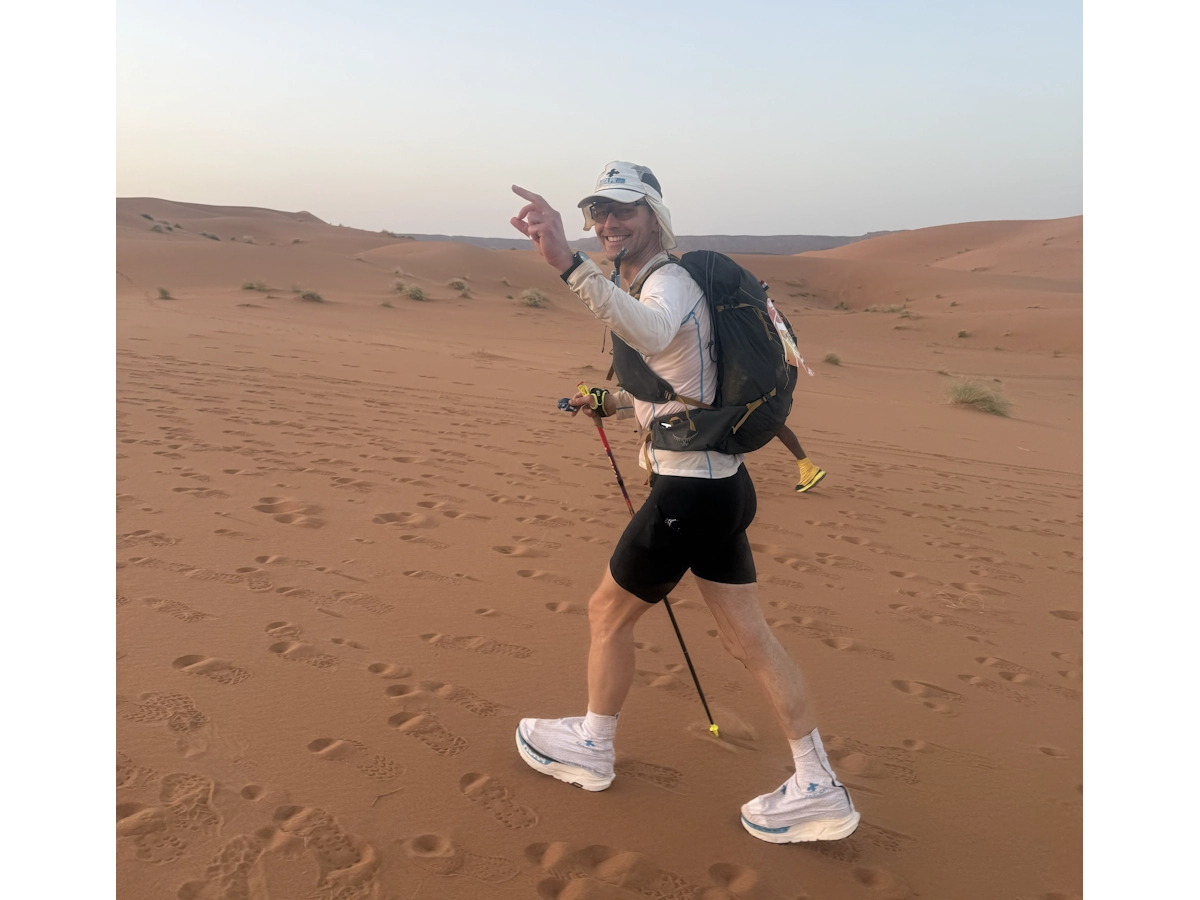
My goal for the MDS is simple: first, enjoy it, and second, finish. So I decide to start very calmly. I walk a lot, enjoy the surroundings and talk to people from all kinds of nationalities who have also taken on this exciting adventure.
You meet wonderful people
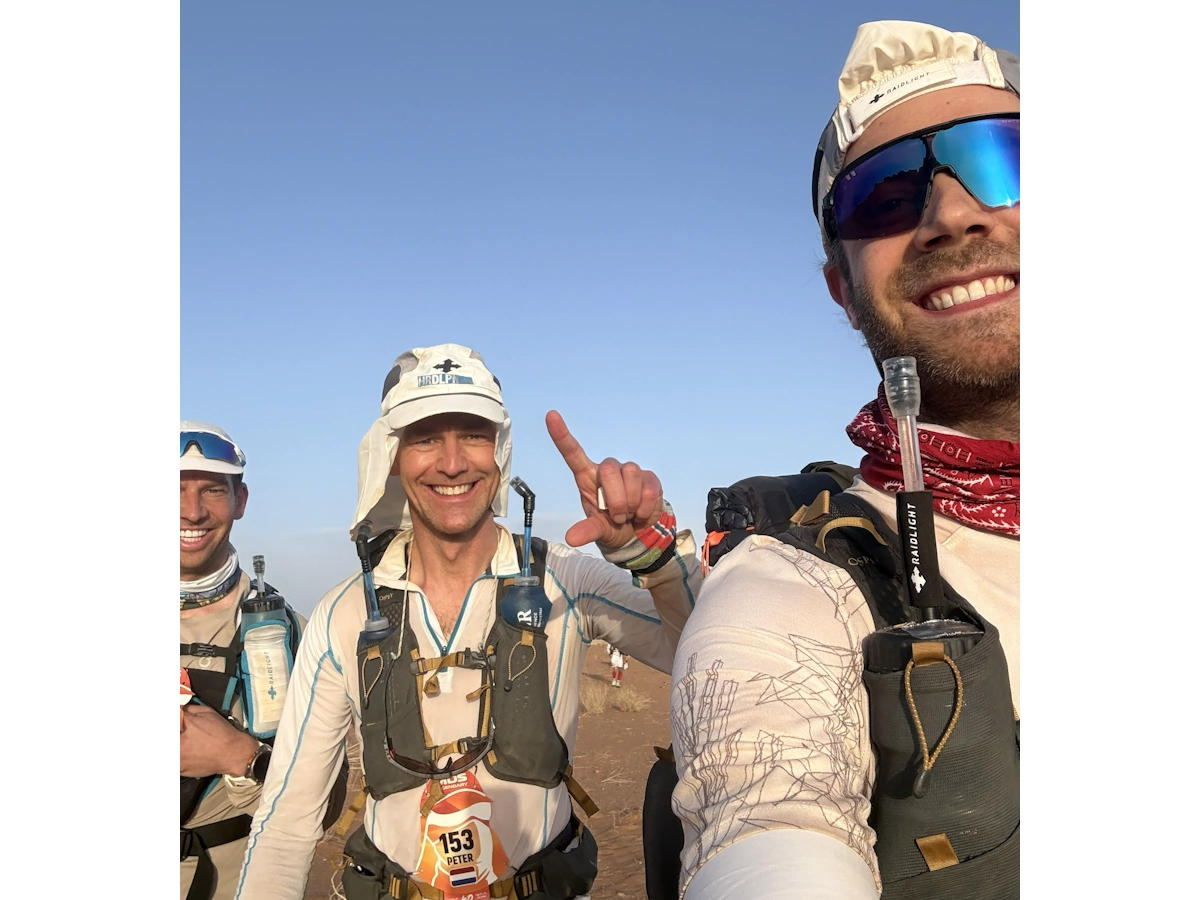
It seems as if all participants are positive and want to help each other reach the finish. Philip from Belgium stayed with me the most. He is a private equity guy who, after three years of preparation, finally wanted to escape work, family life and the rat race for a while. He had already done several extreme one-day events, but never before had he spent seven days on the move with his life in a backpack. On day one I had many more beautiful conversations, and there would be many more in the days ahead. It is wonderful here in the Sahara with all these kind people. After a genuinely hot day of sweating, the finish comes after 30 kilometres. I already found it very tough, much harder than a normal marathon. The first blisters are also immediately there because of the heat. So off to the medical tent.
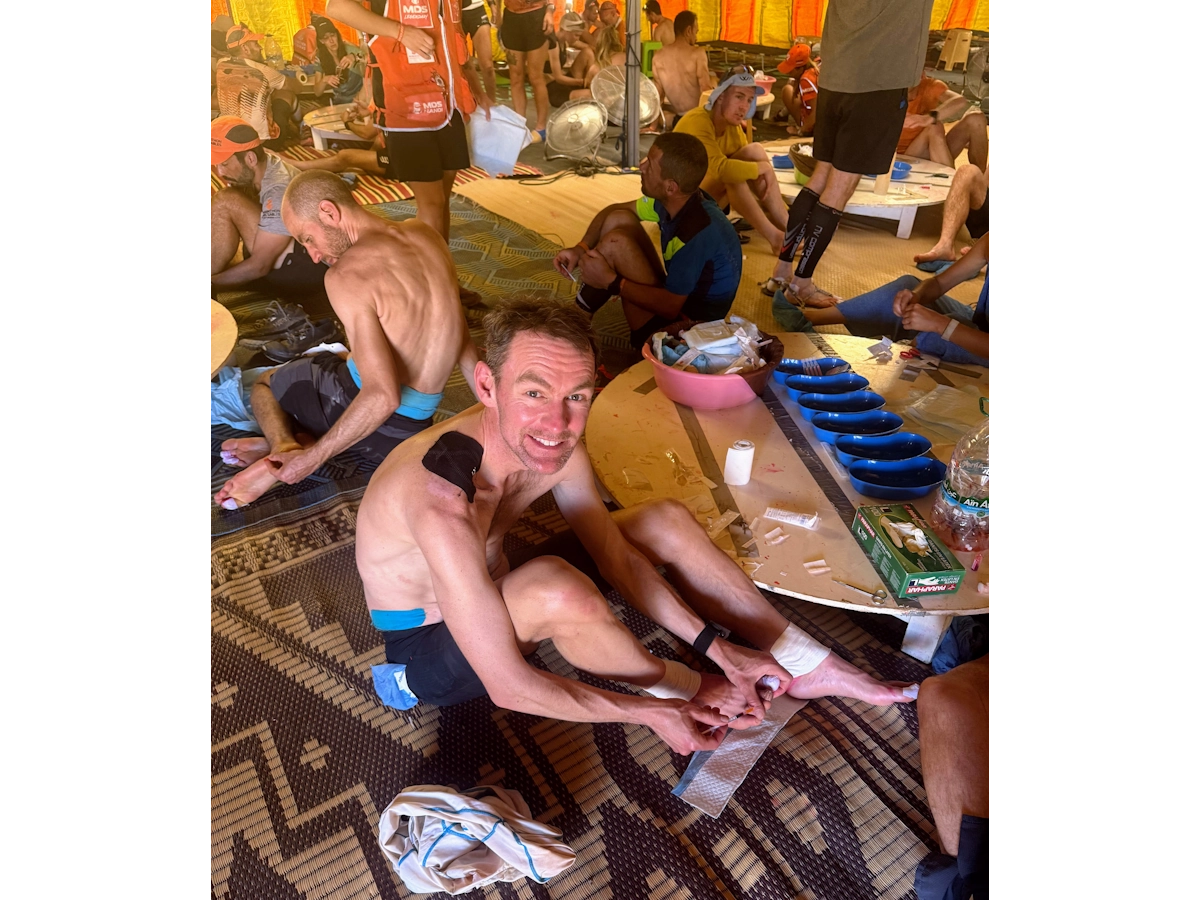
Getting blisters treated
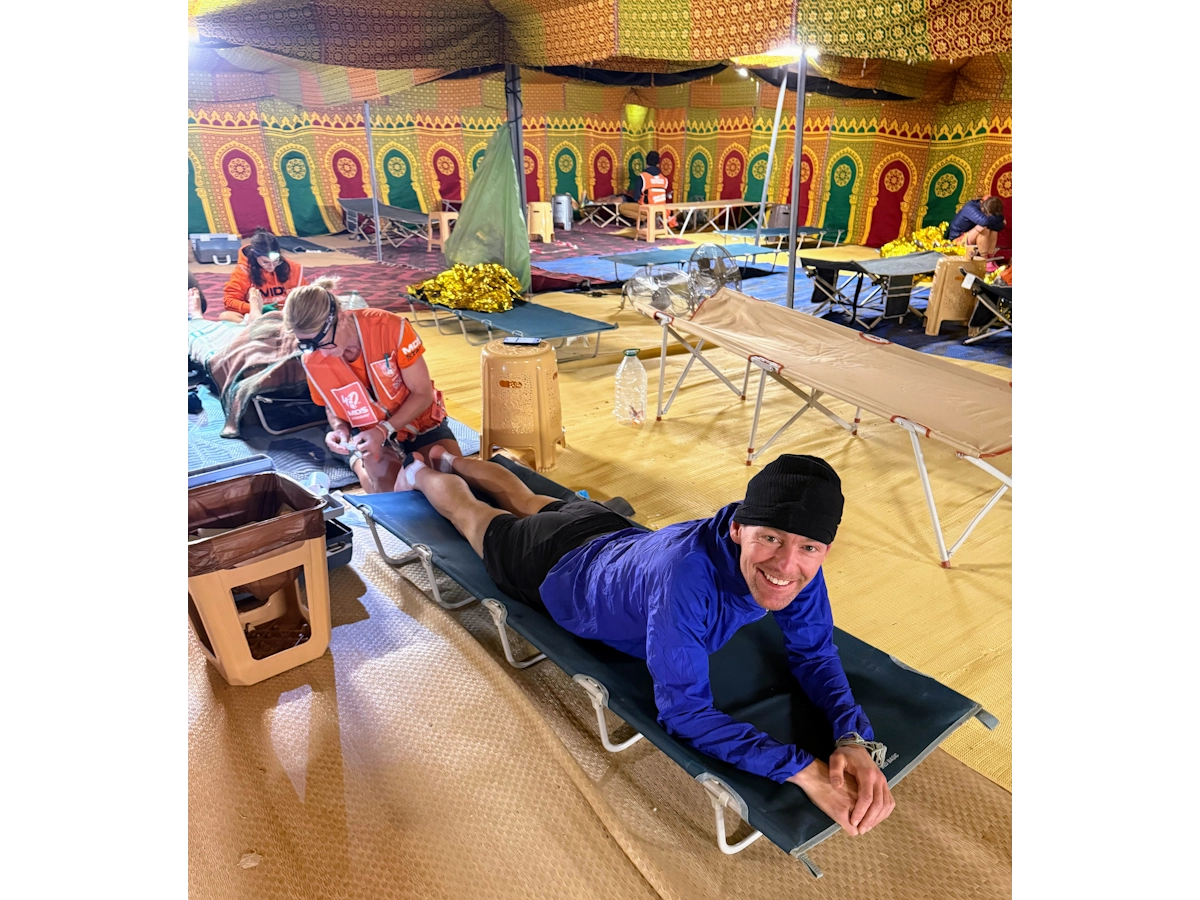
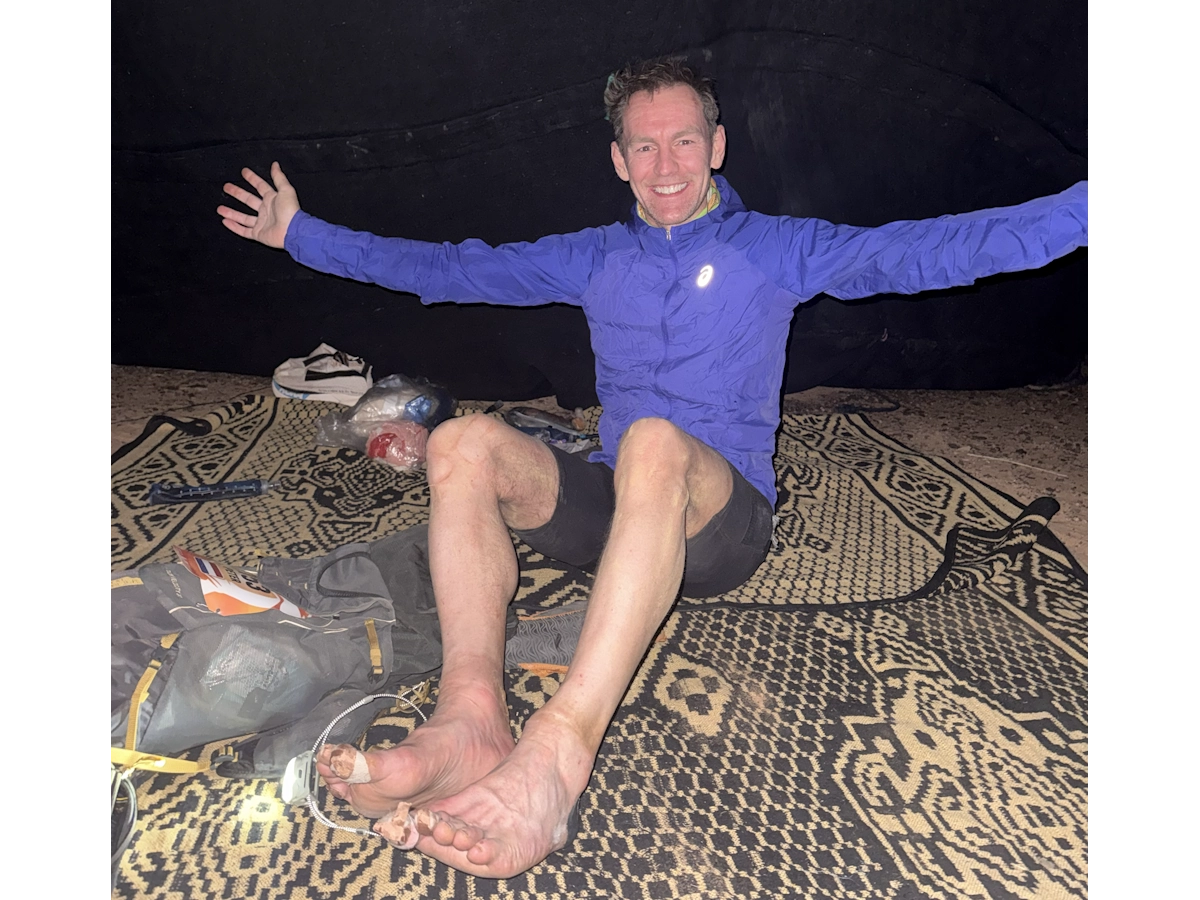
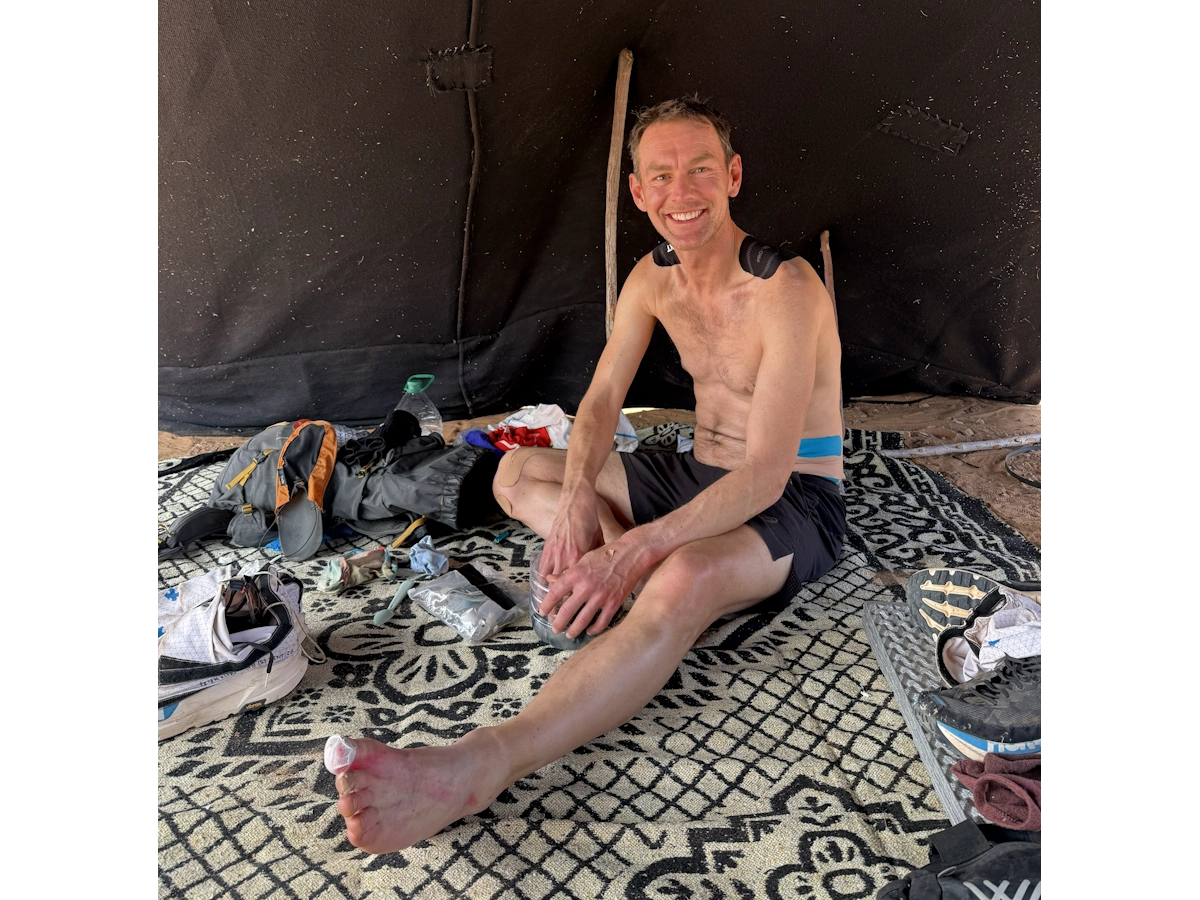
Just a warning about the photo of my feet below. You can also simply scroll past it 😉 Foot care is essential if you want to keep moving at all. After treatment you receive blue hospital covers for your feet to keep the wounds clean. Of course, that is almost impossible when you immediately have to walk through dune sand back to your tent and later do everything on a sandy carpet inside the tent. Those blue plastic covers also make your feet sweat enormously, so it is basically choosing between two bad options.
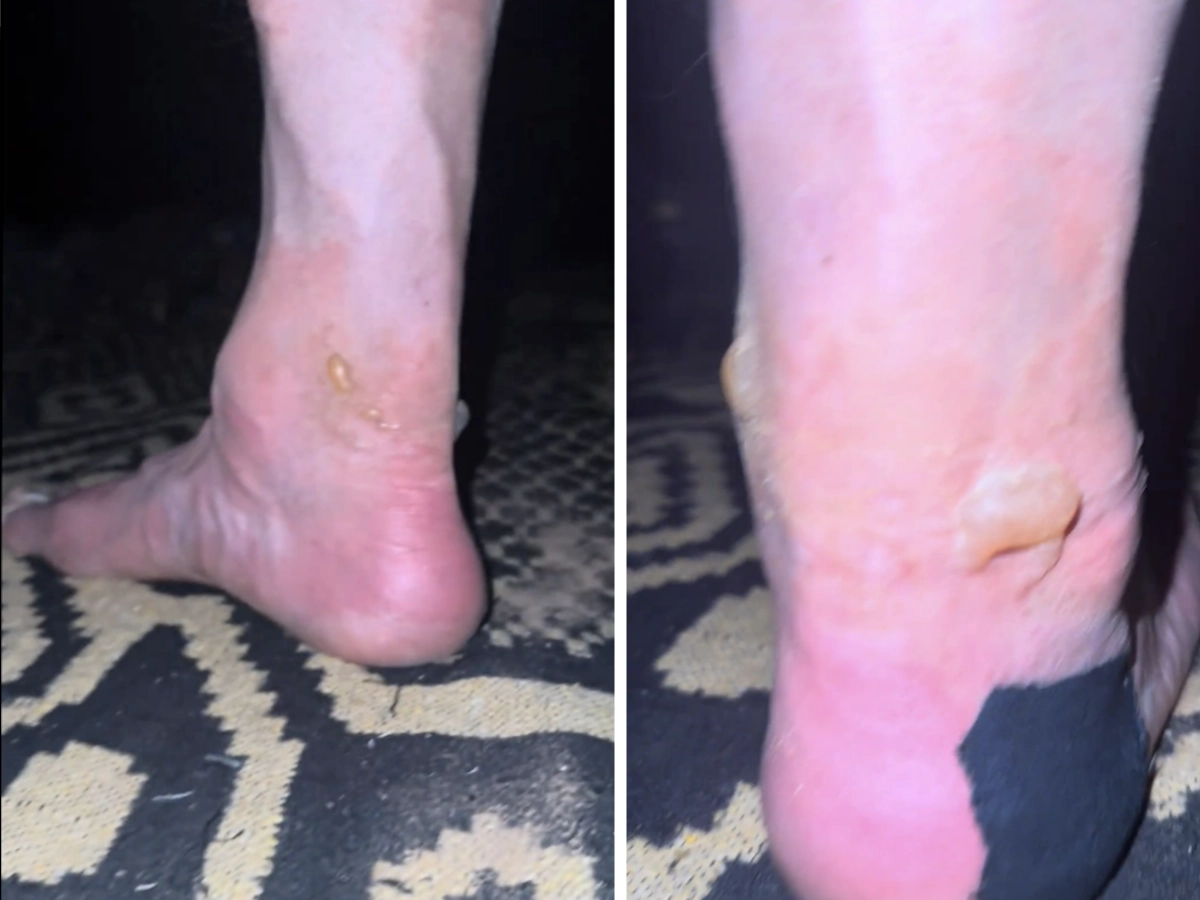
Blisters are unfortunately part of the reality of walking and running through sand for days.
Your feet simply suffer during a week of moving through the hot Sahara, especially with gaiters around your shoes to keep the sand out.
A daily rhythm starts to form
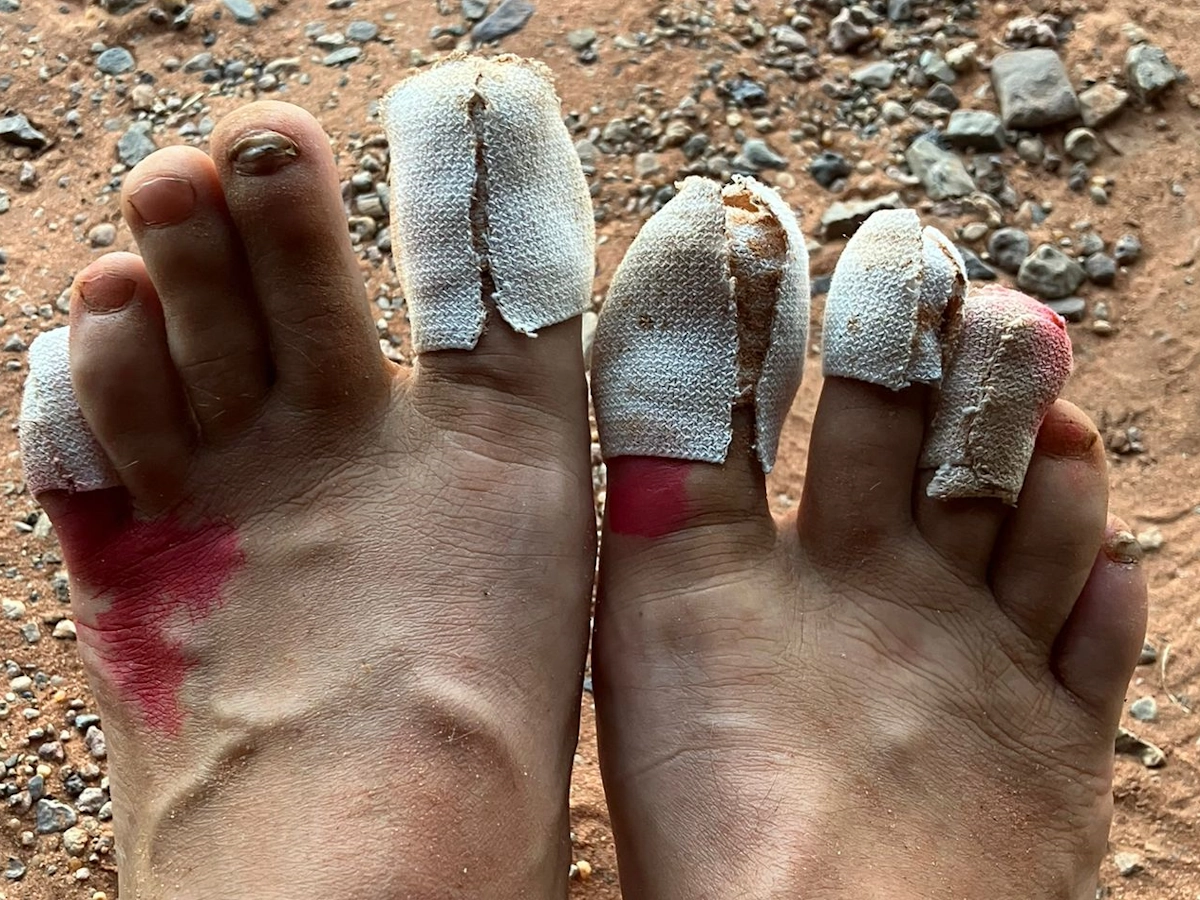
I decide to remove the plasters in the tent and just hope nothing gets infected. Somehow that fits the picture of a self-sufficient and harsh multi-day race in the desert. My rhythm has now become simple: finish, laugh and talk with others after completing another stage. Put the bag in the tent, grab the flip-flops and go straight to the medical tent with water and nuts in hand, because the queues are long. Then on to the emotion boxes to record a video for my followers, and after that straight to the water point for that all-important bottle of water. It is incredible how happy you can become with a new bottle of water, even if it is warm because it has been standing in the sun for hours.
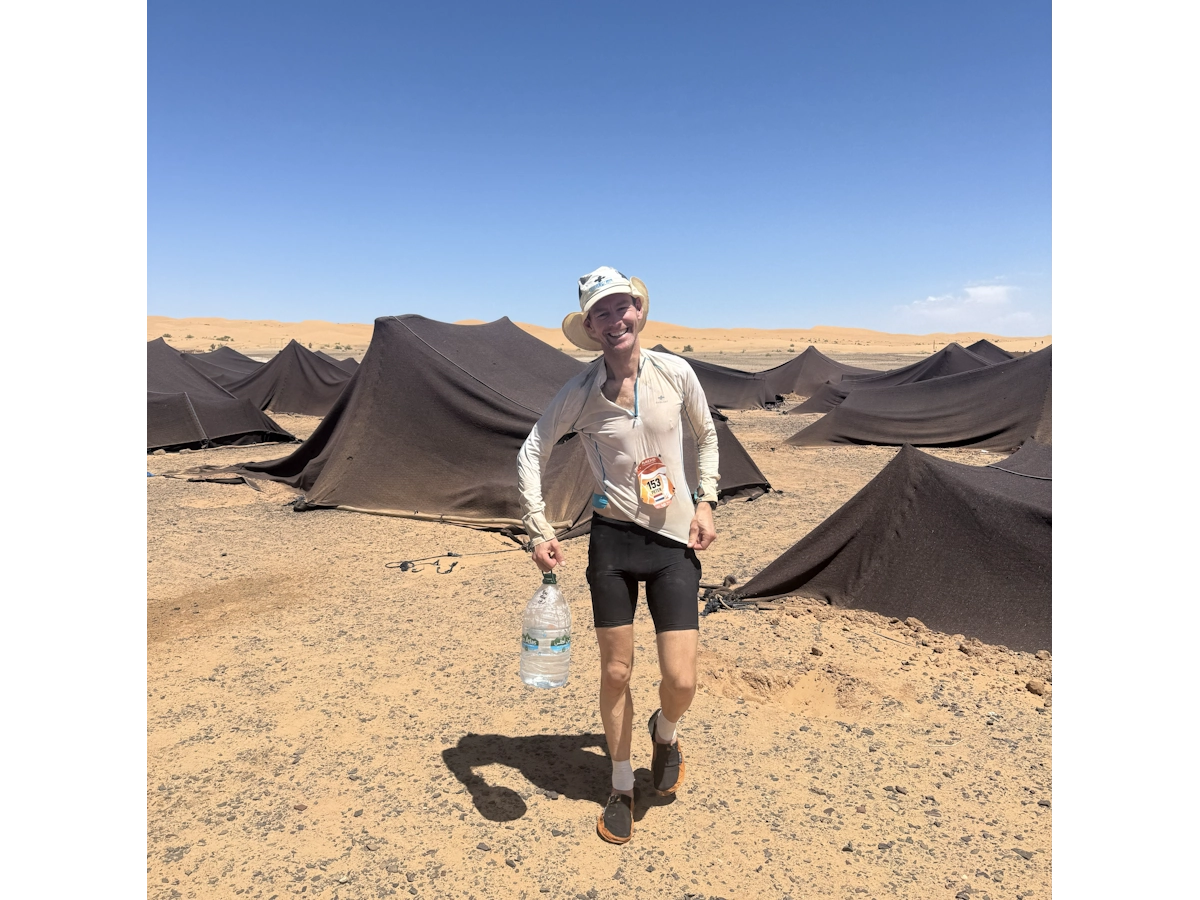
Discussing the route for the next day
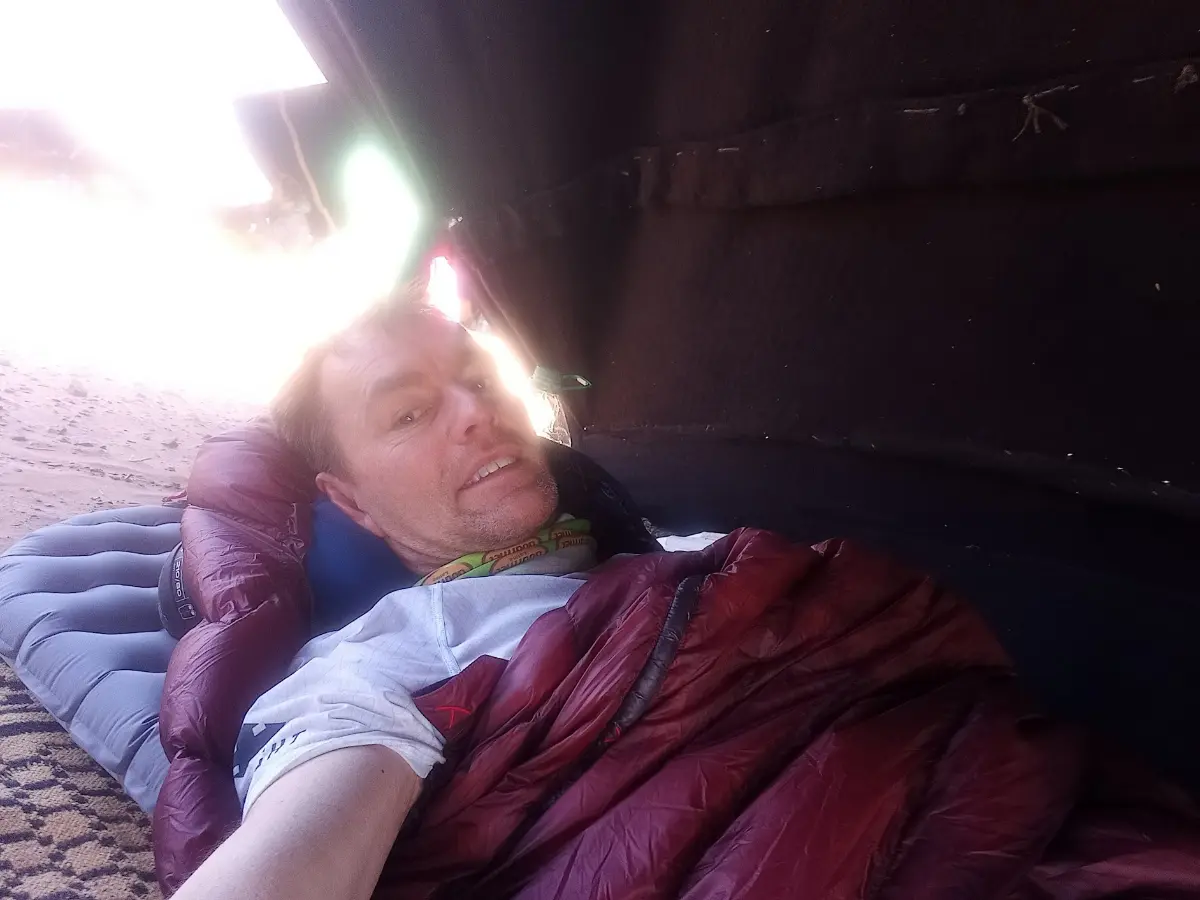
Back in the tent it is time to eat, drink and recover. Before you know it, everyone from tent 136 has thankfully finished and we are already discussing the route for the next day with the route map and elevation profile in hand. Darkness falls early, and after eating we make sure we crawl into our sleeping bags quickly.
Stage 2: 40 kilometres through the oven
The intensity increases, because ten kilometres more than yesterday turns out to feel much longer. I hear many people wondering how on earth they are going to handle the 100 kilometre stage later in the week. Well, we will find out when we get there. First we have to survive these 40 kilometres in the scorching heat. Again I speak to many special people along the way, and this 40 kilometre stage also eventually comes to an end. There is a small celebration when we make it. Straight away I take some protein powder and salty peanuts to recover. Then it is back towards the medical tent to deal with the blisters. By now we can do this ourselves.
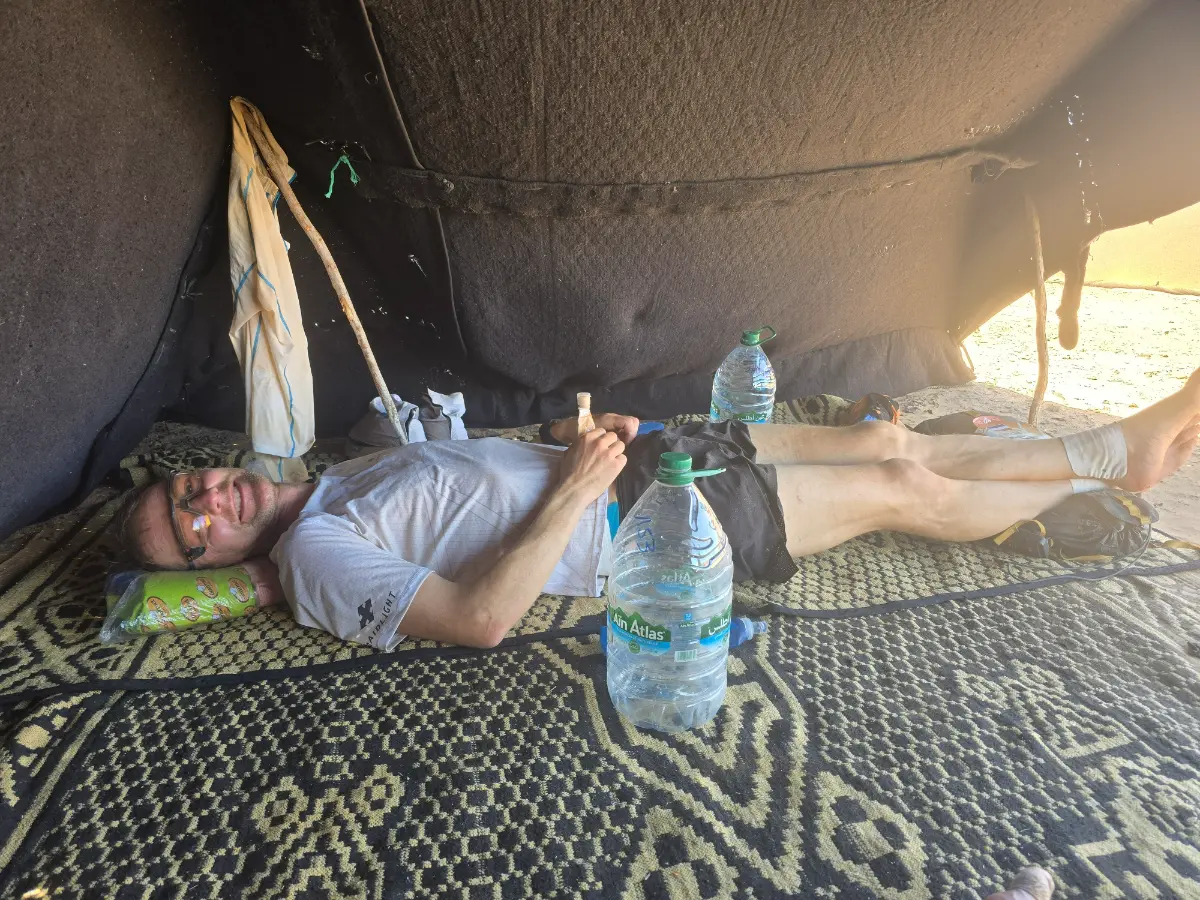
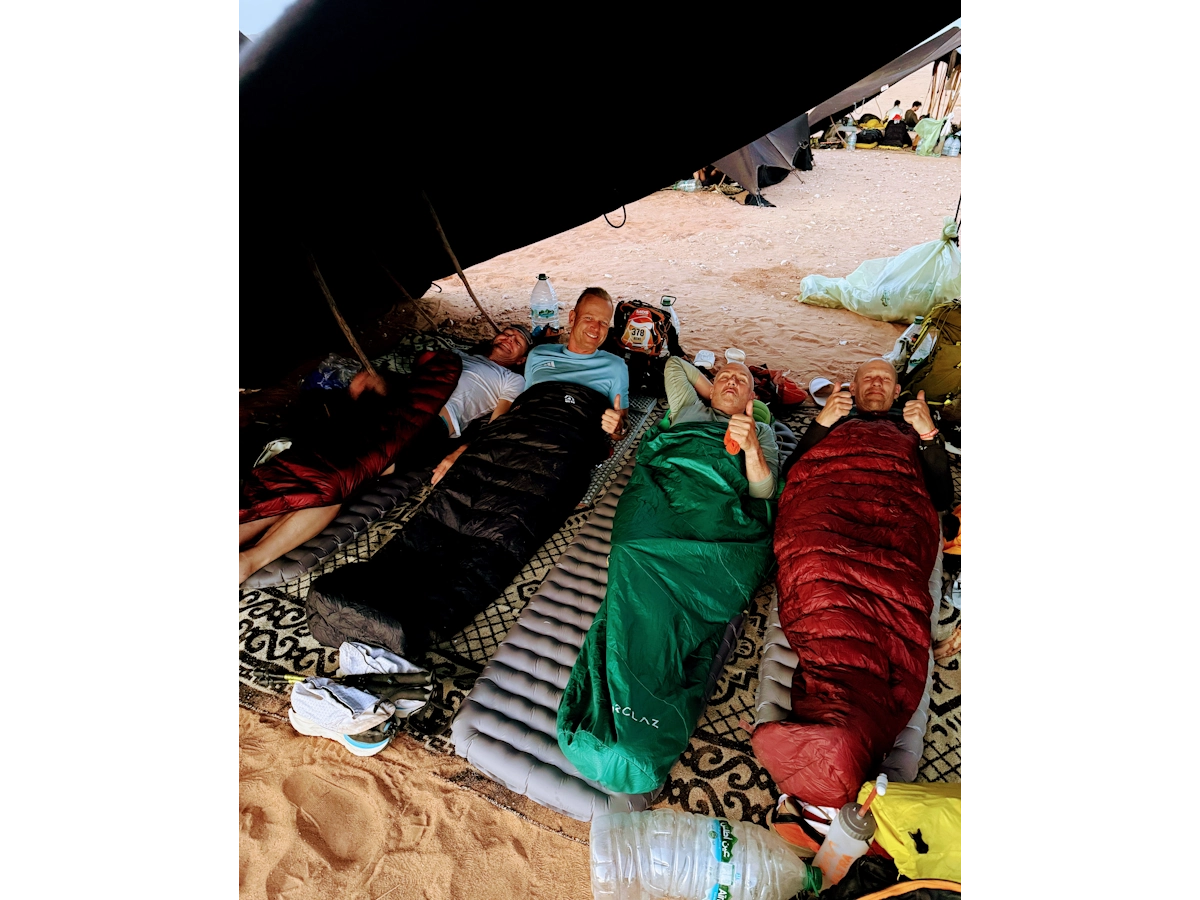
After that, it is simply time to rest in the tent. That is what almost everyone does for most of the time after finishing, besides exchanging stories with tent mates and people from the tents around you. This is fantastic.
Yoga in the bivouac
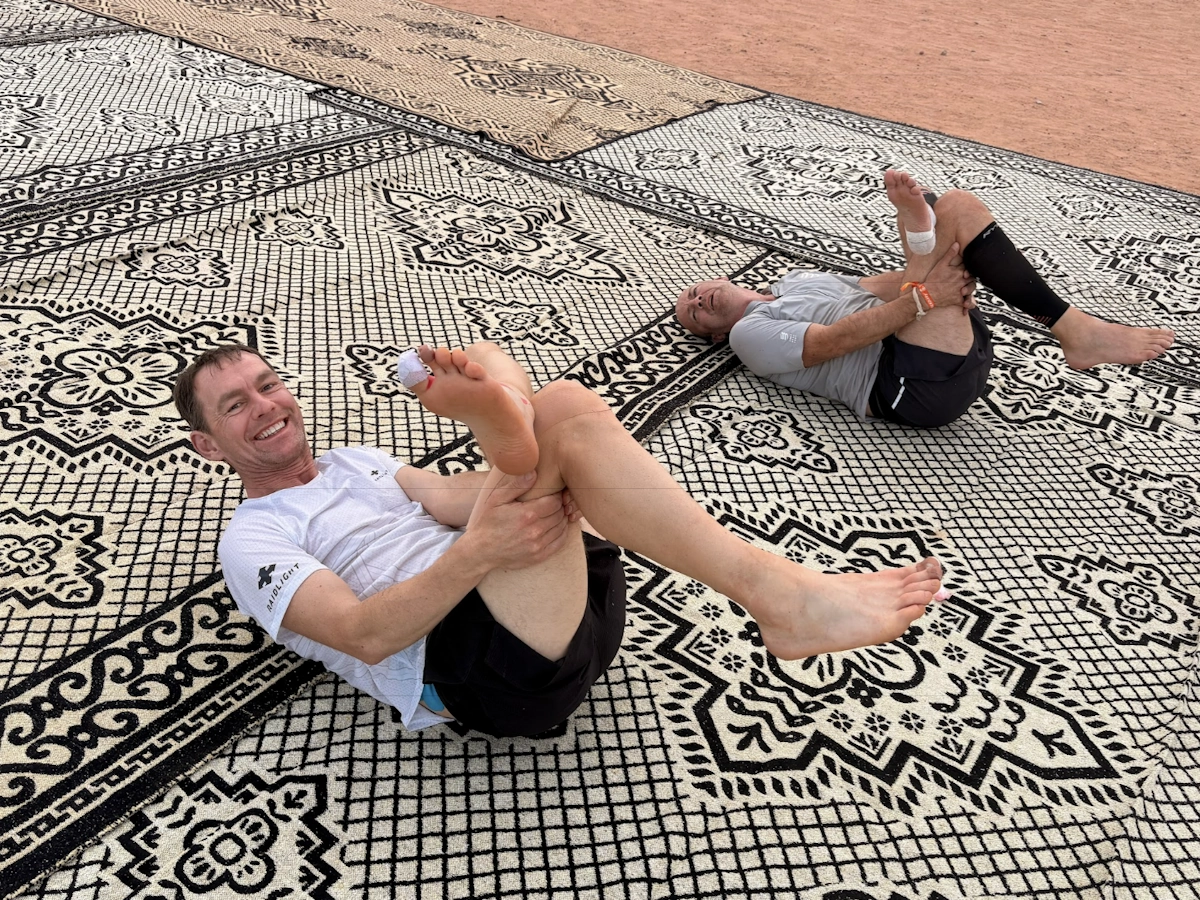
Later we do our own yoga exercises in the tent and then on the central yoga mats in camp. It is hilarious but also beautiful to see, and it strengthens the bond between us. Yoga and stretching help to keep the muscles somewhat loose after a tough stage in the Sahara, and it is also just a lot of fun.
While writing this I realise it may sound a bit sentimental, but you have to understand that we are in a completely new, hot and exciting environment with no contact to the outside world and all our belongings on our backs. We do not know what the day, or the rest of the week, will bring. This is so completely different from other hard one-day events. It is incomparable.
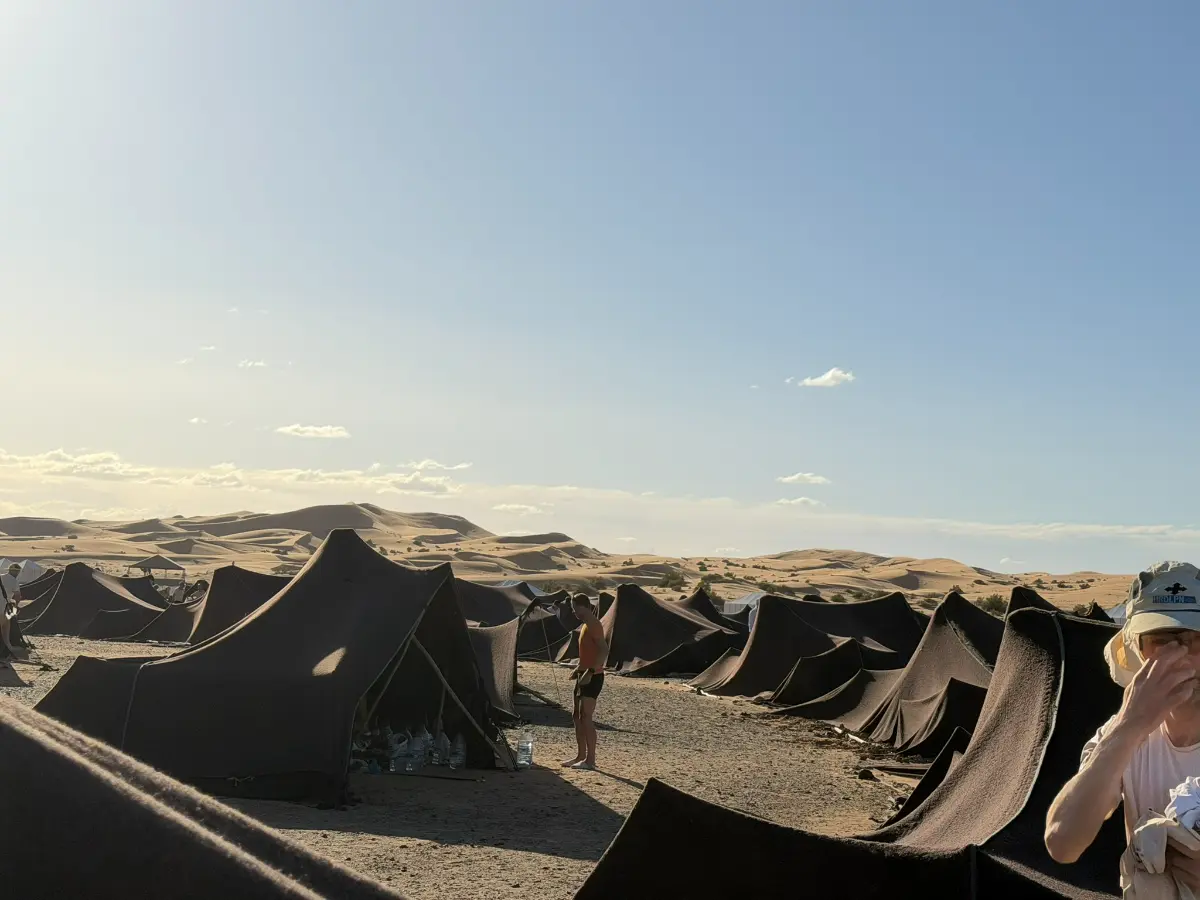
Stage 3: A calmer 30 kilometres before the long stage
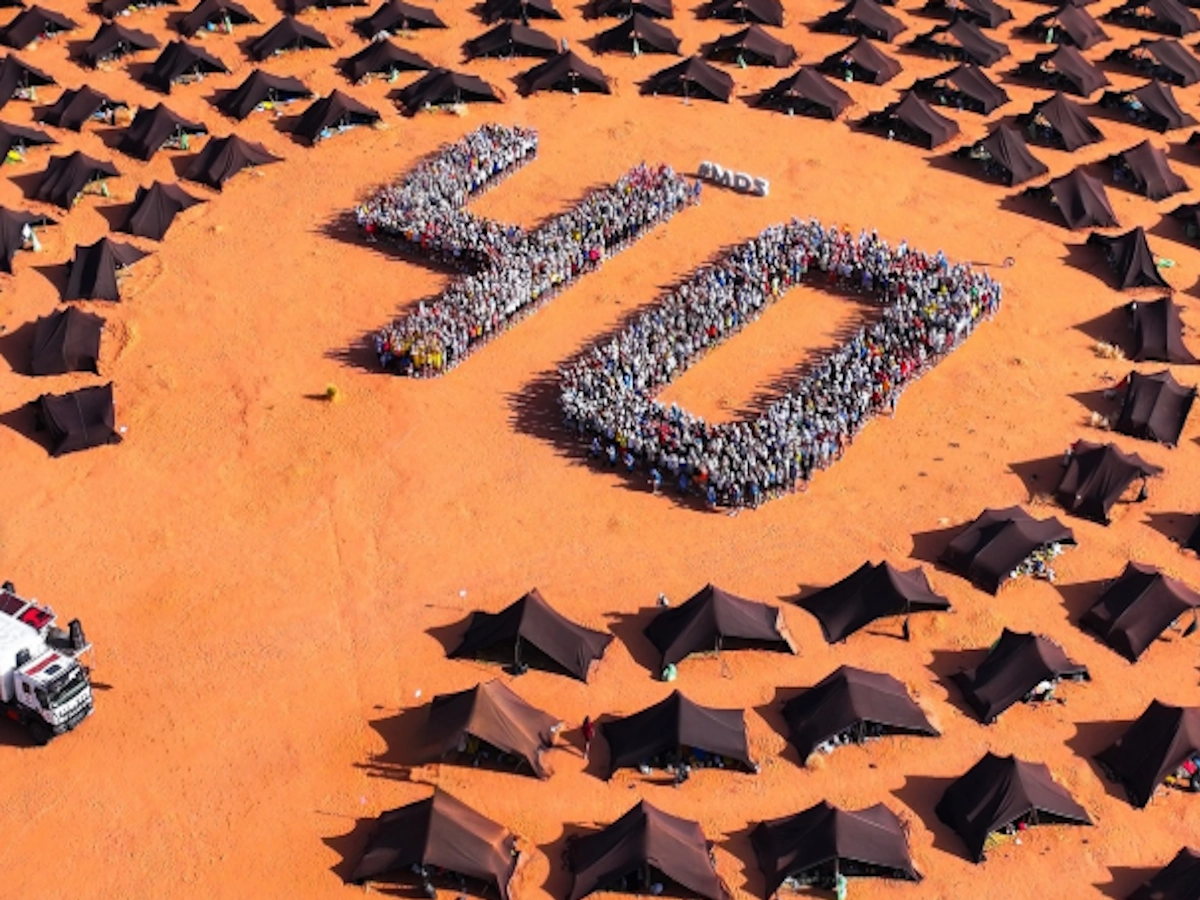
It does get more intense day by day. Again we meet special people along the way. In the tent, we do our own yoga exercises on the rugs with the guys. It looks hilarious, but it greatly strengthens the connection between us. We also, of course, stand in the heat after a long speech to form the famous number for the aerial photo. This is the milestone: the 40th edition. So in the heat we stand neatly in the two digits for the famous MDS drone photo.
Stage 4: The infamous 100 kilometre long stage
The long stage of this 40th edition is 100 kilometres instead of the usual, and already very respectable, 80 kilometres. For everyone it becomes a heavy, long, hot and stormy adventure, although every runner experiences it differently. We start hard, and after some tough dunes it gets even heavier. Roel and I are literally climbing up on hands and feet.
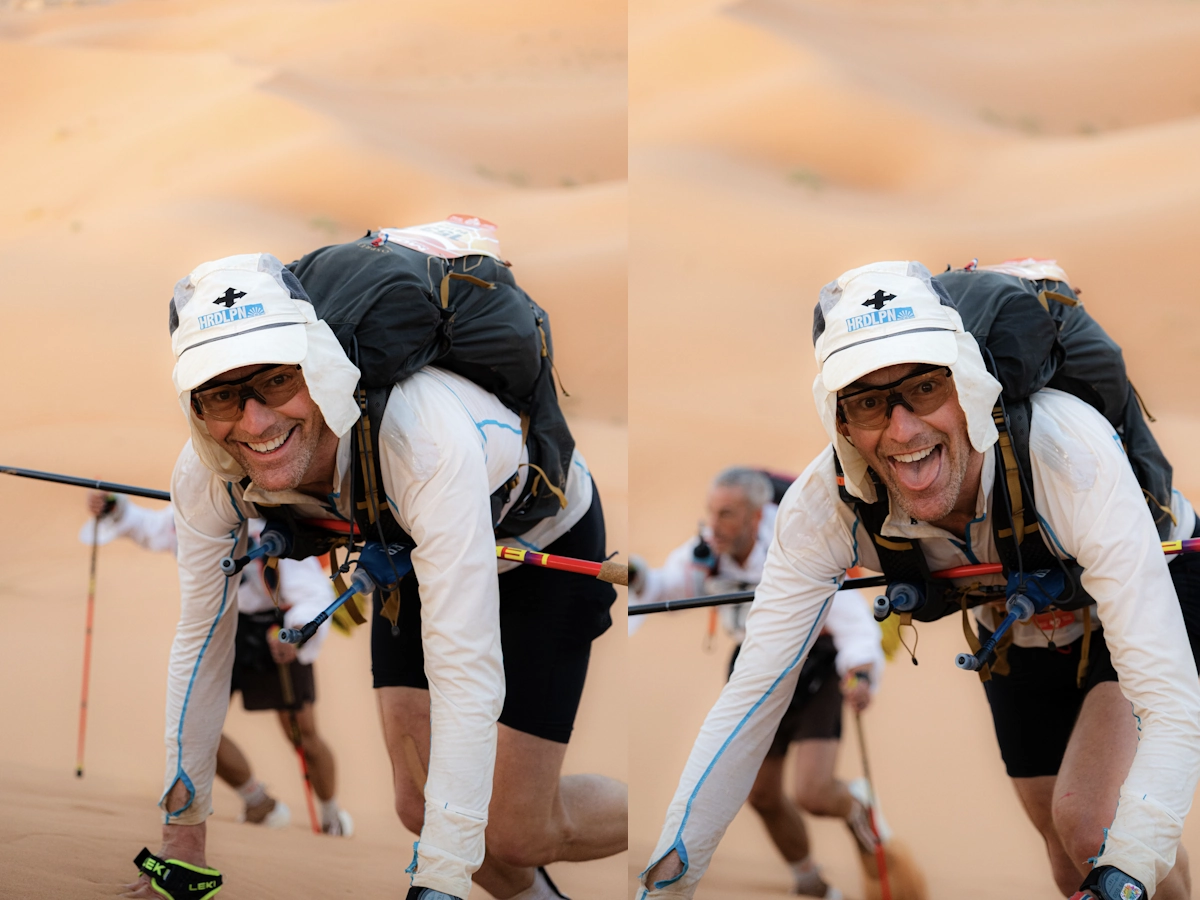
I had started together with Roel, who unfortunately could no longer run because of a knee injury. That still hurts to think about. Later he even had a hip that popped out, and yes, he simply had it put back in and continued. That is the attitude of this absolute warrior. I continue slowly but steadily and start passing more and more runners after around 60 kilometres into the stage. It is brutal, but it is going well.
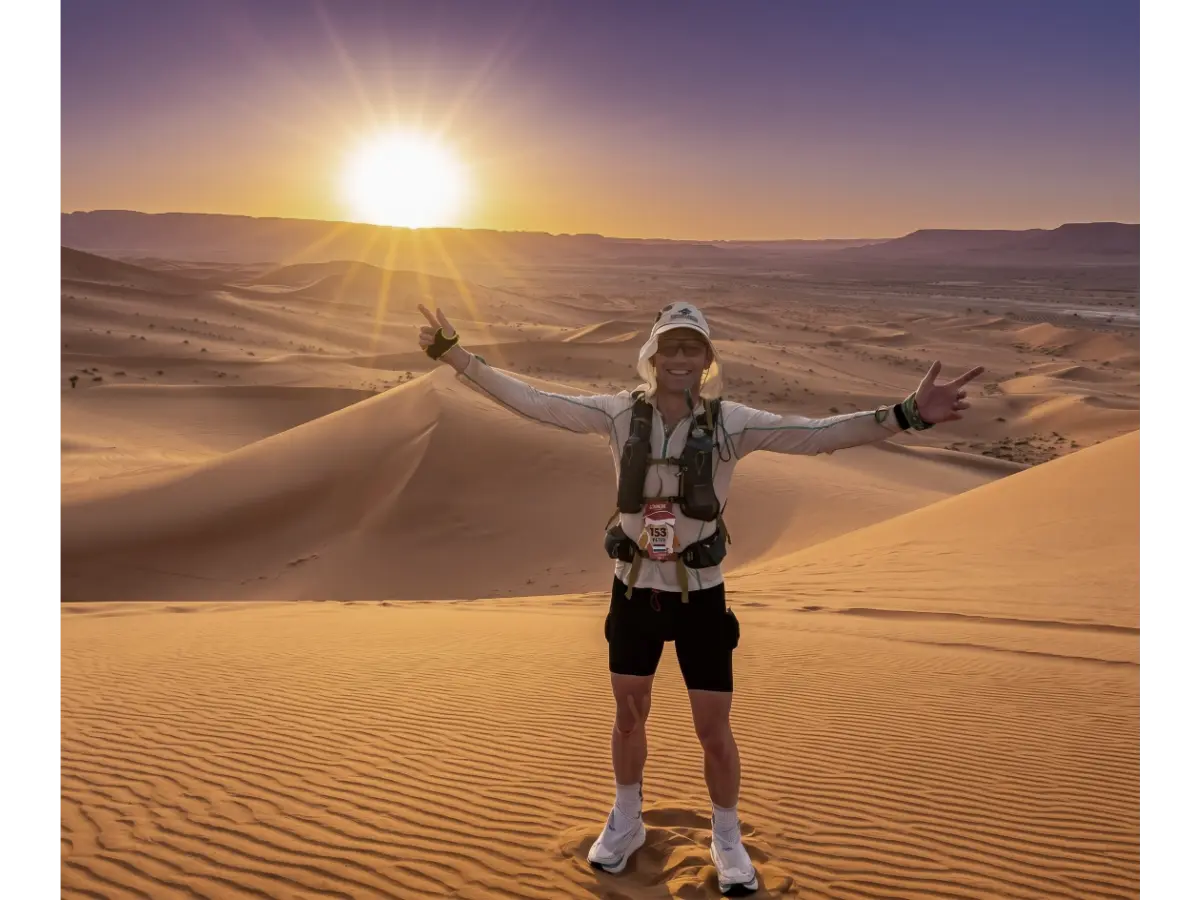
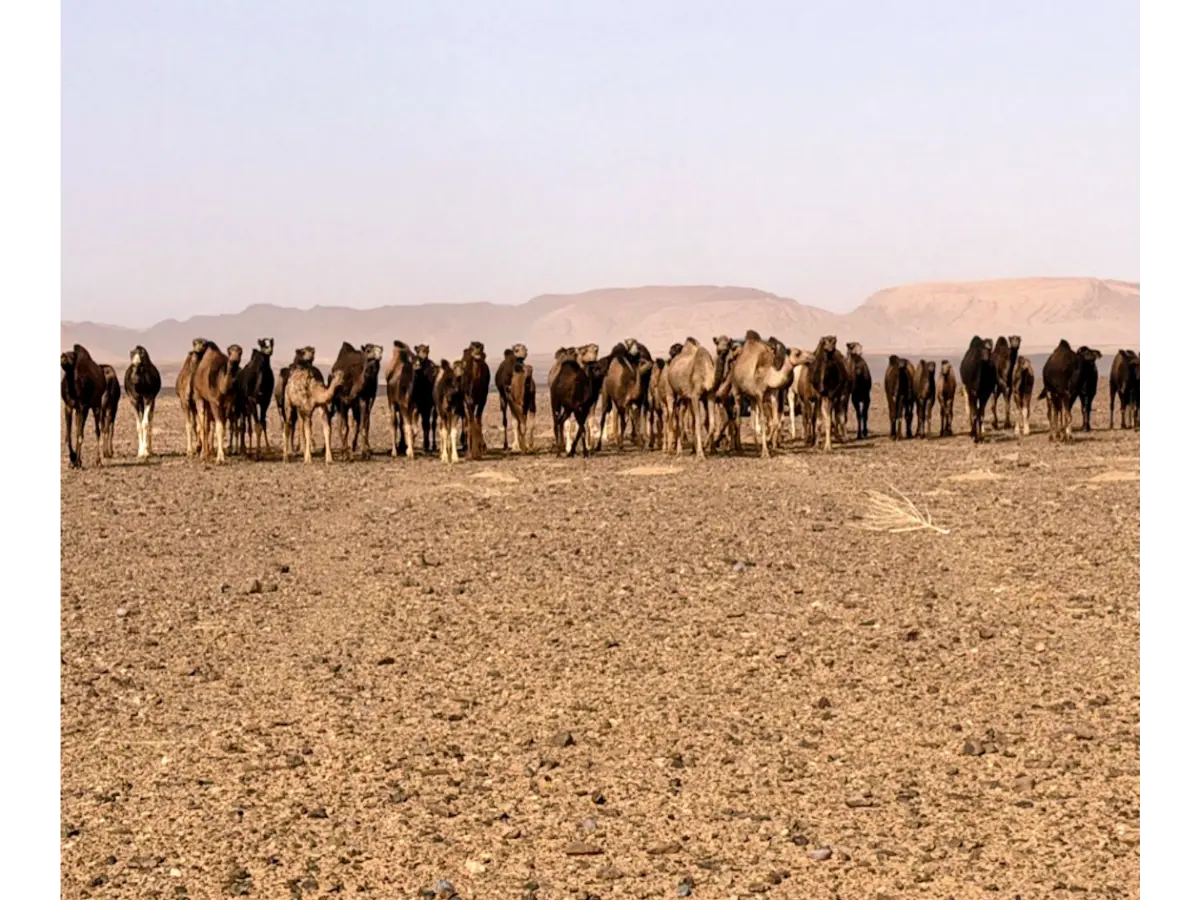
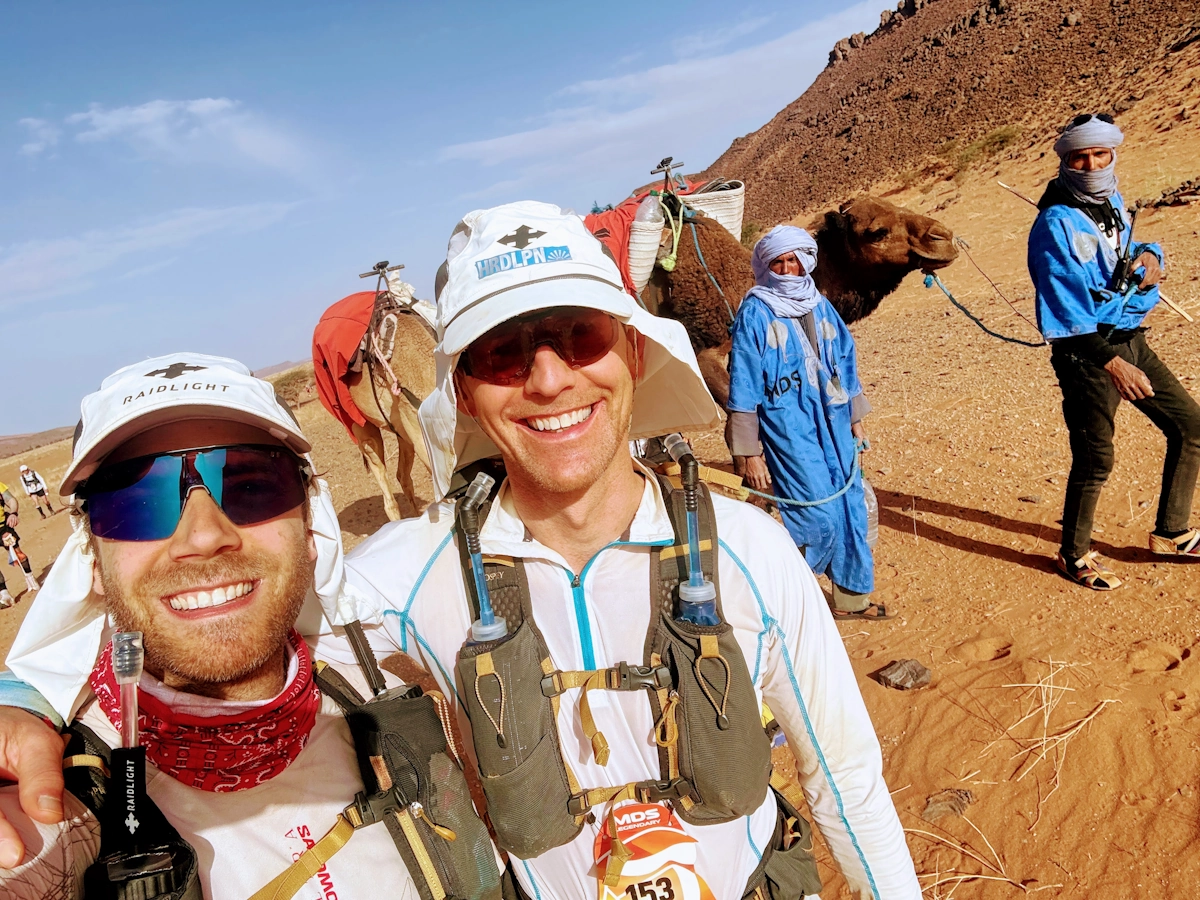
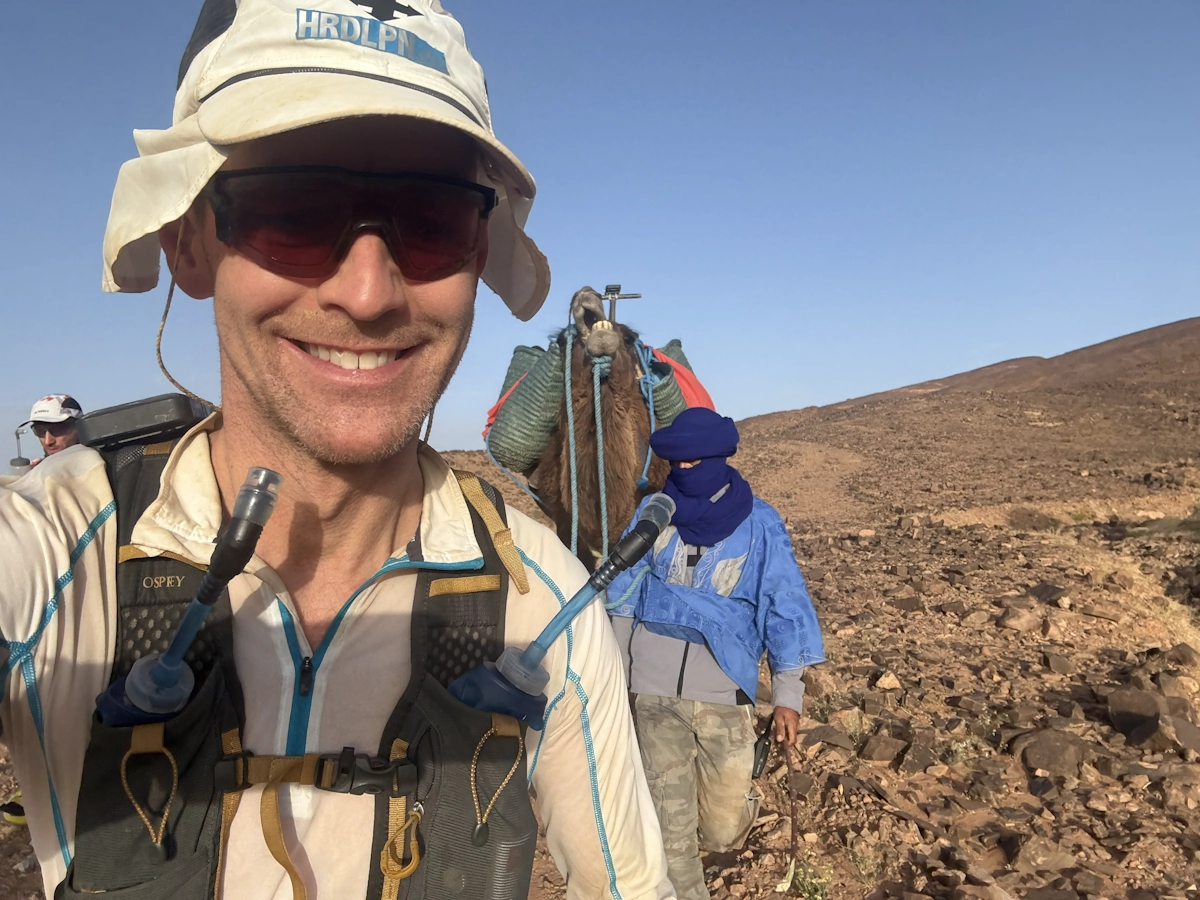
I talk with participants from all over the world, which is beautiful and gives morale. Further on, someone calls out to me. It turns out later to be Birte, asking me to run together with her and Camile. Shortly after that, we see a large herd of dromedaries or camels. Unique, because I have never seen anything like it. This is pure enjoyment.
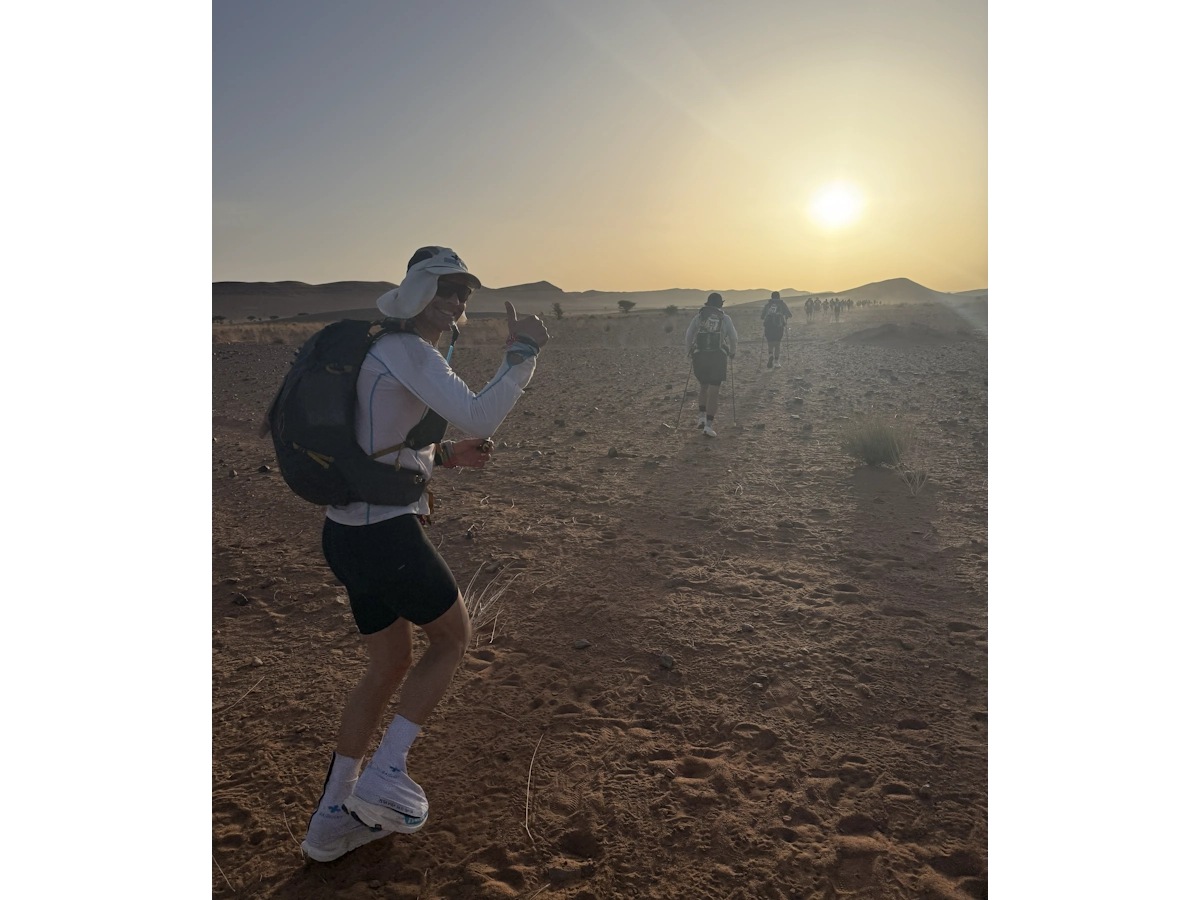
There is a strong headwind, and of course we Dutch people know how to ride in echelons 🙂 Just like in cycling, we rotate at the front against the wind across the Hamada plain. This stage follows such a beautiful route. From the outside, the desert may look like it is always the same, sand, sand and more sand, but in reality it is very varied. There are dunes, different types of sand, stones on the ground and occasional mountains. I start to love it. Especially when, after my turn at the front, I am allowed to shelter again in our little group of three.
A heart rate above 150 means leaving our group
About an hour later, Camile says his heart rate has climbed above 150. That happens automatically as the hours pass. After a short discussion, he decides to drop back and lower his pace. A pity. Birte and I continue, and we keep overtaking runners who have started too fast. Despite our fatigue, that gives energy. We ask some runners if they want to join us, but for most it turns out to be a bridge too far. A few try for a hundred metres or so but then have to let go.
So we keep going, with a light sense of tension as the sun quickly drops towards the horizon. We also see this beautiful herd of dromedaries. The headlamps come out of our bags and before we know it, we are running in the dark. There is an incredible starry sky around us, but we barely pay attention to it. Everything seems smaller and quieter when you are moving through darkness with only two headlamps and the route flags, which we miss a few times and then have to backtrack to find again. Kilometre by kilometre, this new normal starts to feel more familiar. I still remember the 80 kilometre sign. It felt like a real celebration.
A lot of wind
The wind picks up even more. A buff is essential to protect yourself from blowing sand. And yes, here I look a bit like ET, but the sand gets everywhere and starts to irritate everything. The buff keeps the sand away from the places where you really do not want it, and that is very pleasant. How you look, smell or appear stopped mattering after day one anyway.
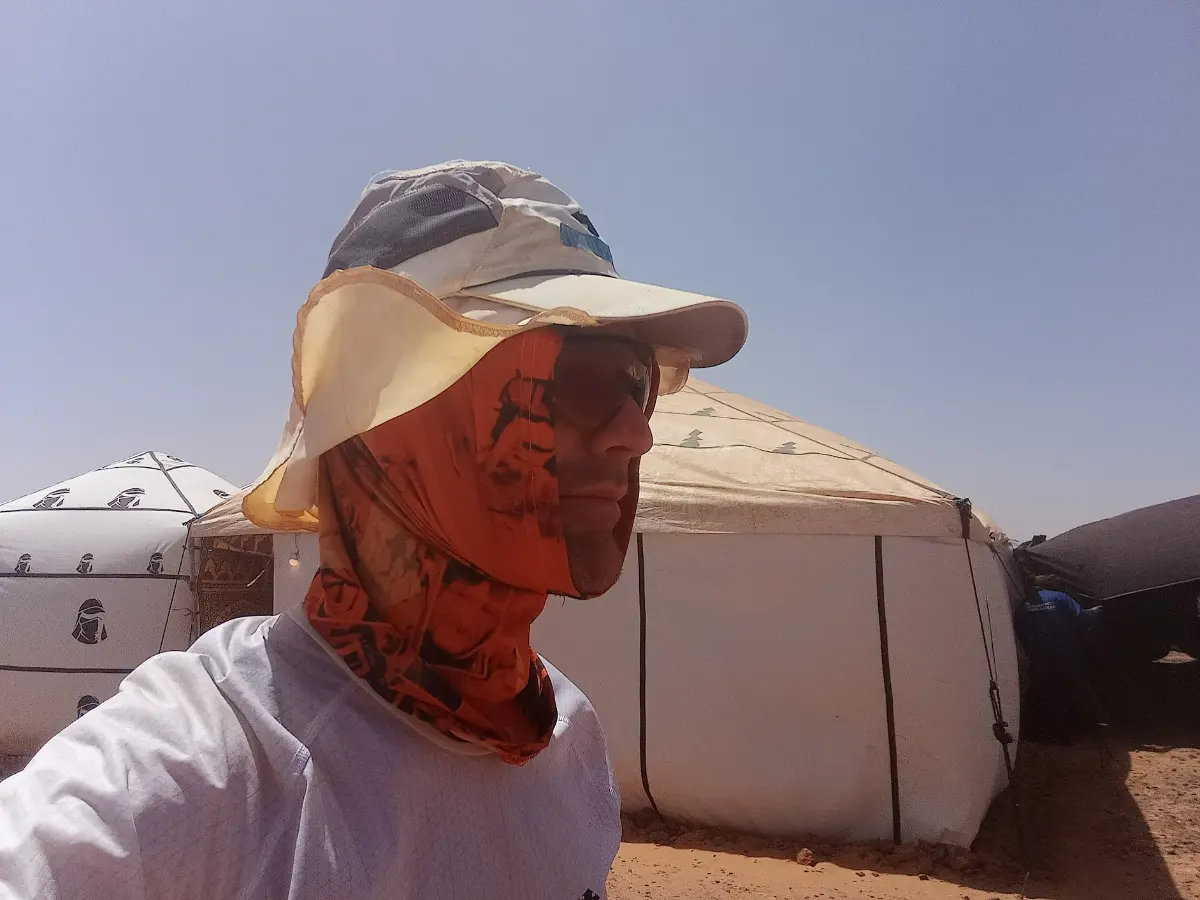
80 kilometres
We are now at 80 percent of the stage, so we are getting there. I remember that very morning, around kilometre three, I was already struggling quite badly through the soft sand. We keep going and this is amazing. We know we will reach the finish before midnight. That may sound unimportant, but for us it means we can take a full rest day afterwards, and before that we can still get a normal night of sleep. That is fantastic. We carefully eat our way towards the bottom of the day’s food supply. But there is no time to waste. We have to continue.
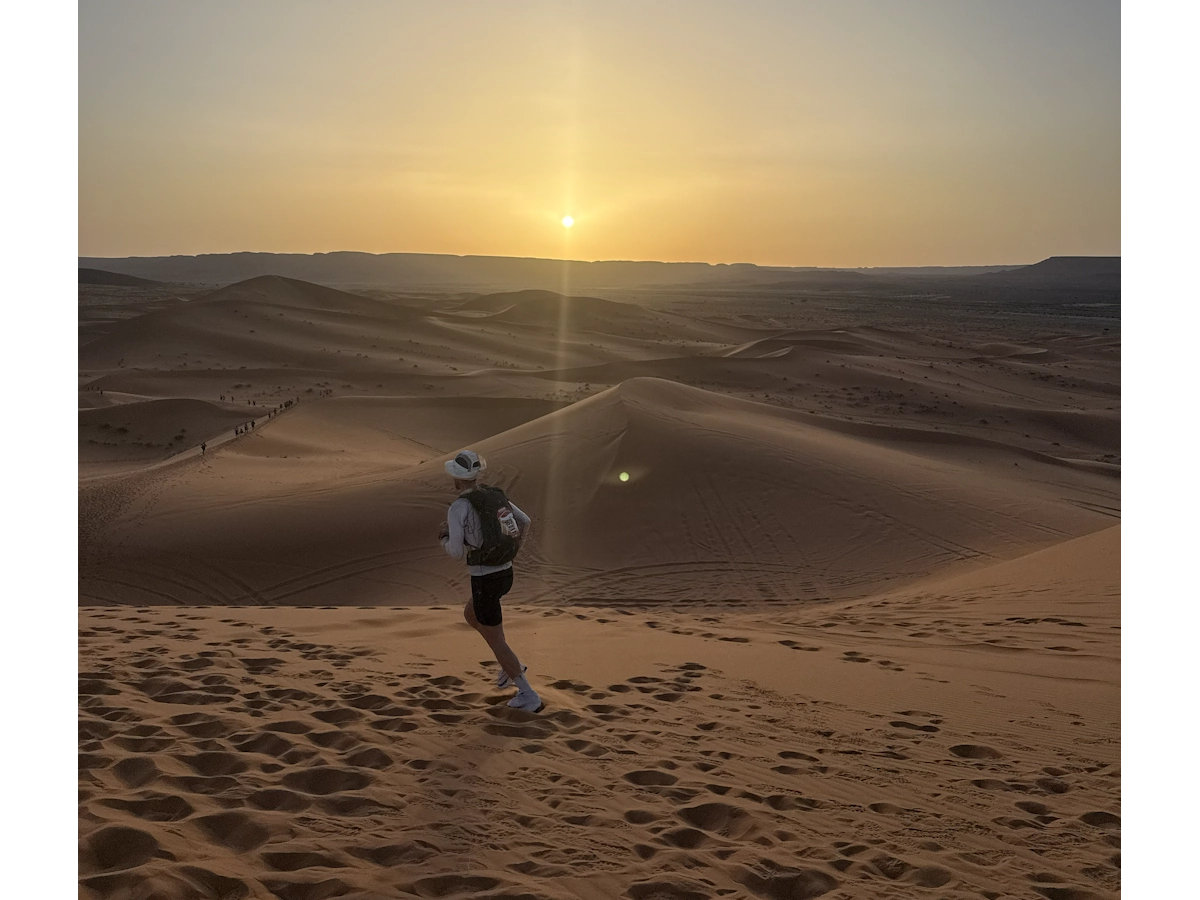
Being careful with food
I have to ration my food because I simply brought too little, or maybe I had already eaten too much during the first 80 kilometres. All 39 previous editions of the MDS would have been finished by now, but we still have a few hours to go. Still, we are very happy that we have already made it this far. The checkpoints become more important than ever during the night. You see the lights appear in the distance, then a little later you hear the music, thank you organisation, and after that the encouragement from the blue and orange jackets. You can tell that they are paying extra attention to lost runners, overheated runners, even though it is slowly cooling down, and all kinds of injuries.
Hallucinations
In the days after the long stage, I hear that quite a few runners had hallucinations, ranging from small mirages to full conversations with ghost runners who turned out not to exist. We also pass the 90 kilometre sign, and the imaginary celebration grows even bigger. We are definitely going to make it.
The ground is now very difficult, with lots of bumps, dune sand and hairy tufts of desert vegetation that we have to slalom around while still following the route. Safety remains the most important thing. I pull my buff over my head because it has been getting cooler for a while, and I finally allow myself to take off my cap. Lovely. We encourage each other with “We’ve got this”, “Hang on”, “One foot in front of the other”, “Keep pushing”, “Almost there” and finally “Finish strong”. You probably know it from your own finish of a hard race: it is so intense and so beautiful at the same time. In the last four kilometres there are larger signs with phrases like “Every step got you here”, “Don’t look back” and “You’re making history”. Suddenly we see the finish lights against the sky.
Exhausted but happy
The finish lights are brighter than the checkpoints. We are dead tired, but also incredibly happy. The lights are misleading though, because there are still a few hundred metres to go. We encourage each other to keep running. The music is playing, the speaker is loud and we hear the first blue jackets and orange jackets clapping. We pass the timing point, a sort of measurement beam for the GPS trackers attached to our bags, and this is the final stretch towards the arch. We cheer, laugh and cry towards the webcam. Suddenly it is done. Amazing. For a moment we are the only runners at the finish, with about 15 MDS crew members around us.
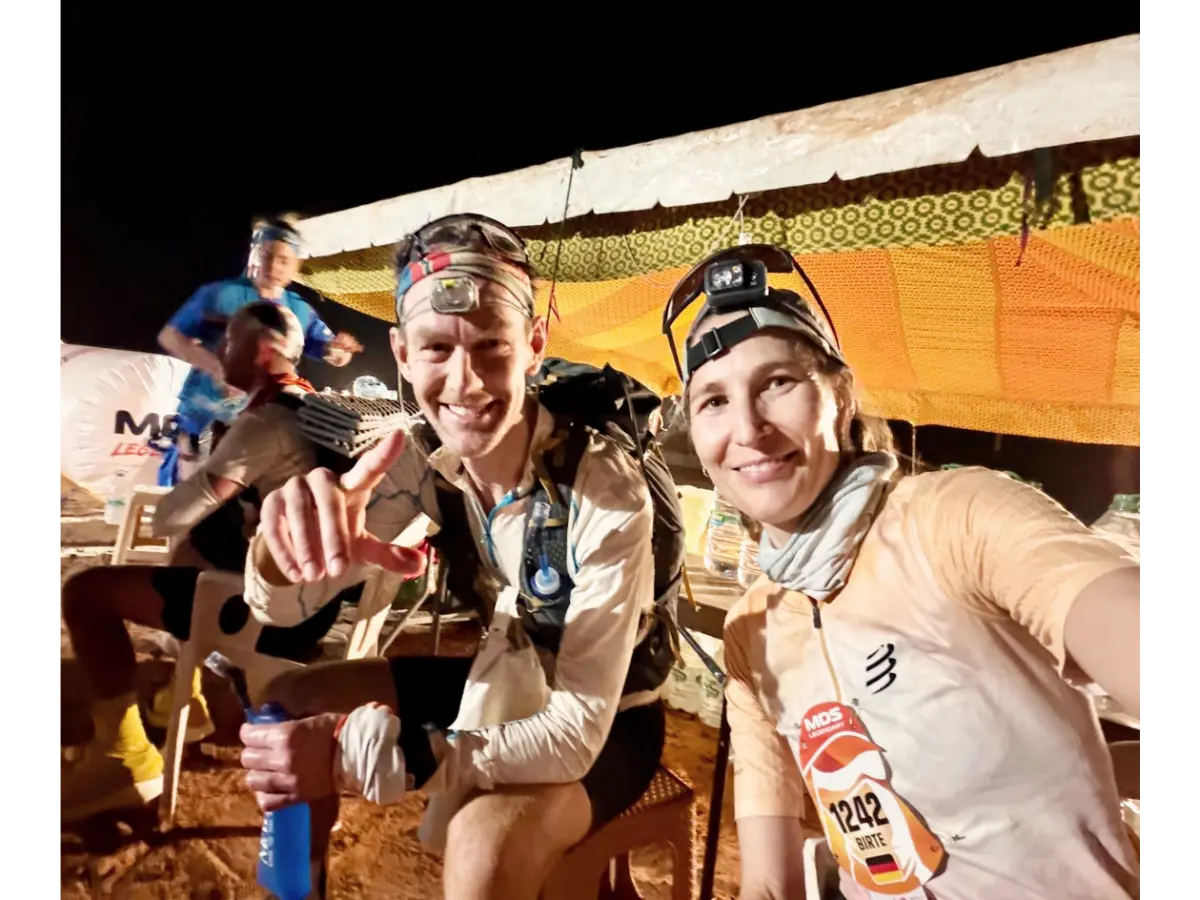
The relief after the longest stage is almost impossible to describe, but we managed to finish it running.
It is a very special moment. Birte has to sit down on a chair for a moment because she feels dizzy. It does not matter anymore. We are there. After some salt, help and wet towels she comes round again and is euphoric too. Two more runners arrive, the ones we passed in the final hundred metres, and there is dancing and shouting. Out here in the Sahara there are no neighbours, noise limits, permits or anything like that 🙂 The music is turned up extremely loud for one song. I have no idea which song it was, because I was too tired, but it was SUPER. Three days later Birte turns out to have finished as 9th woman in the entire field and proudly stands on the podium. But at this moment we do not know that yet. The 100 kilometres may be done, but there is still a full marathon and a half marathon to go. We take a few more photos and head back to the tent. After the hardest stage, rest suddenly becomes the most beautiful thing in the world.
Roel comes in a little later than I do, but he can still sleep a good night. In the meantime, I have cleared the tent of sand after the sandstorm and removed every stone under the rug that could puncture my air mattress. I did this one by one, cramps included, because I really wanted to keep sleeping on a full air mattress. We enjoy the moment a little and talk through the day, but we are tired and satisfied.
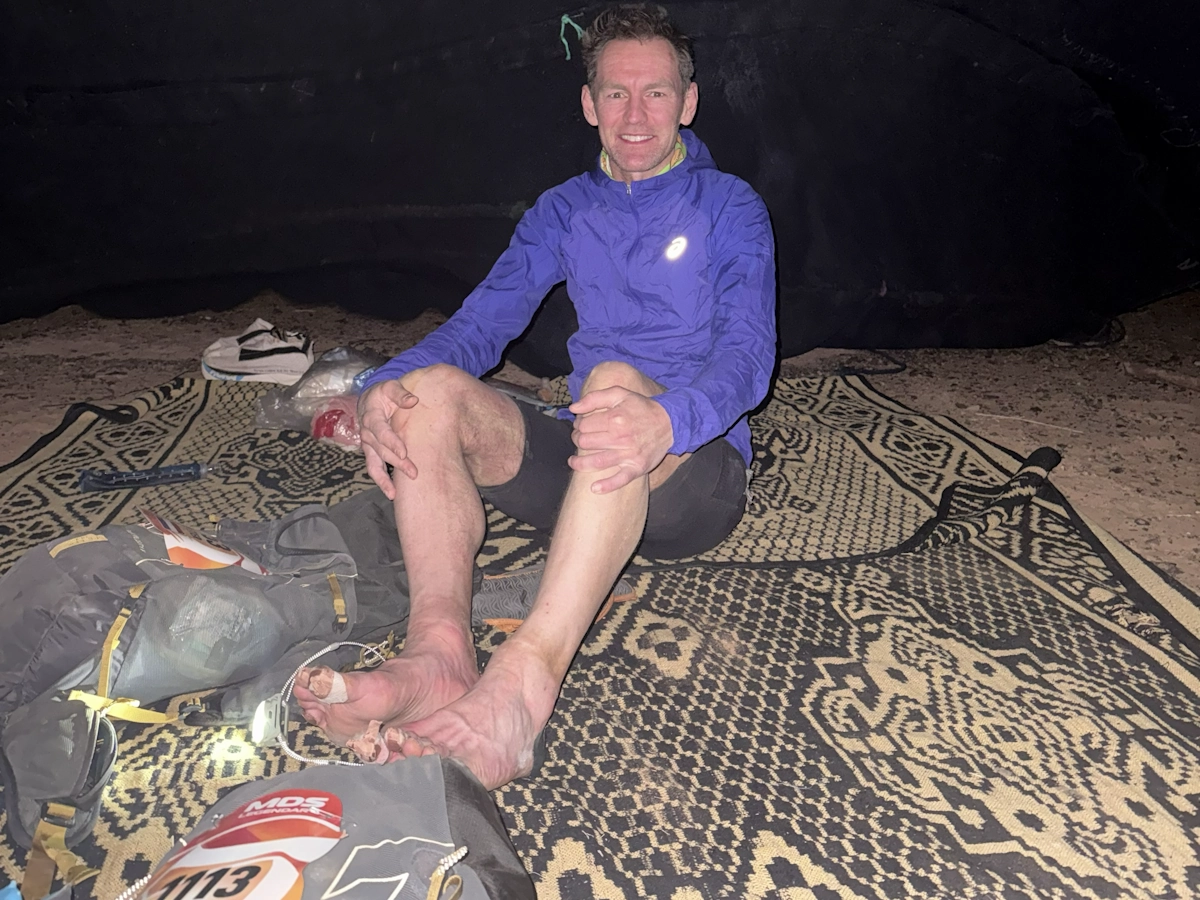
After such extreme effort, even sitting still feels like luxury. Then the two of us go to sleep in what suddenly feels like a very large tent for two 🙂
In the morning two more tent mates arrive, and later in the morning and afternoon more runners come in. I was incredibly happy when I saw that René had also completed the 100 kilometres despite all his injuries, bruised toes, wounds and other misery. A high five was definitely in order.
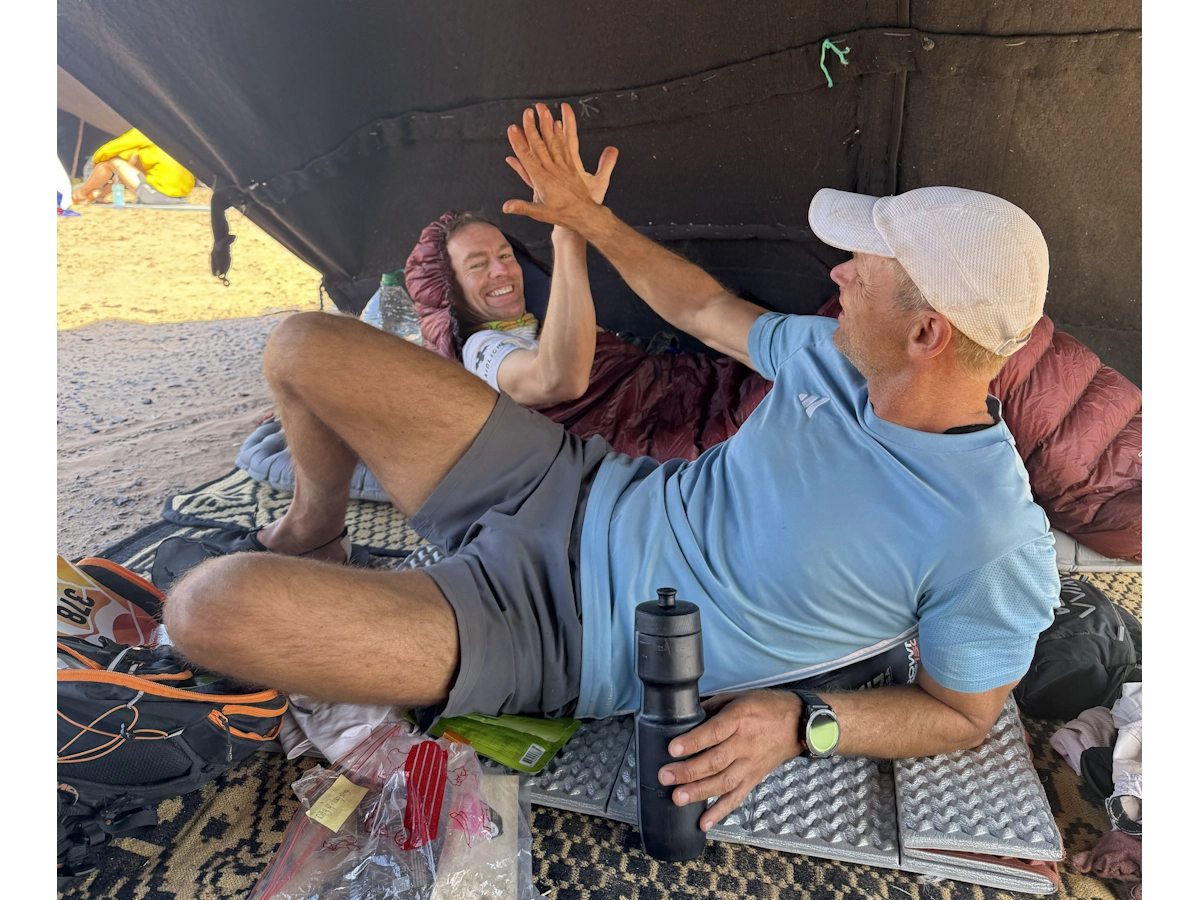
Even in tough conditions, the joy remains visible
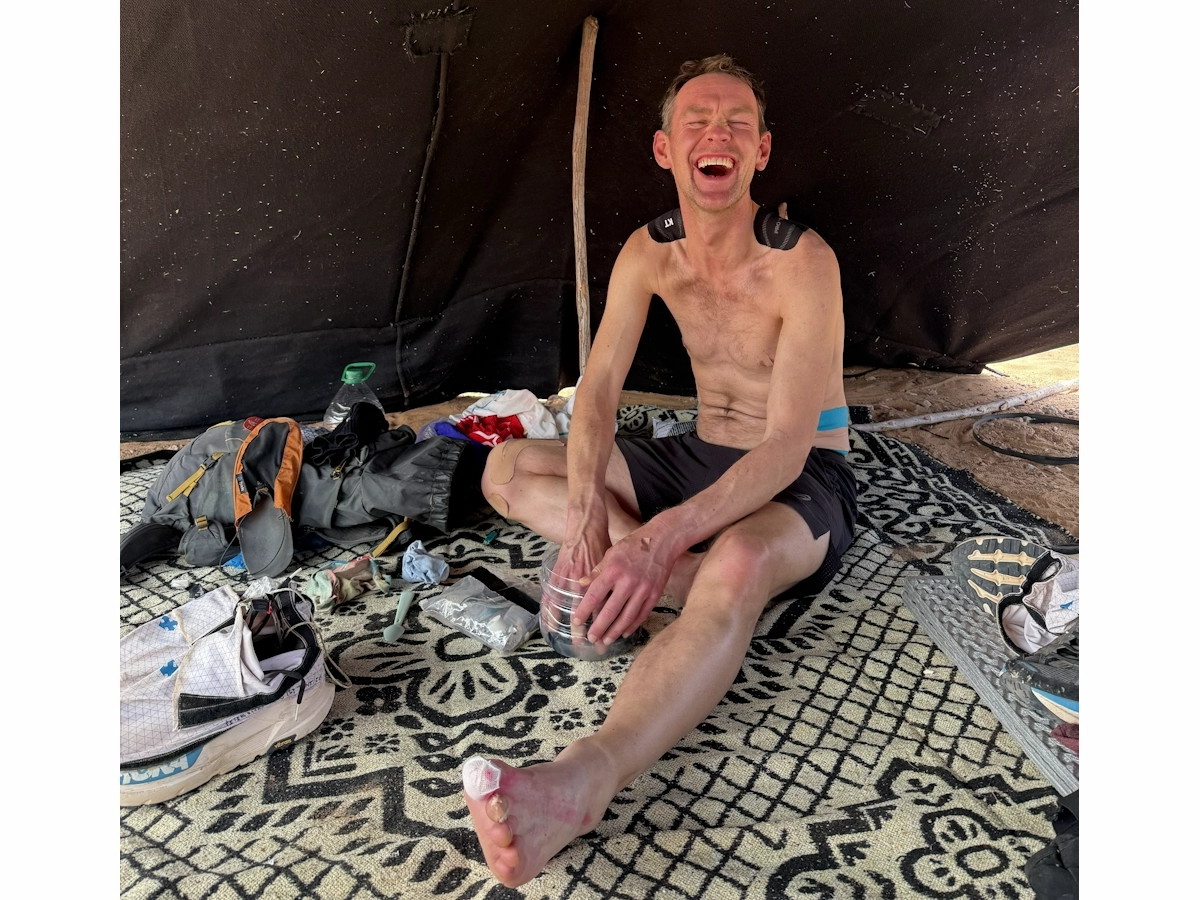
Great hilarity about my little cat litter tray
Yes, where others chose a cooking set, a titanium mug and a real meal, I kept things a bit more Spartan. For me it worked fine. Besides saving weight, which you have to drag through the desert for 270 kilometres, I also preferred to walk around the bivouac, talk to people, enjoy the race afterwards or simply chill after the stages. In any case, René, my neighbour in the tent, became more and more relaxed as the days went on. As if we had known each other for years, he kept coming up with better jokes about it. We laughed so much. These little things make the Marathon des Sables even more memorable and special for me personally.
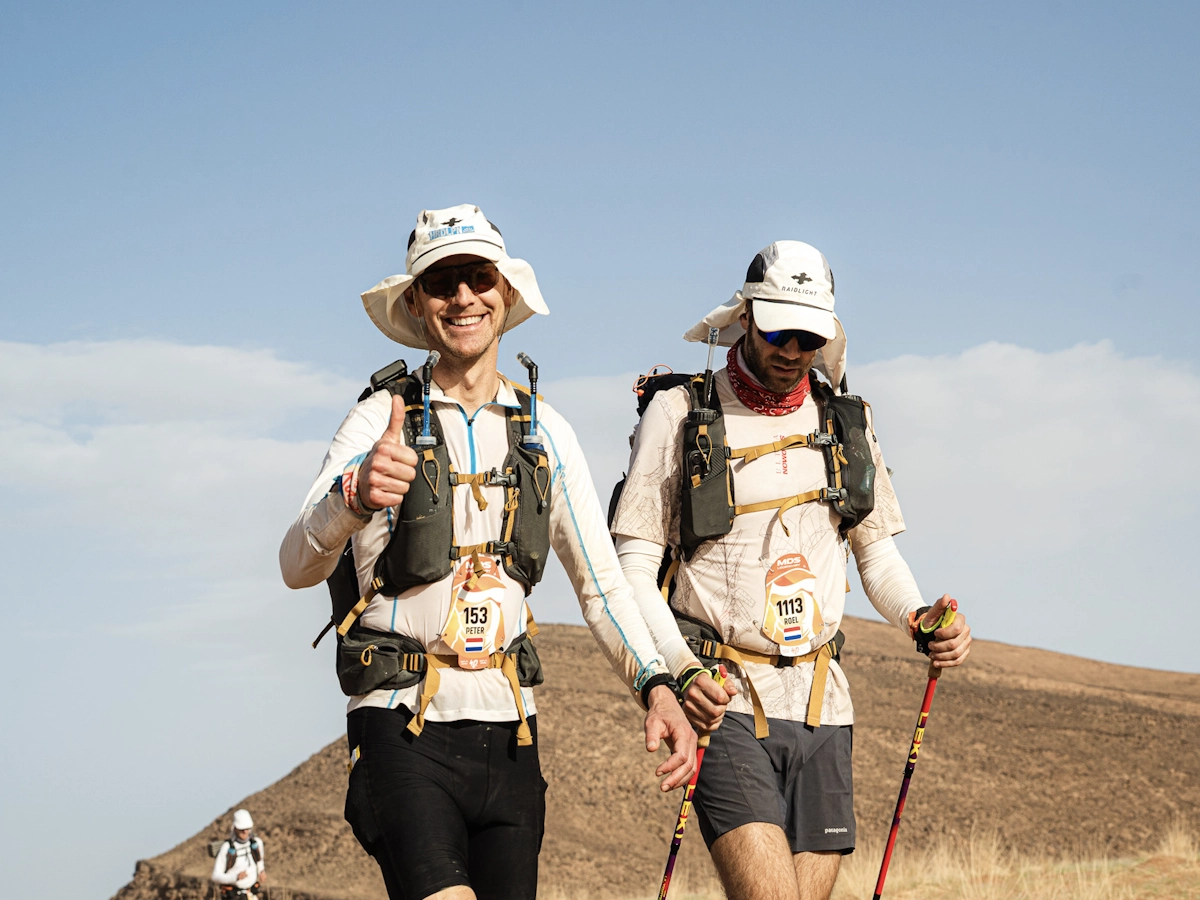
Yes, it is hard. You have nothing from your normal life: no hygiene, no normal rhythm, no privacy. It is the combination of the conditions and the physical challenge that makes it so hard. Sometimes it goes well, and sometimes you just hit a low point. This photo is just one random moment during a Marathon des Sables stage. Despite everything you experience for the first time in your life, it is still incredible. No normal daily life, no soap opera, no potatoes and cauliflower, but this. Doing and experiencing it together, and also completely alone.
Stage 5: Just a marathon after the 100 kilometres
It is my birthday on the day of the marathon after the 100 kilometre long stage. Before dawn, the whole tent sings for me. How great is that? We are early birds, so a few tents around us wake up a little earlier than planned, hahaha. Even special moments are celebrated in a simple way here during the race. I love that. Later in the day, after the marathon stage, other male and female runners also come to congratulate me.

This marathon distance on day five goes surprisingly well. The human body can handle a bizarre amount. With Roel, Richard and Daniel, we start the stage.

It goes quite well, and both Roel and Daniel run ahead for parts of it. Strong. We alternate a bit, and it is tough, but we seem more determined now. After 100 kilometres, a simple marathon is almost easy 🙂 Of course it is not actually easy. It remains hard work, and after the finish I sit down on a chair with great pleasure. Within no time Daniel is standing next to me and we are happy. Very happy. This is pure enjoyment, and it is wonderful.
Surprise
After days of suffering, even simple fruit tastes like a luxury meal. Because of the heavy 100 kilometre stage and the 40th anniversary edition, we all receive one orange and one banana. Like hungry wolves, we head towards the fruit truck.
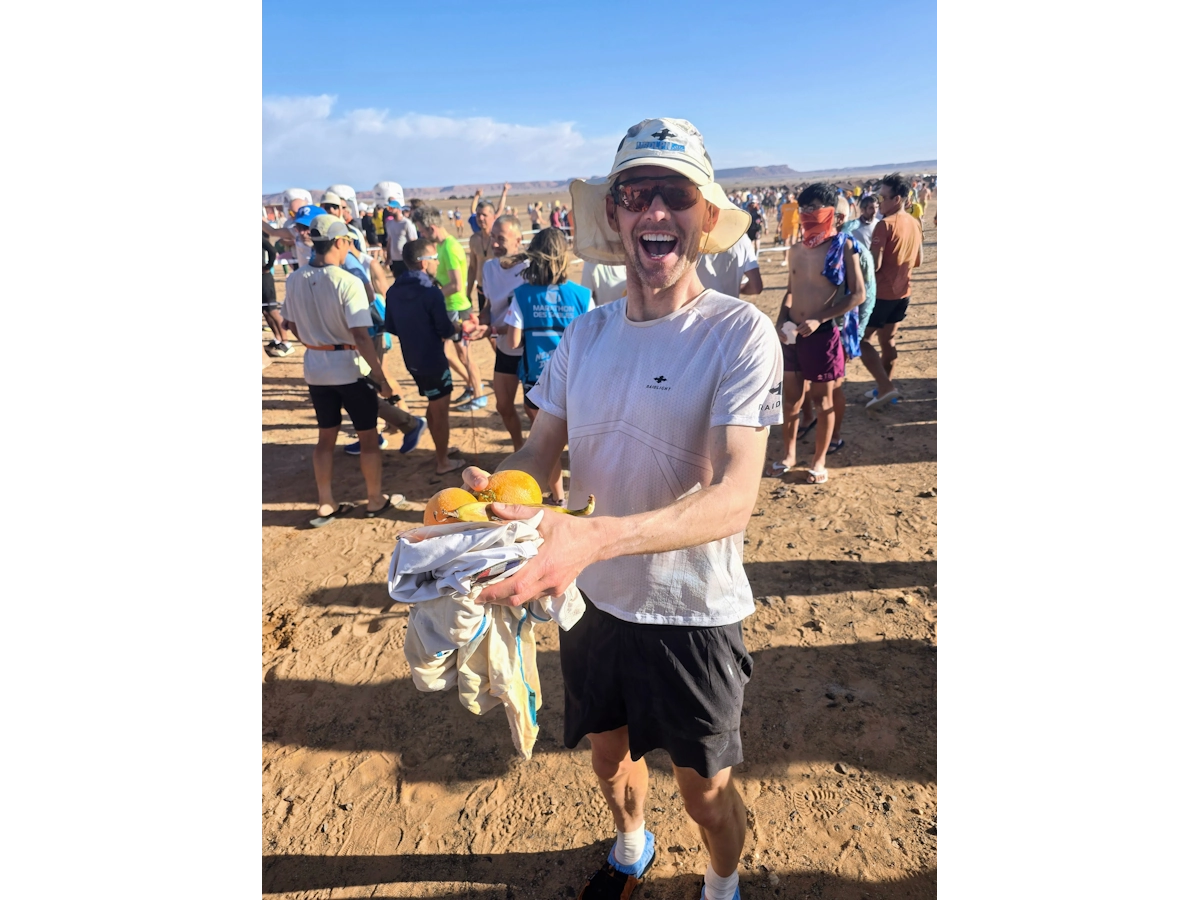
We also take one last group photo, because tomorrow after the half marathon everyone will go straight onto the bus to the hotel.
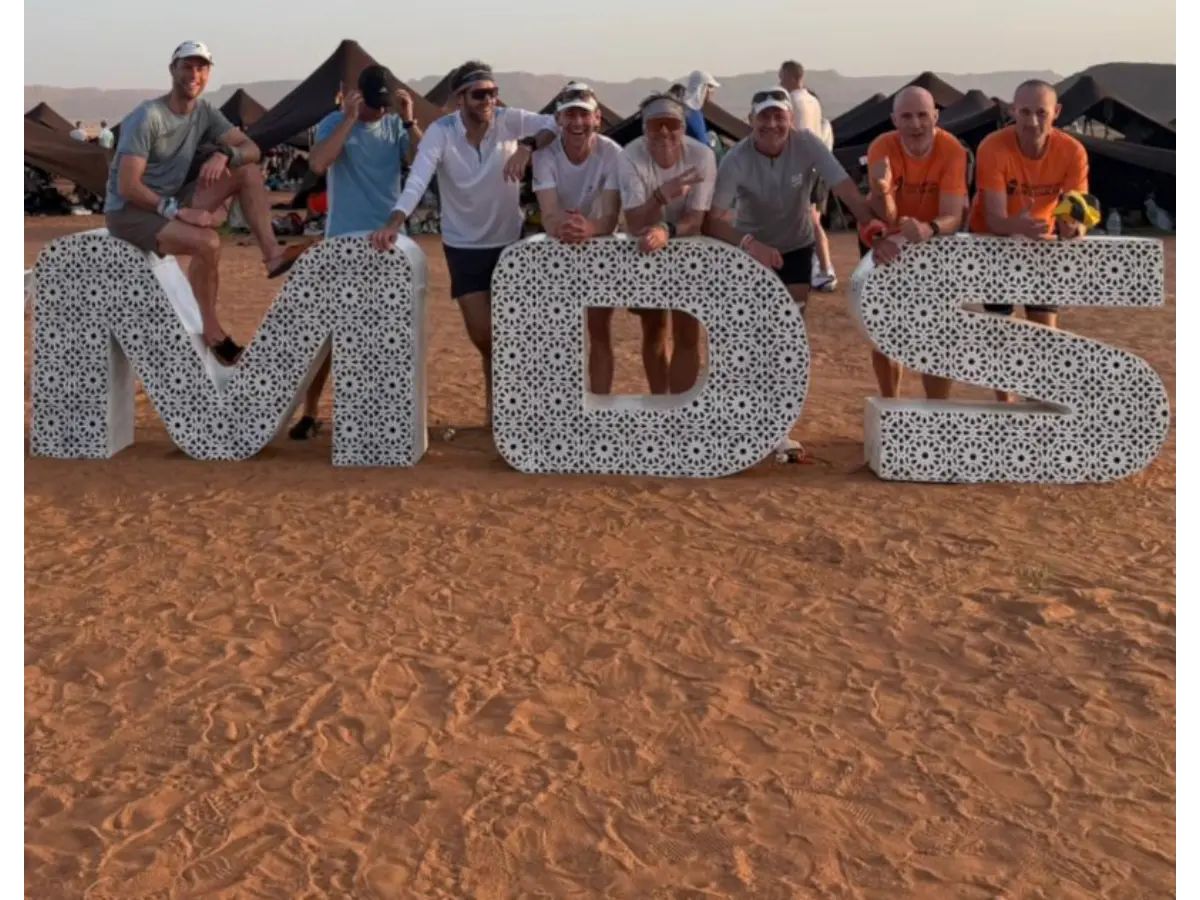
Stage 6: The final stage
The final day is “only” a half marathon. How hard can that be? Well, actually quite hard, because we get dunes. Lots of dunes. Yesterday we had already practised this properly at the beginning of the stage, and Roel flew over them. Today there are even more. I run partly together with others and partly alone. It feels good like this. Everyone around me clearly has one goal: reach the finish. In the final kilometres over the dune ridges, I meet Daniel and Mikkel, whom I had met earlier in the week in camp.
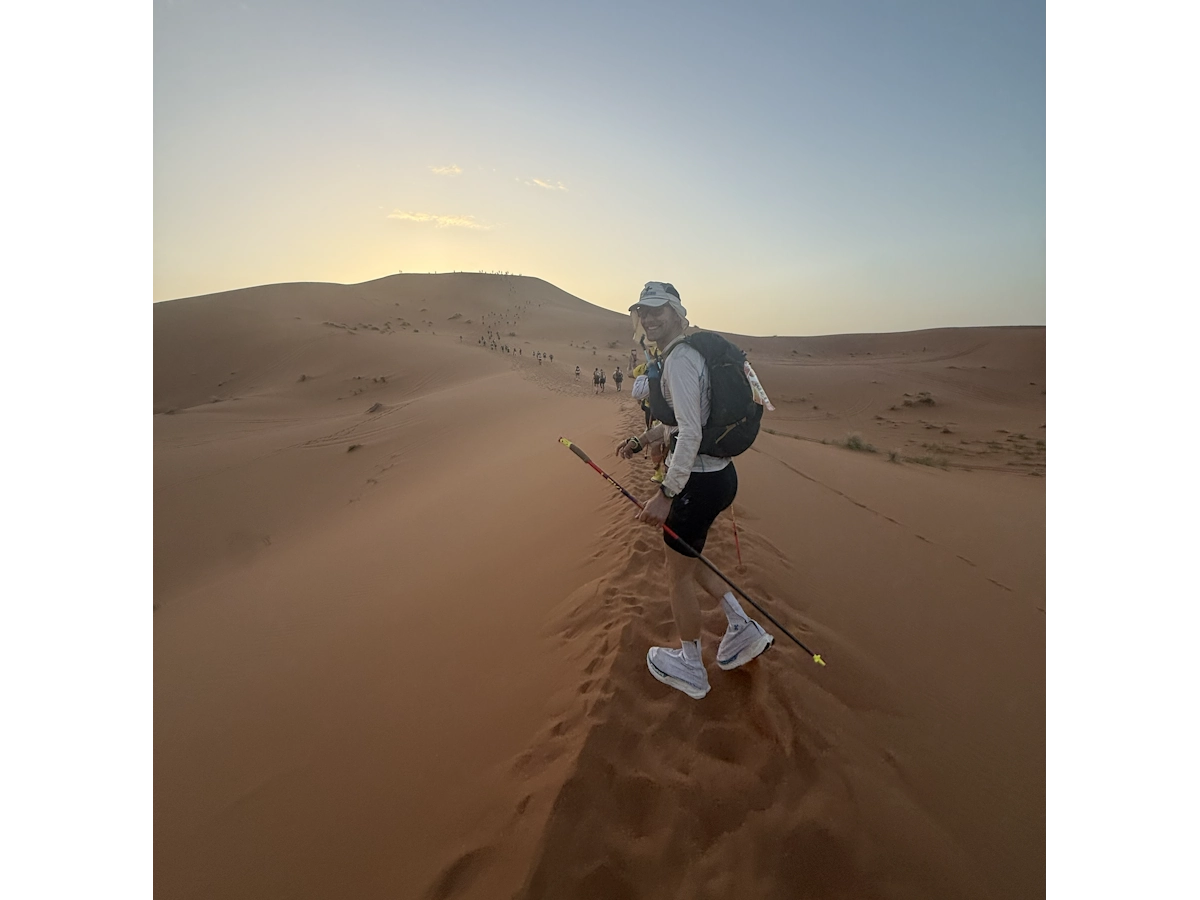
Together we decide to run the last kilometres. Over the dunes this is tough, but I want to keep some pace. It is not far anymore and we are sweating anyway. Mikkel has to let go, but Daniel is strong and runs powerfully with me. It is beautiful to experience this finish moment together. We head towards the finish arch, give lots of high fives and enjoy the music, the speaker and the joy around us. We receive the big golden medal. Incredible. We really did it.
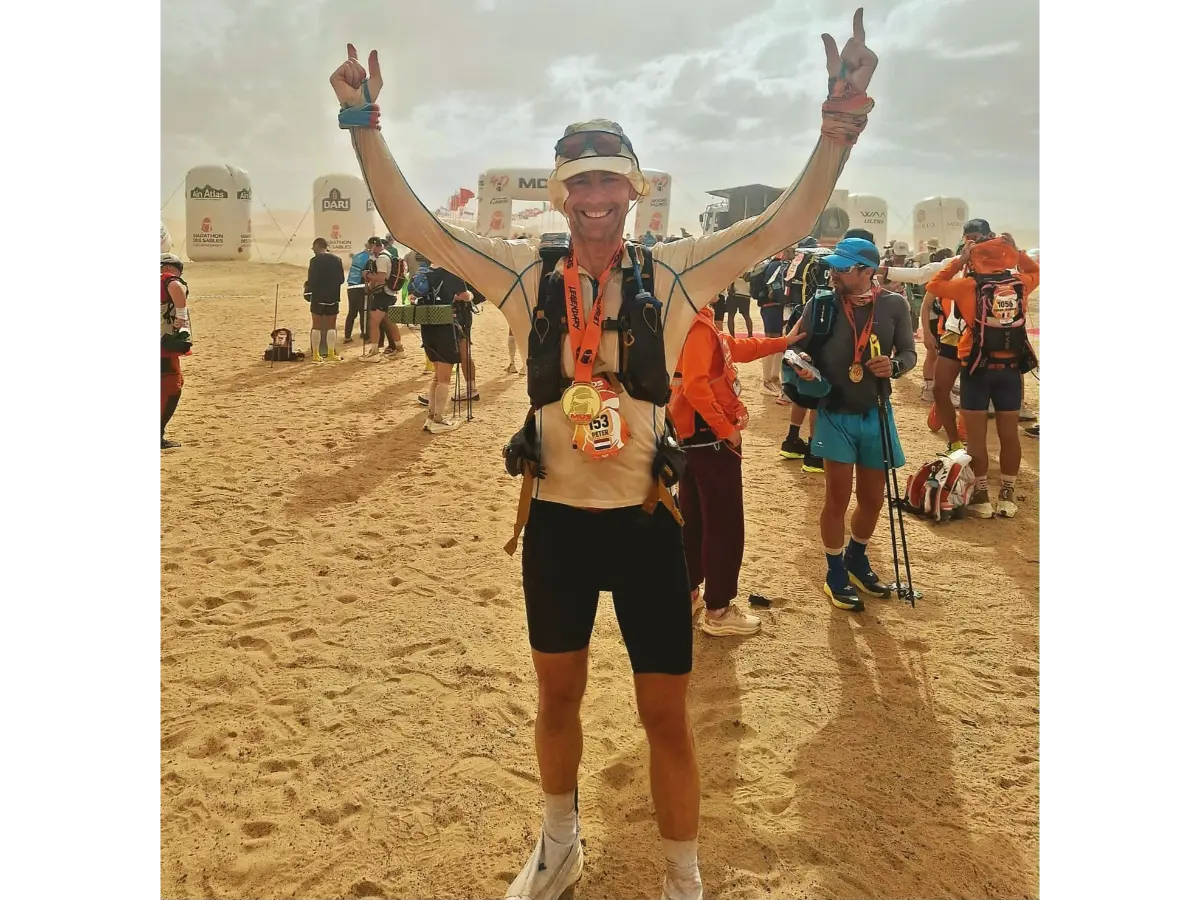
Tears of happiness
Not much later, Menno comes in and we fall into each other’s arms. It is emotional after a week of struggling through the heat of the Sahara. We cry and shout with happiness.
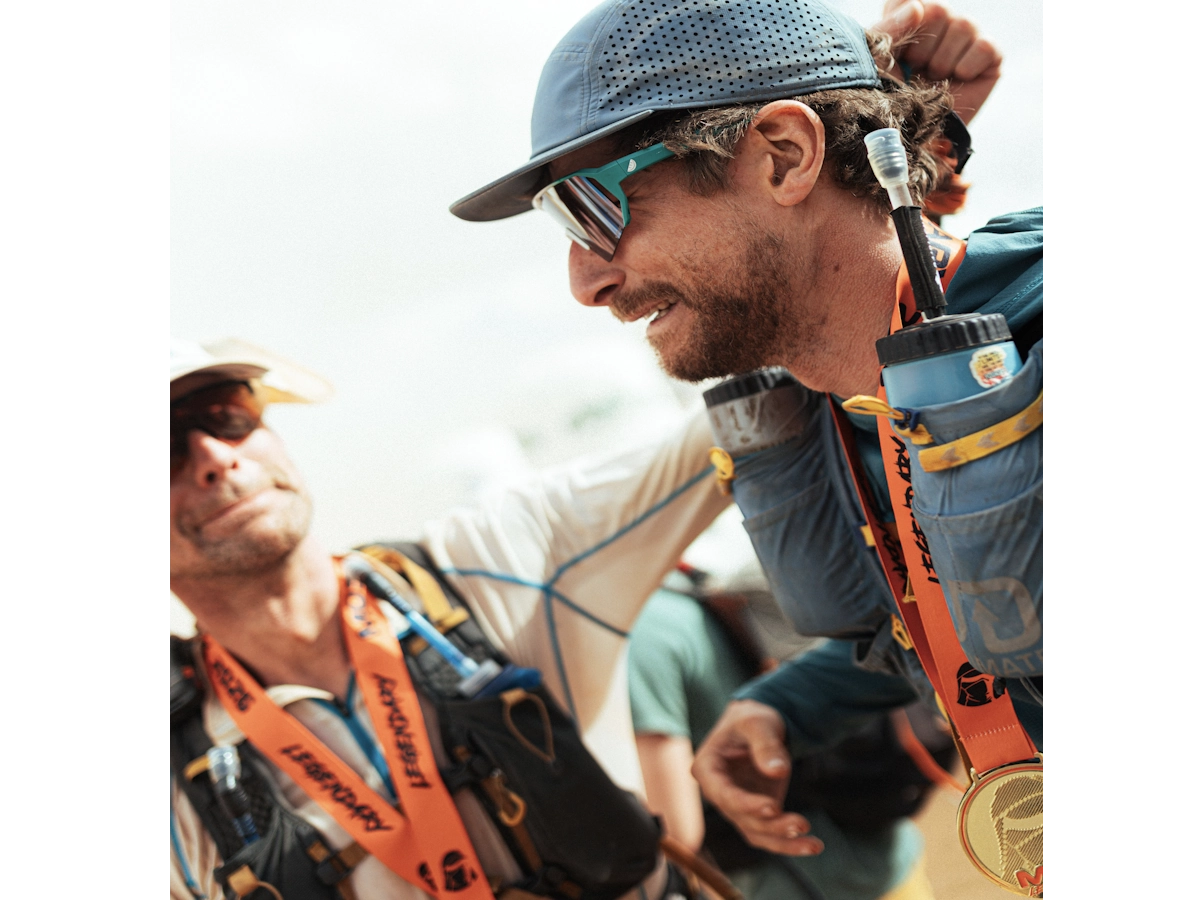
The emotions run high after completing seven days of suffering. Immediately afterwards, a sandstorm breaks out with rain. On the bus back to the hotel we realise: we have tamed the Sahara. Now it is time for beer, and we start by the swimming pool.
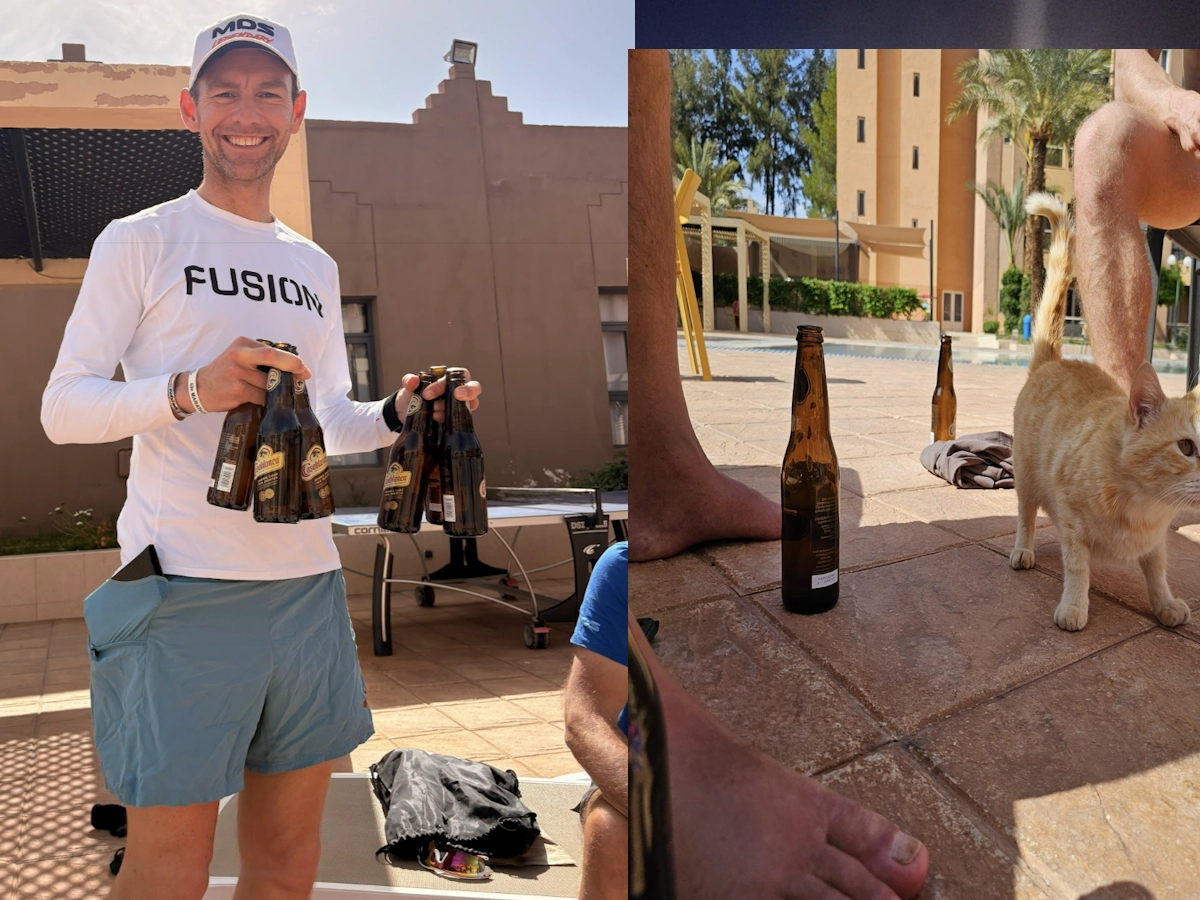
After the finish there is finally time to relax and enjoy.
Photos
A few more beautiful images from the past days.
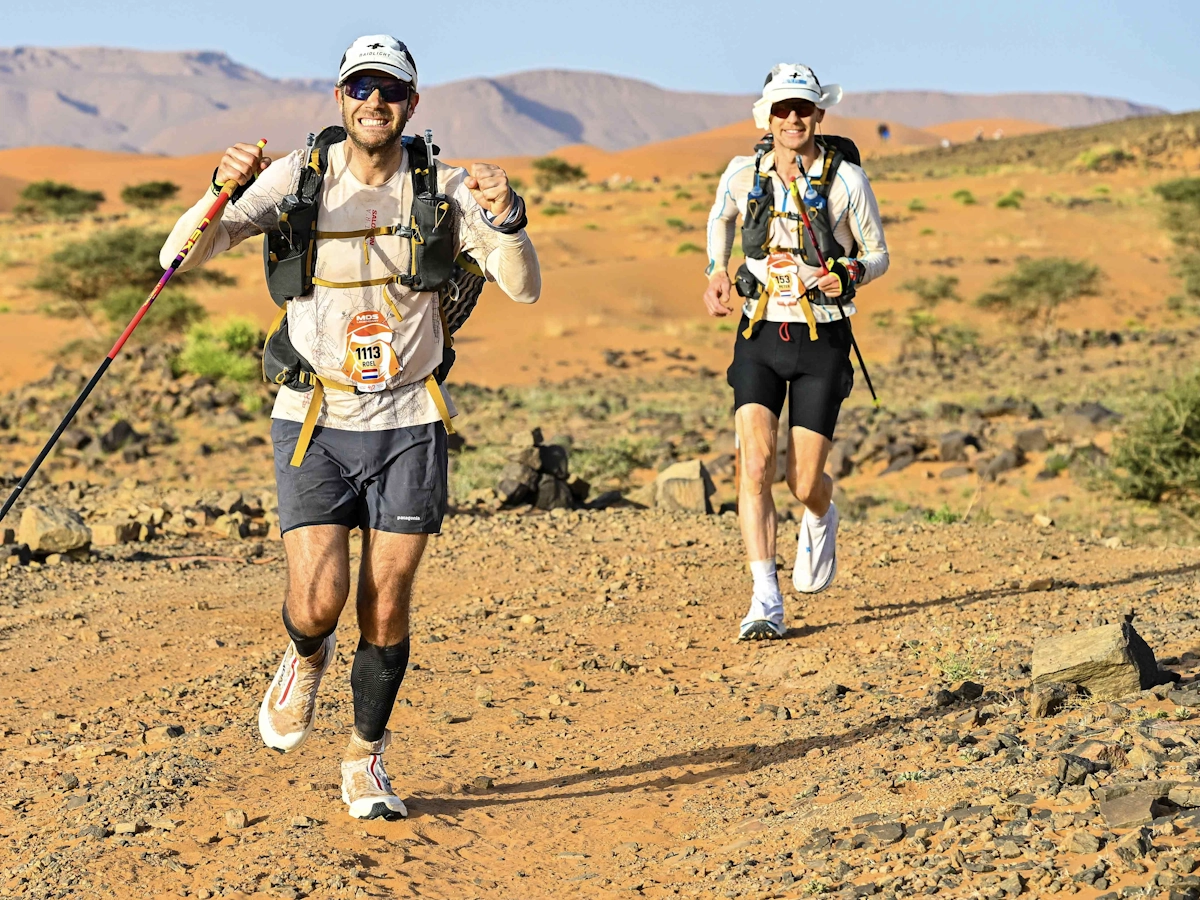
Running together simply makes the long kilometres in the desert a little more bearable.
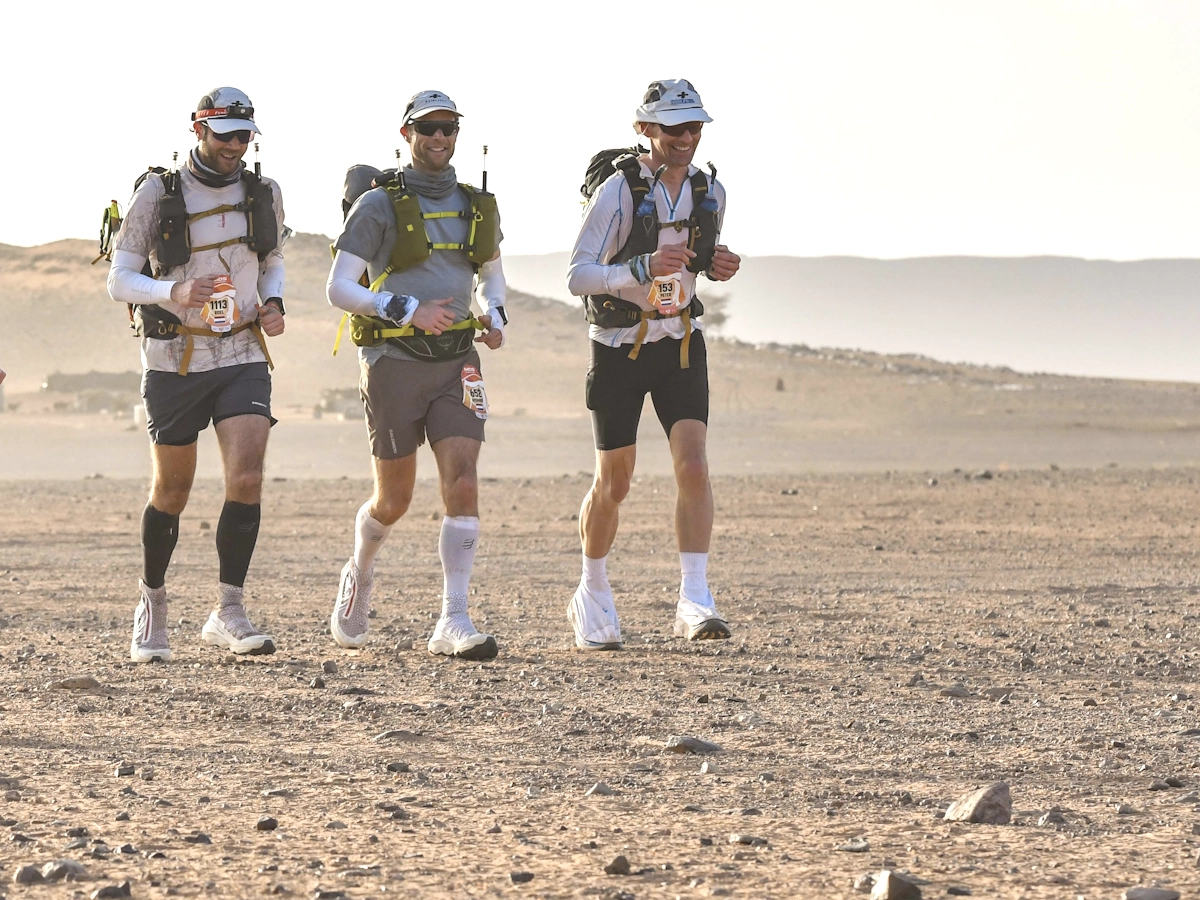
Despite the heat and sand, there is still plenty of room for fun along the way.
Keeping pace together helps you hold a rhythm during the stage.
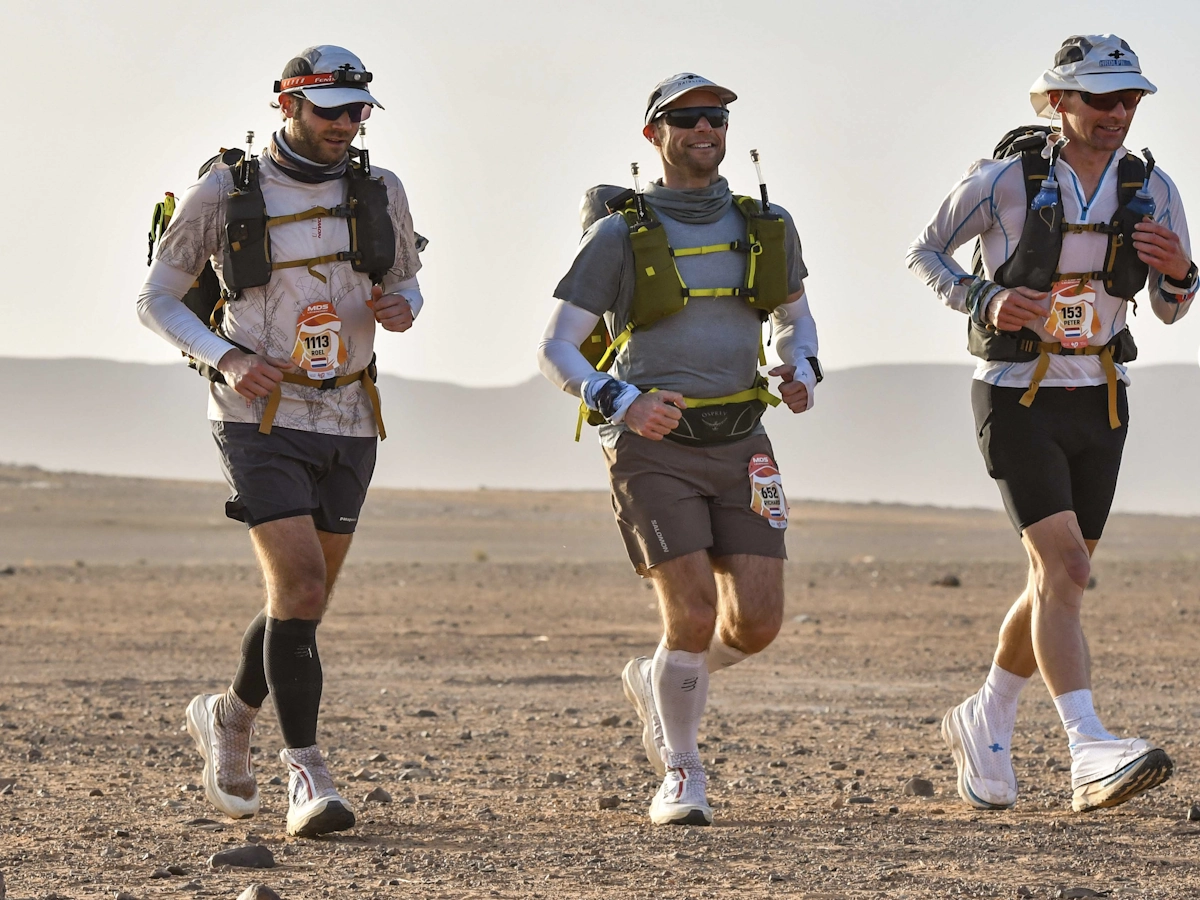
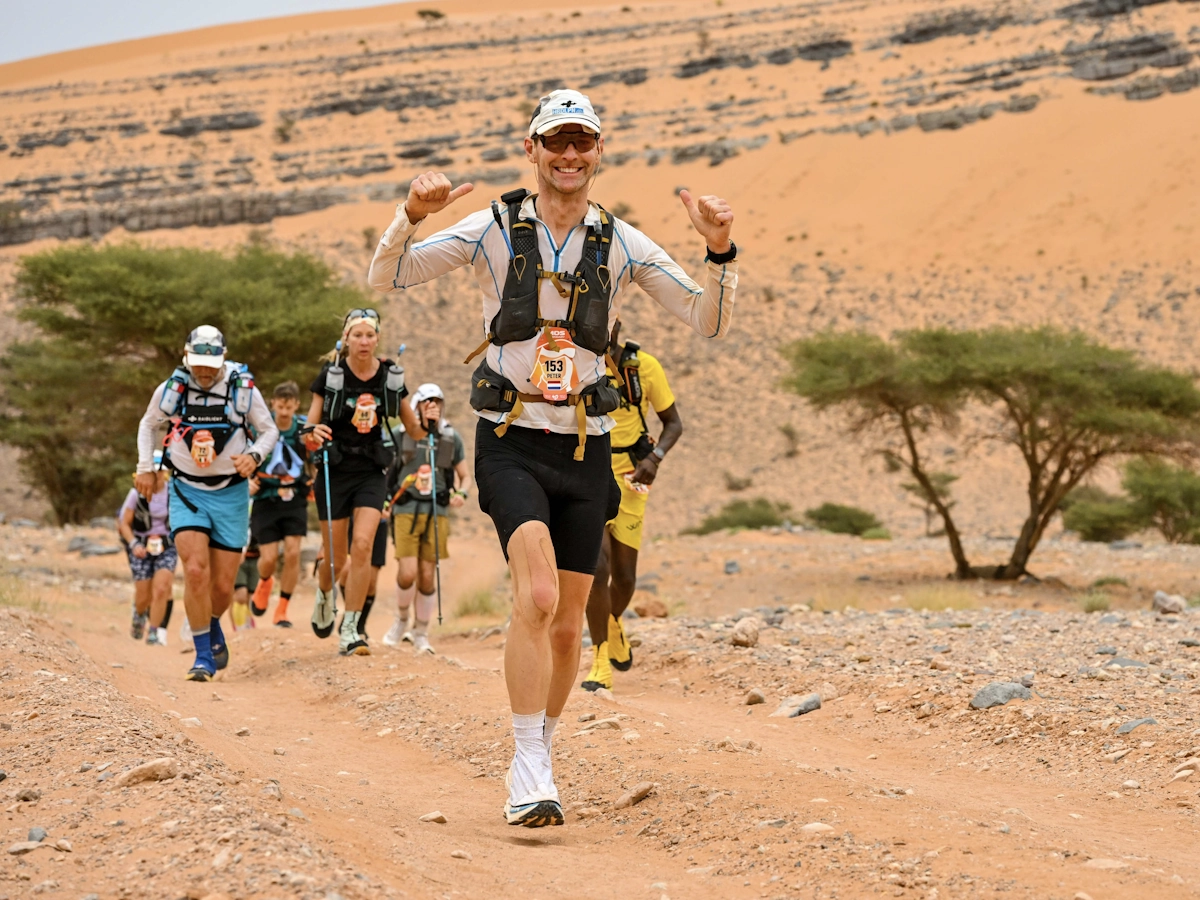
Moving in a small group often gives you just that little bit of extra motivation.
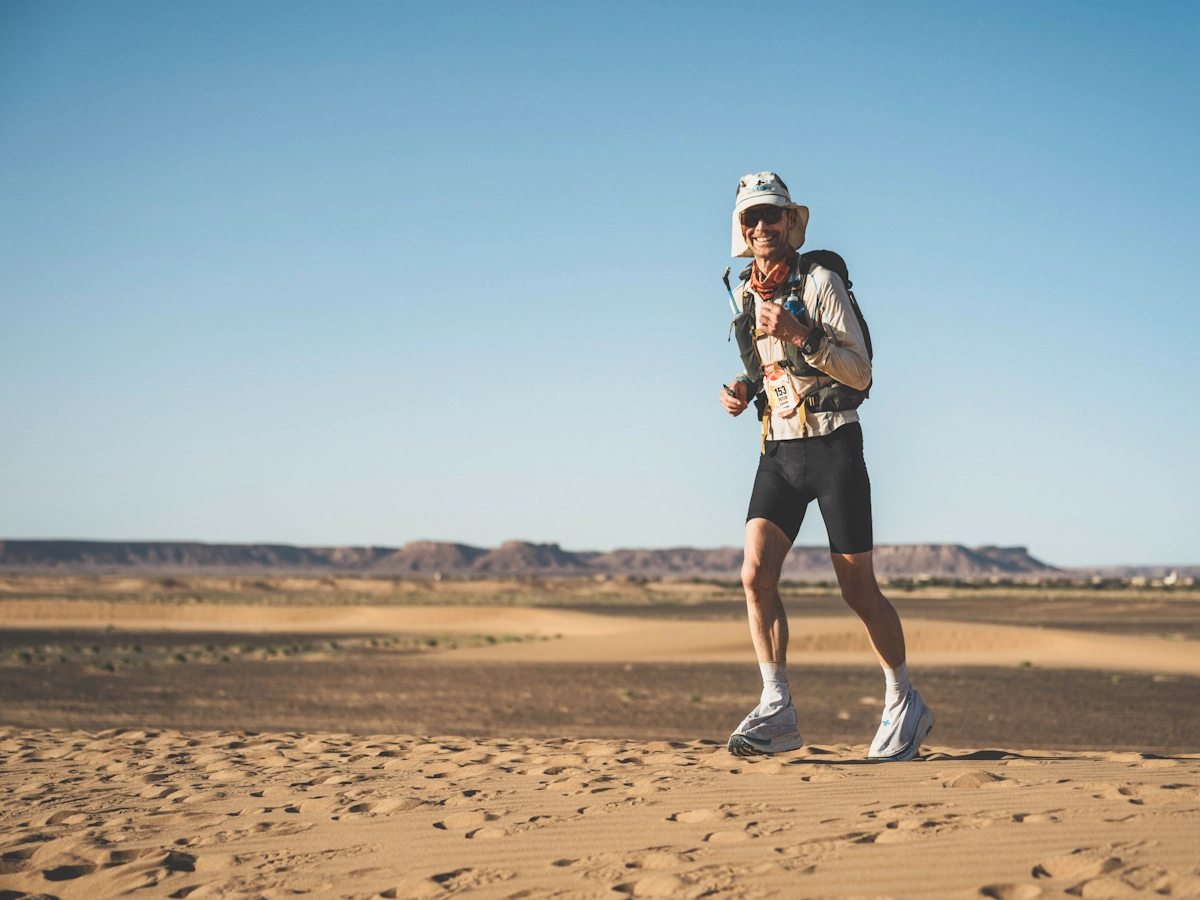
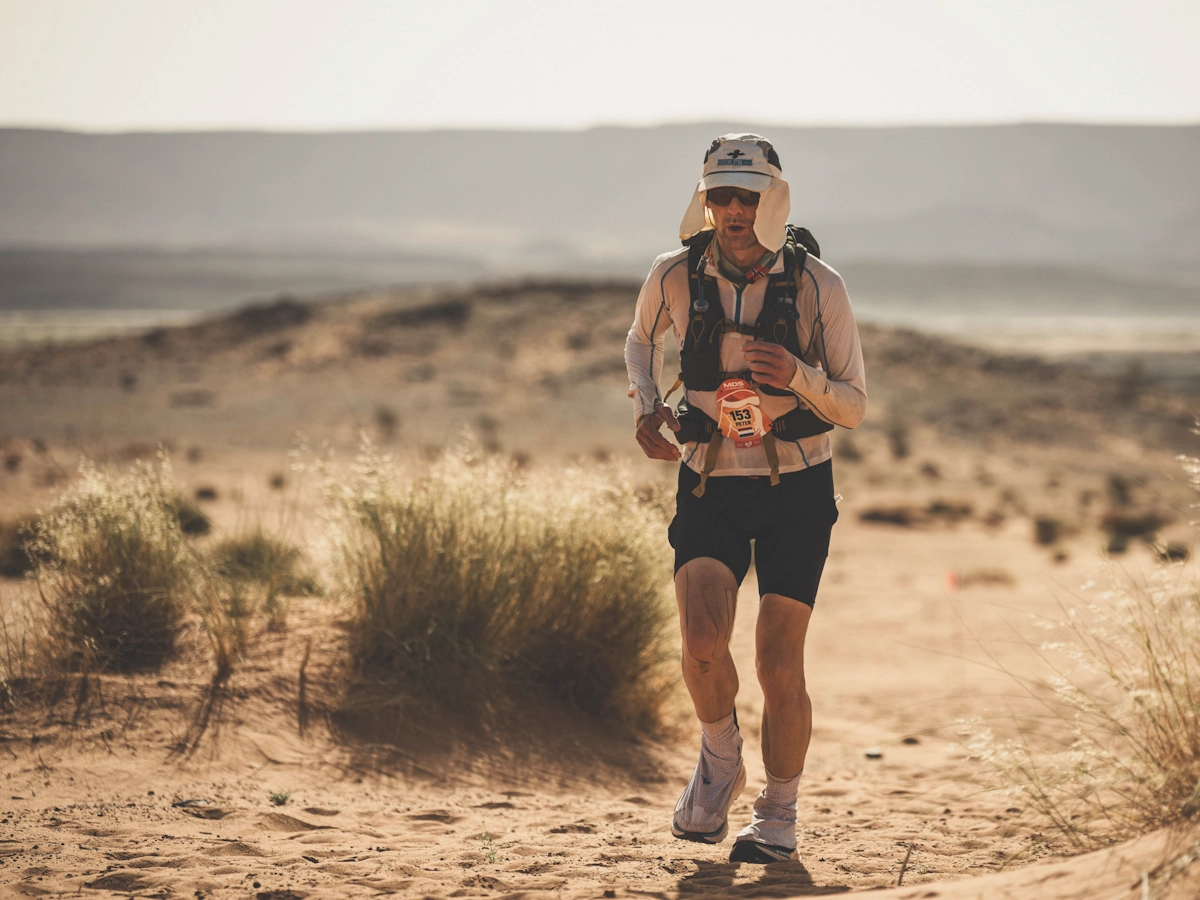
Sometimes you are completely alone with yourself and the endless desert.
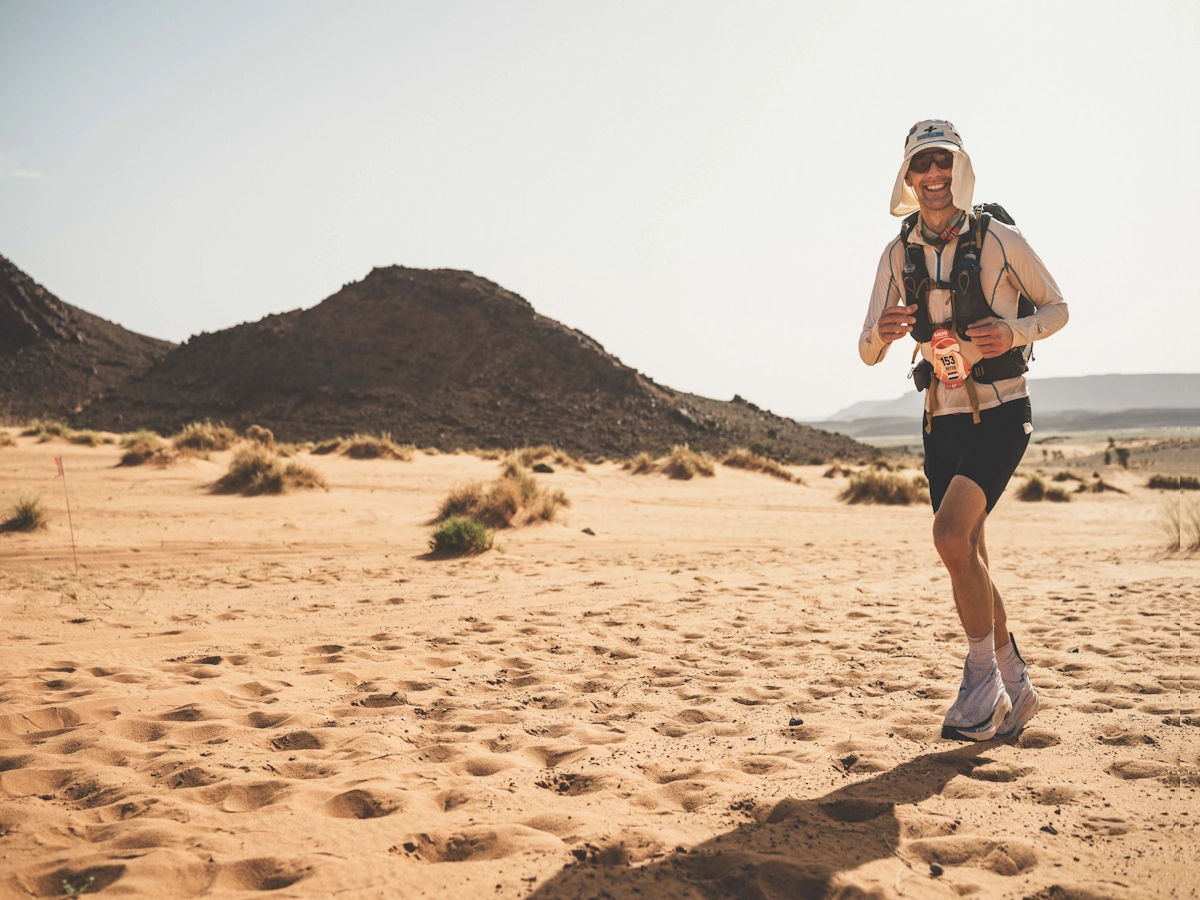
The silence and emptiness make these moments both hard and special.
Every step through the sand takes extra energy and determination, especially when you are alone.
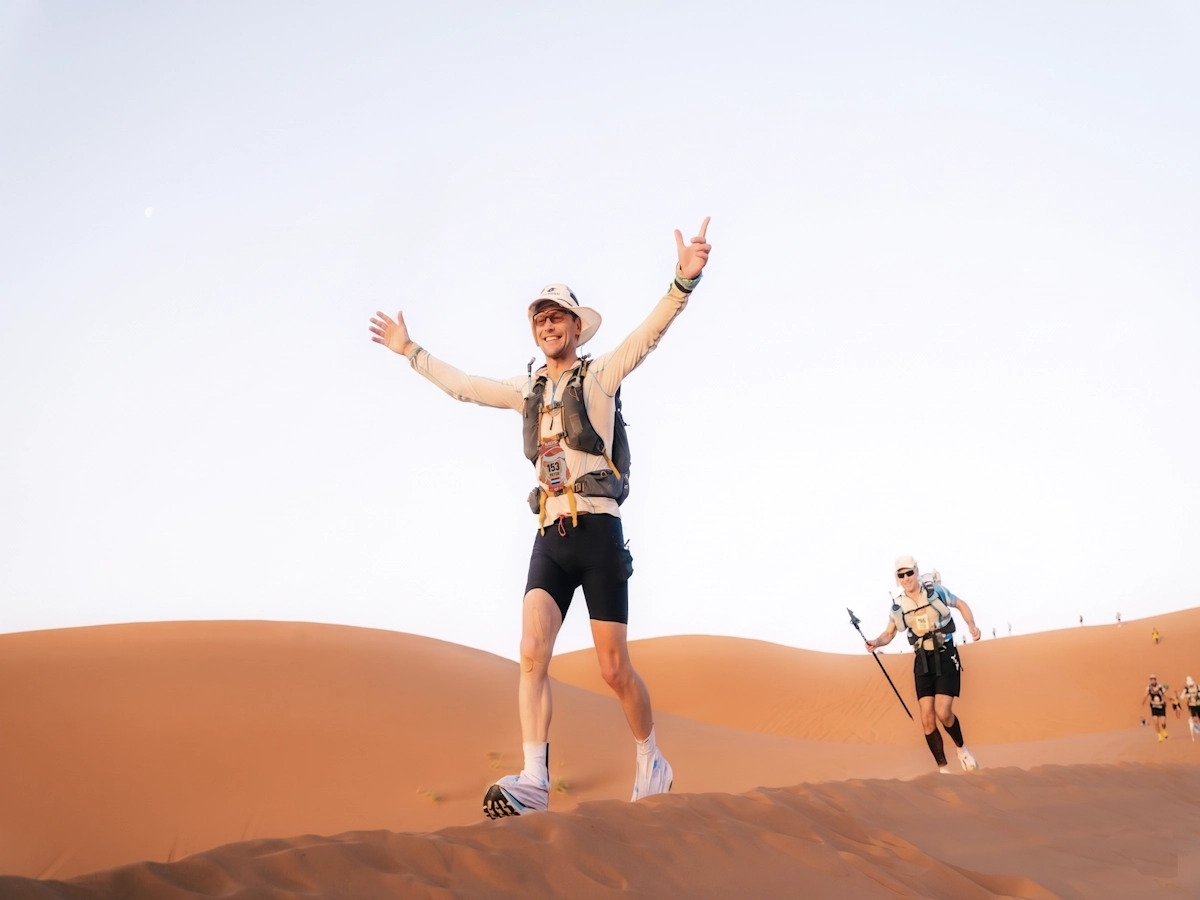
The vastness of the Sahara makes every kilometre incredibly impressive, and I feel very small in this hot desert.
Choosing your own pace is crucial if you want to keep going in this extreme challenge.
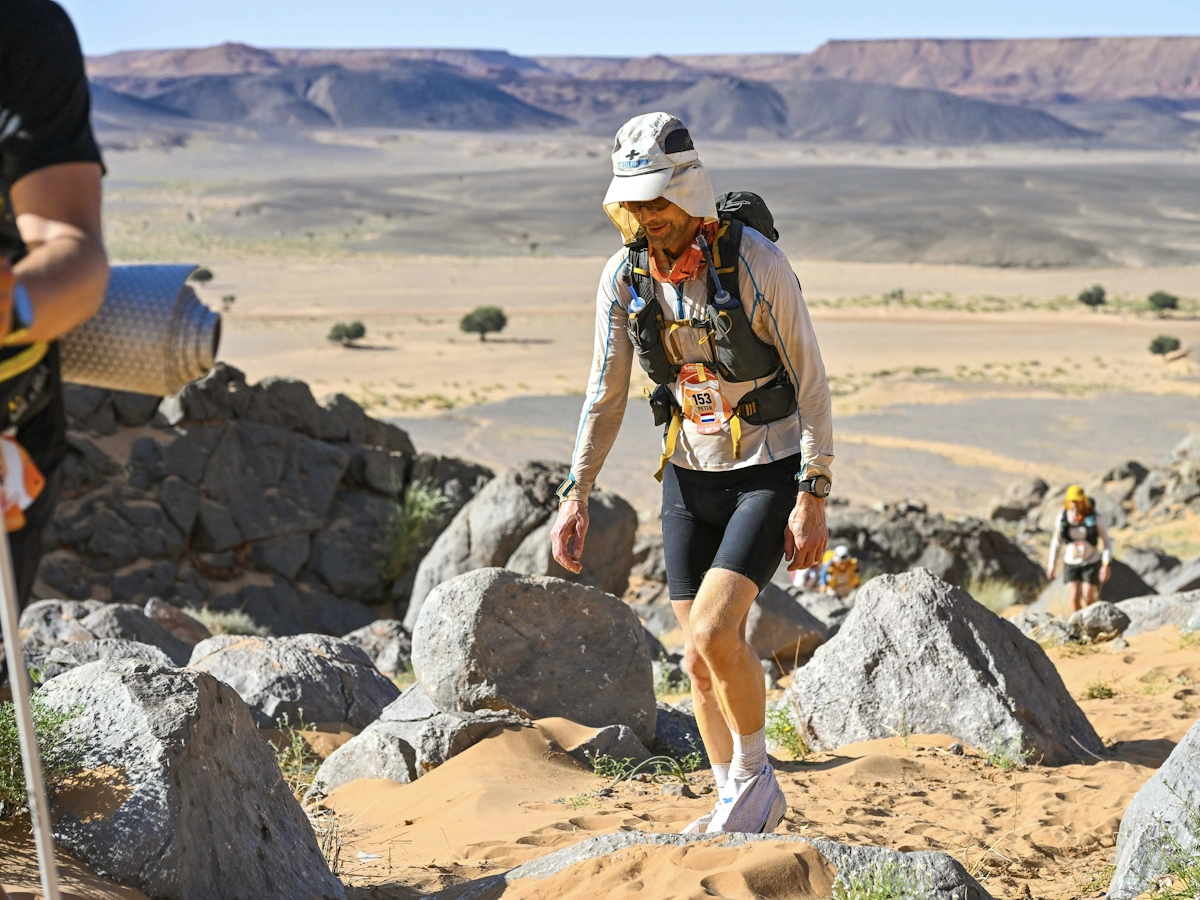
The terrain constantly changes between soft sand and sharp rocks.
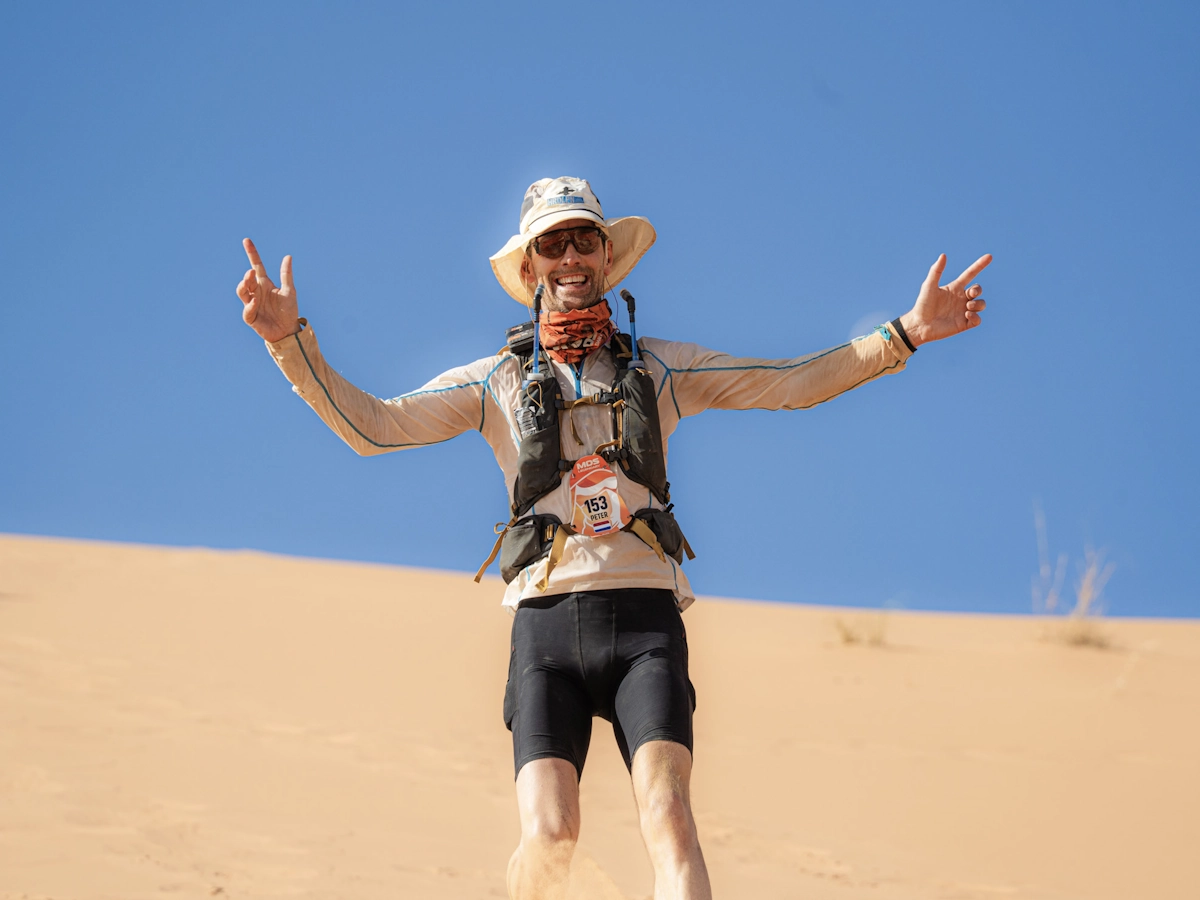
Between the suffering, there are also moments of intense enjoyment.
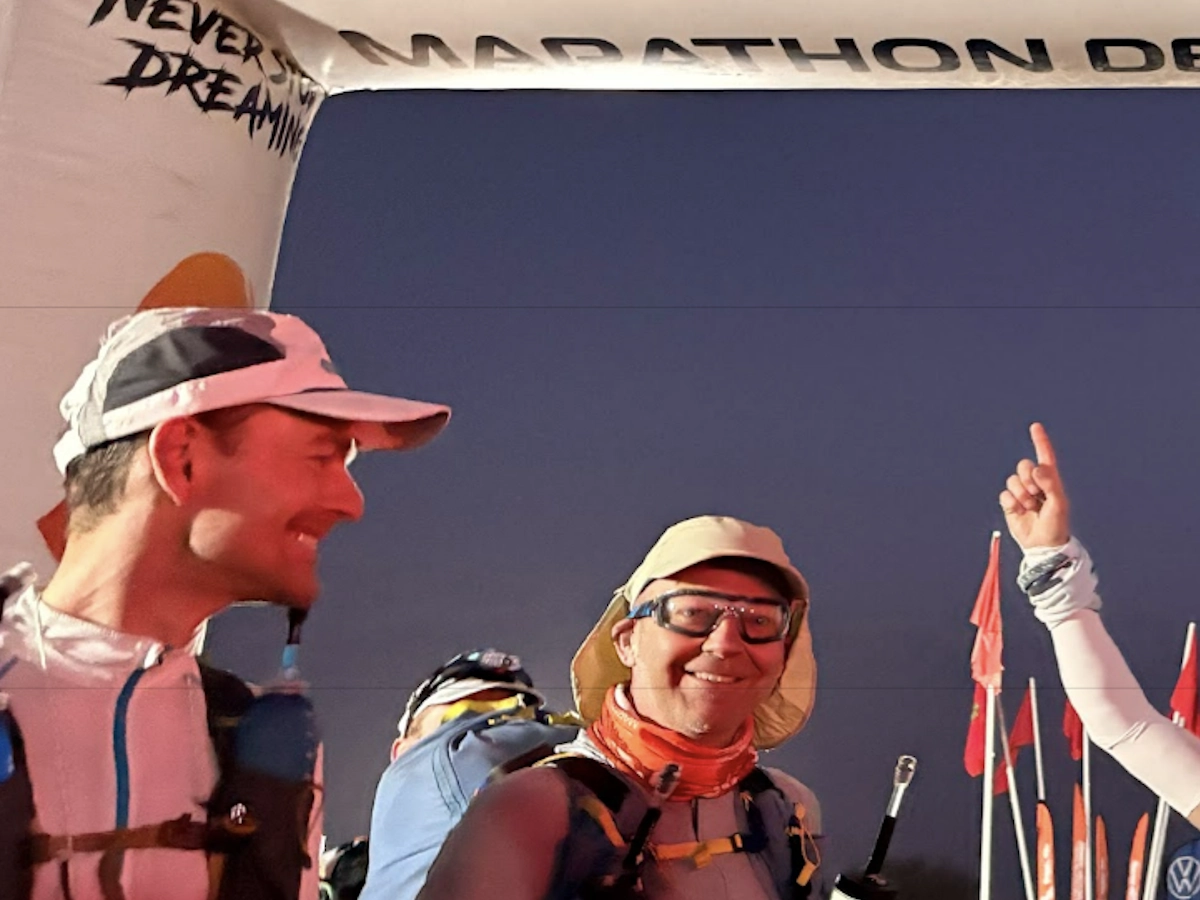
The start of each stage feels like the beginning of a new adventure.

All food and gear have to be carefully organised in camp.
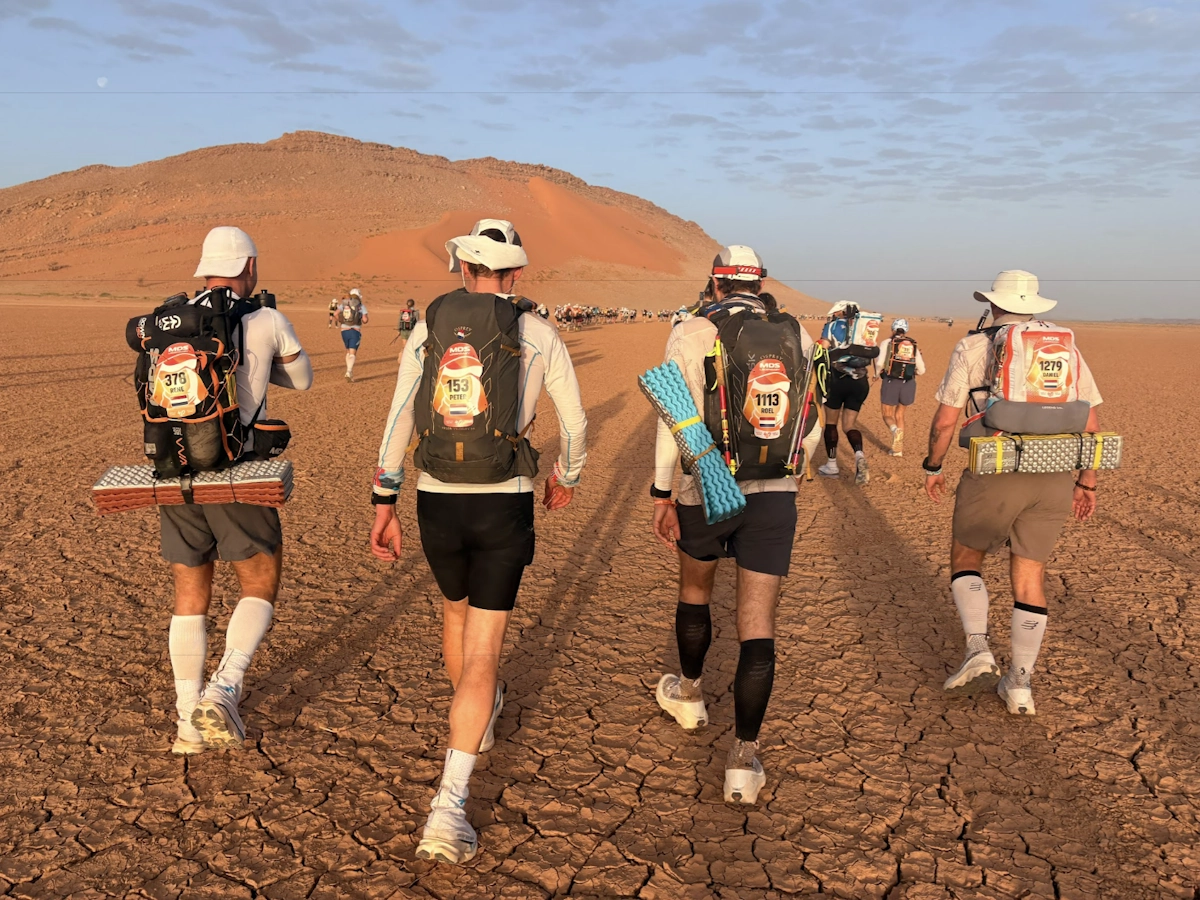
Moving through the stages as a team gives extra strength.
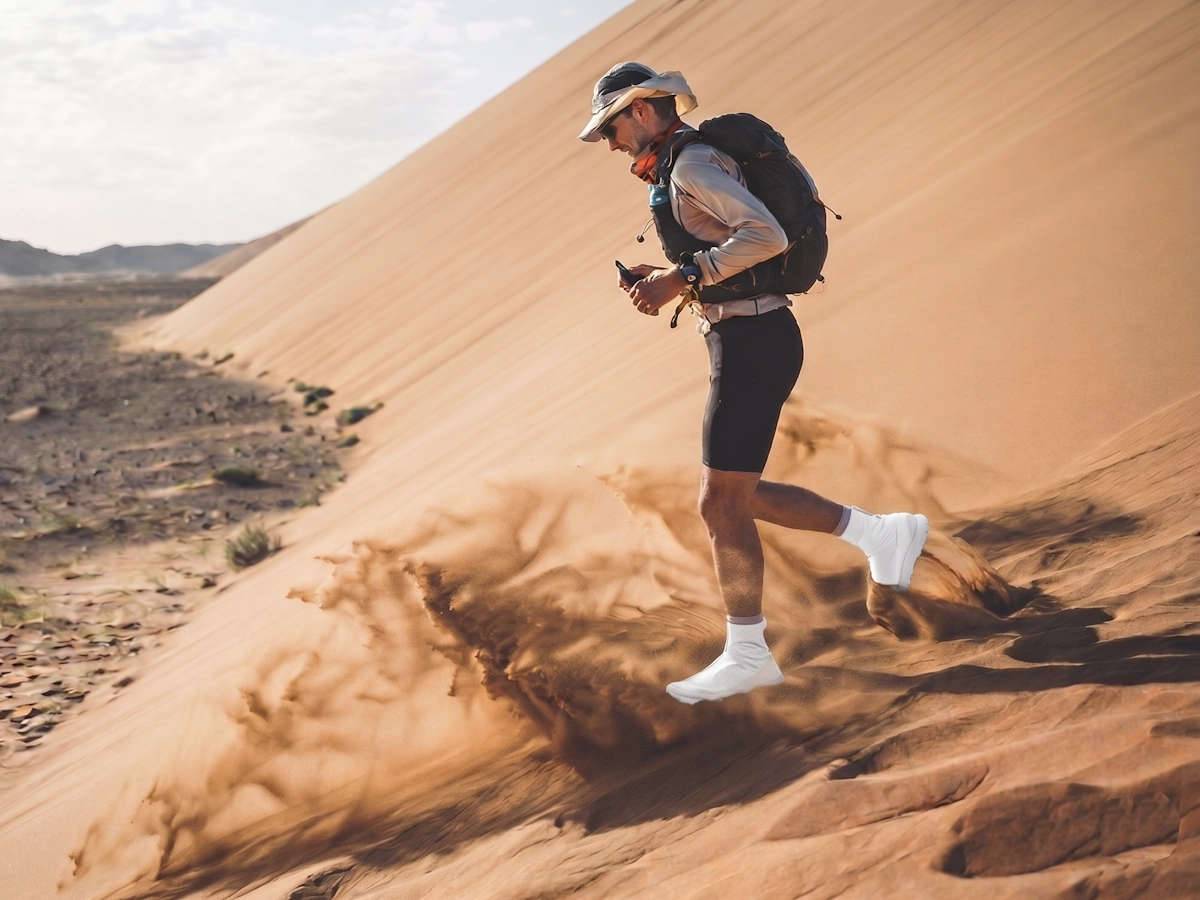
On a descent, you can sometimes pick up speed in the sand.
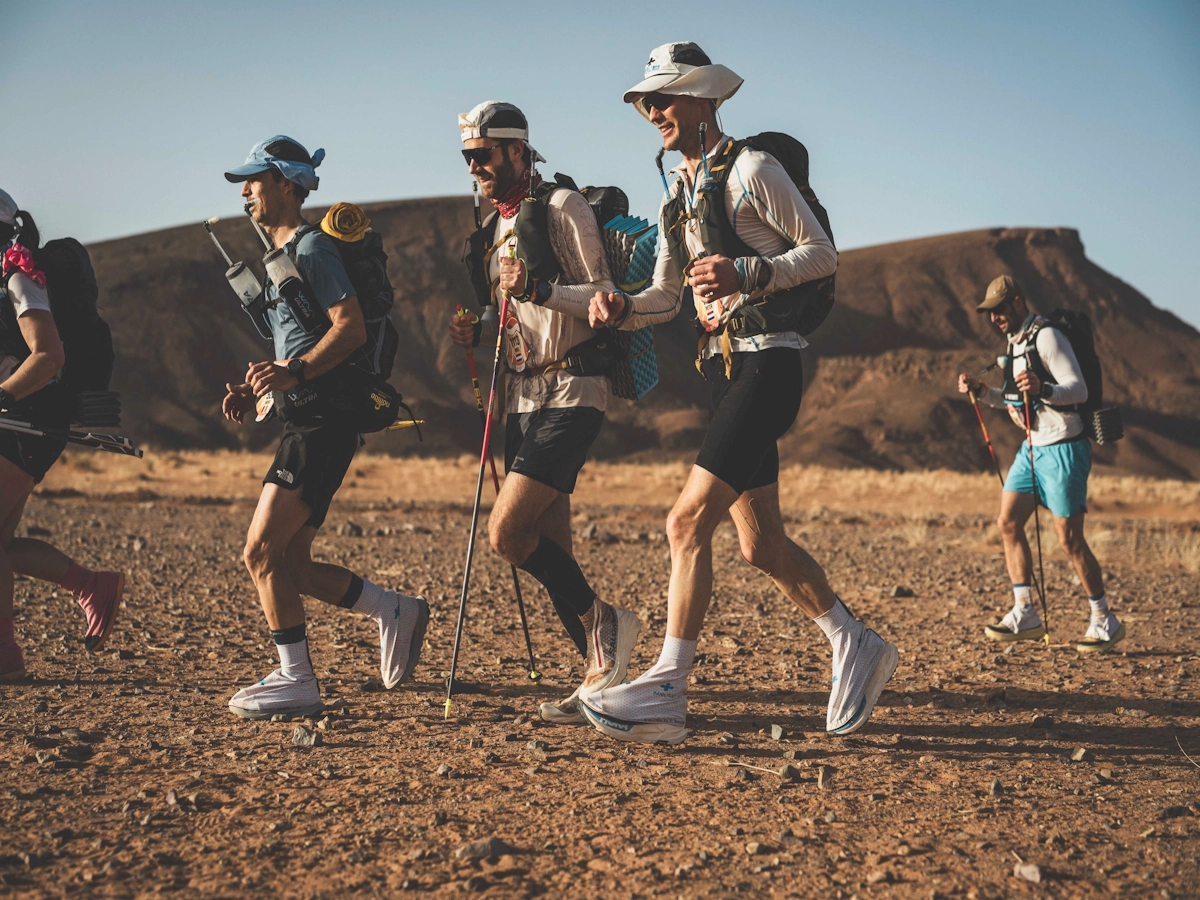
Staying together helps you get through difficult moments.

The rocky sections require technique and concentration.

Even in Morocco, snow outside the desert can surprise you.
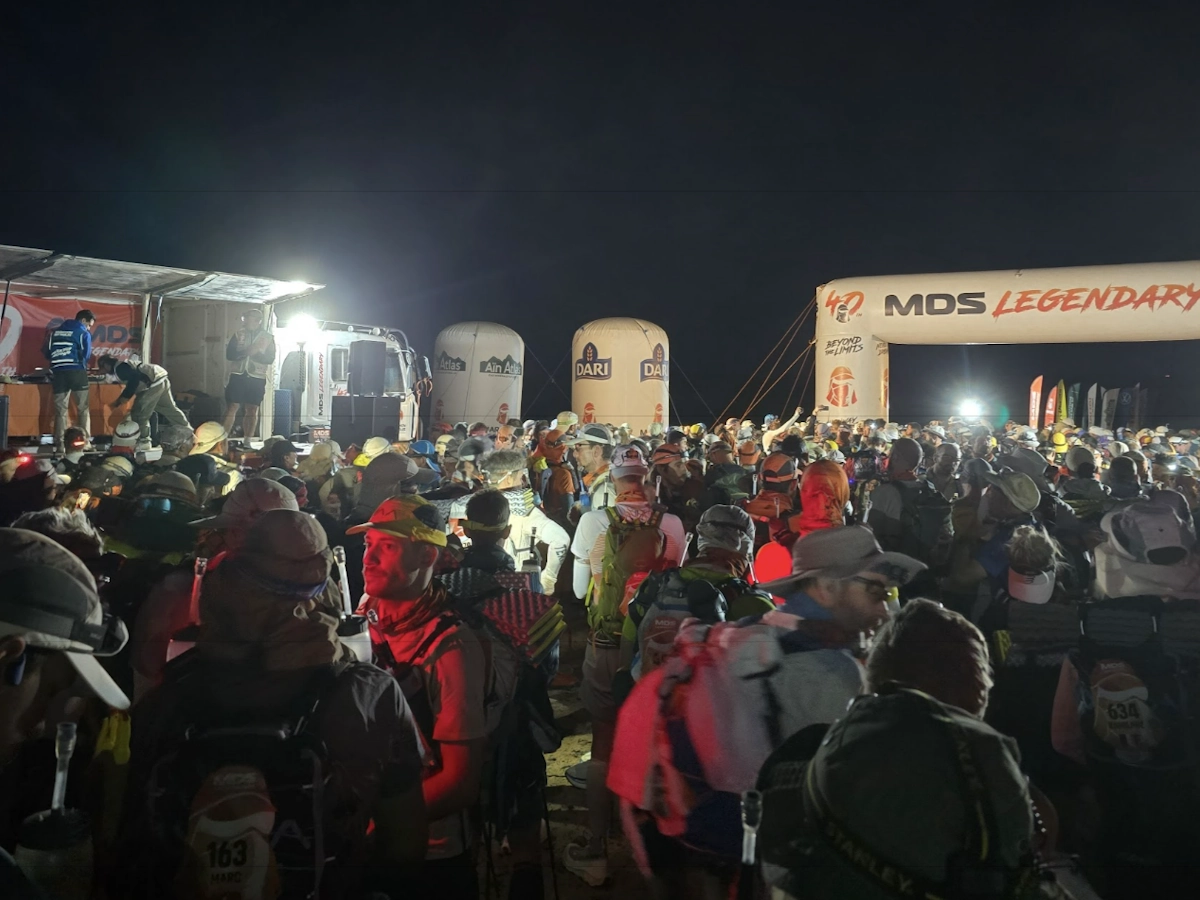
The start line marks the beginning of another tough day in the heat.
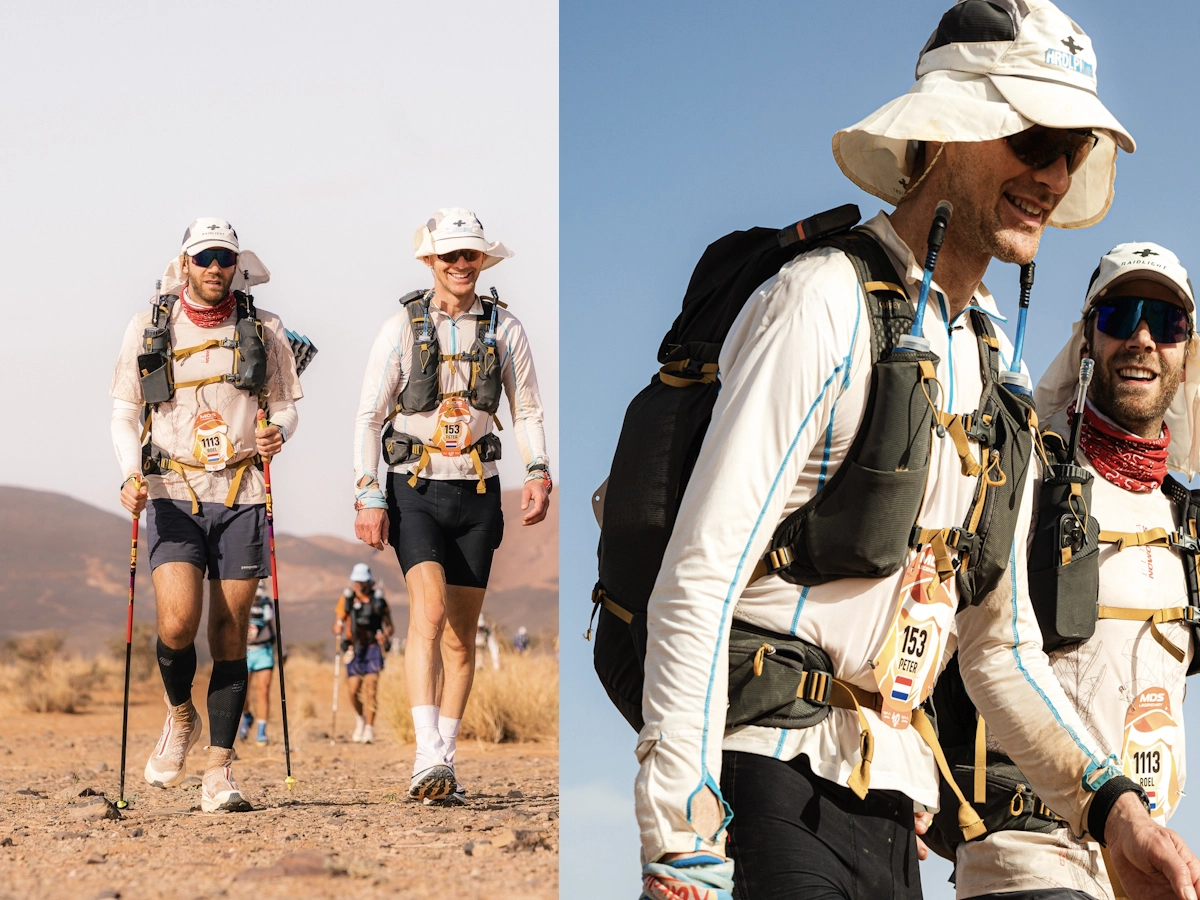
Along the way, you support each other to reach the finish.
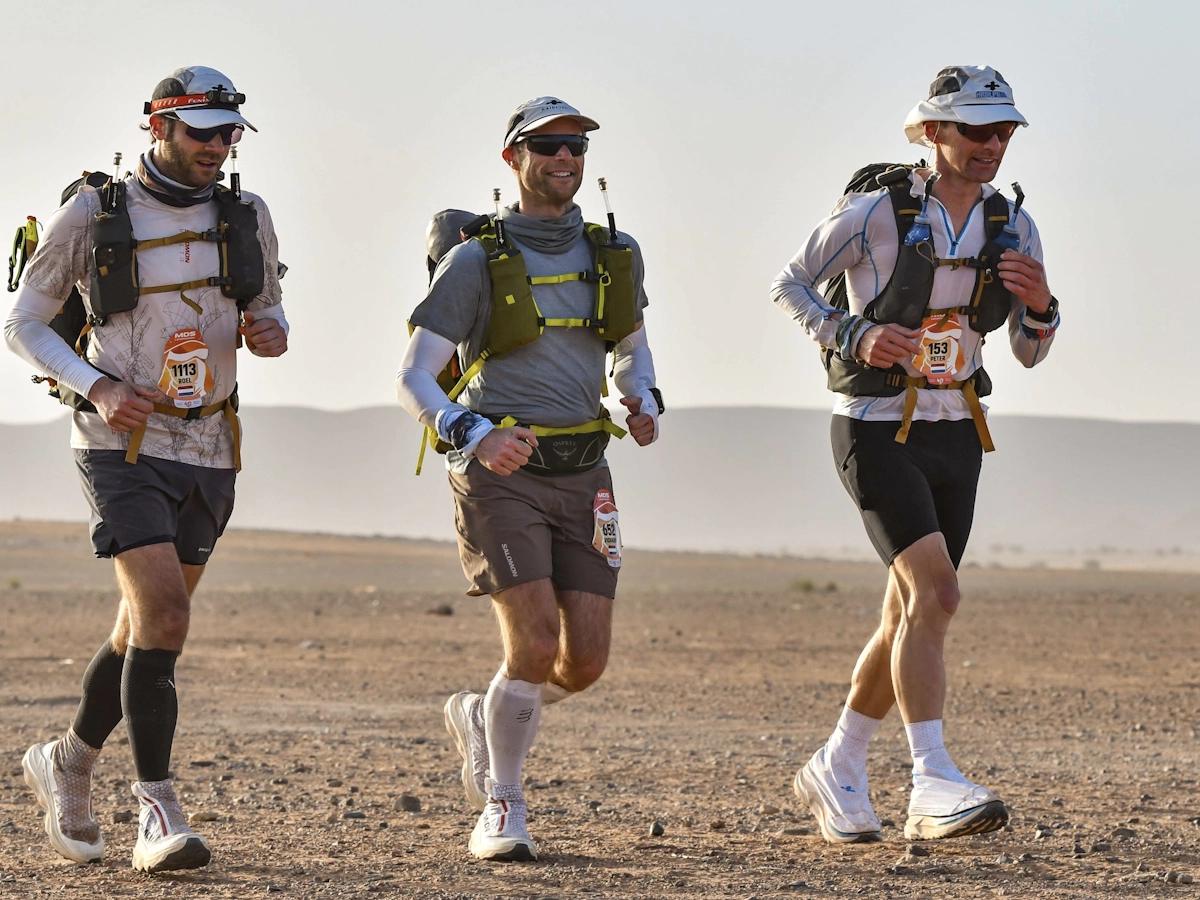
Running together makes the desert feel slightly less endless.
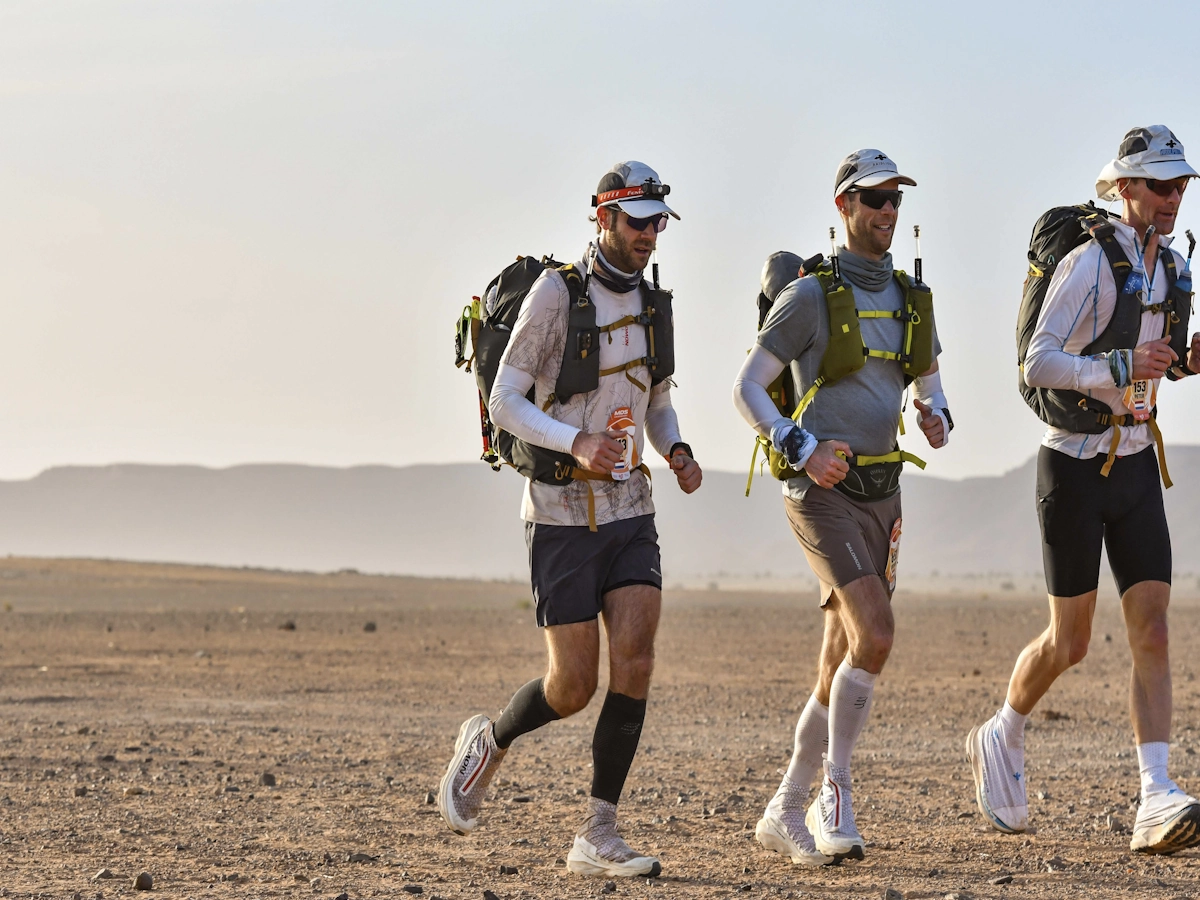
Pushing through as a team makes this challenge unforgettable.
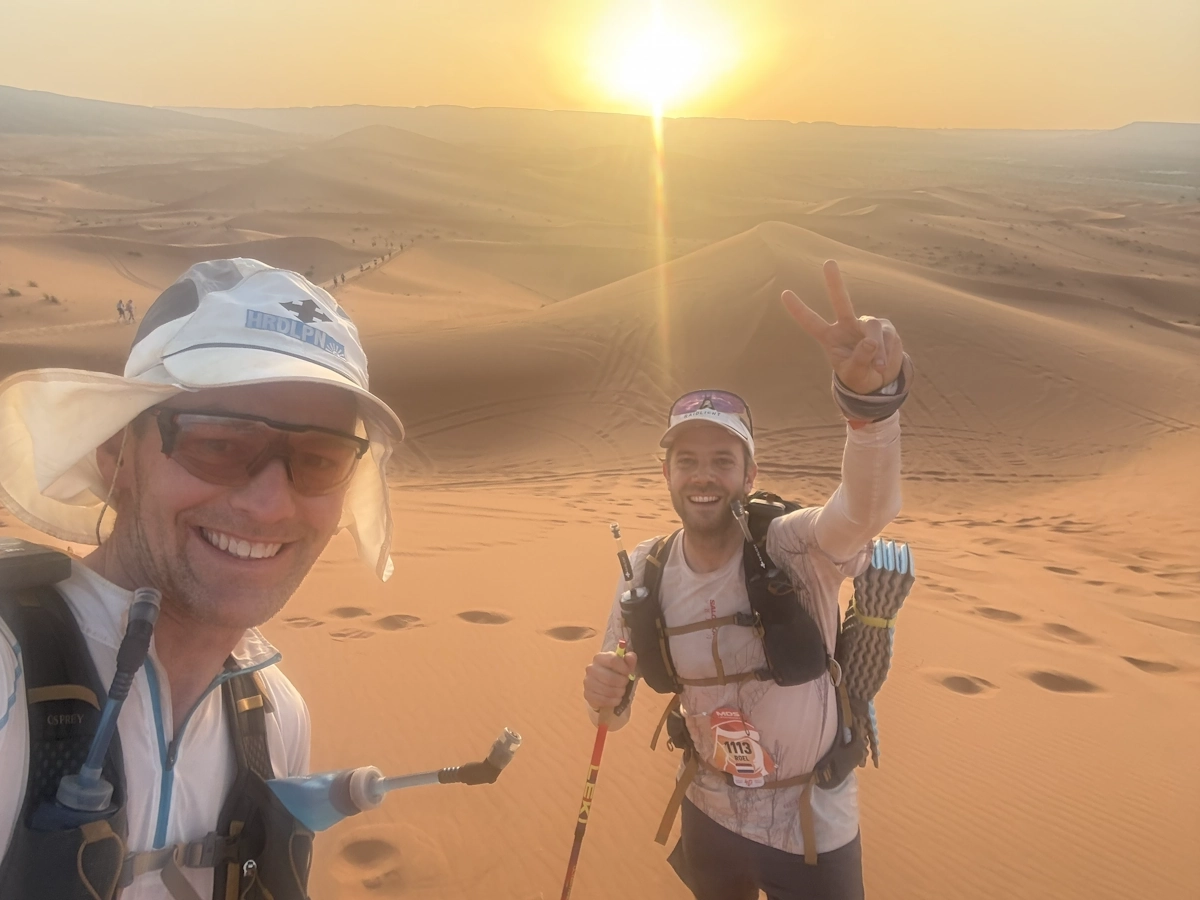
The moment I reach the finish after days of suffering.
Frequently asked questions about the MDS
Let us start with a few quick yes-or-no questions I often get about my participation.
Did you think about quitting?
Yes.
Is this healthy?
No.
Is something like this pointless?
No.
Was this the most beautiful thing you have ever done?
Yes.
Was it life-changing?
Yes.
Were you scared?
Yes.
Did you go alone?
Yes.
Was it hard?
Yes.
Did you sing along to Highway to Hell before 5 in the morning?
Yes.
Can you sing?
No.
Did you make friends?
Yes.
Did you miss people?
Yes.
Did you get blisters?
Yes.
Did you get a lot of blisters?
Yes.
Was it really more than 250 kilometres through the Sahara?
Yes.
Is that not too far?
Yes.
Did you see people cry?
Yes.
Oh, did you see many people cry?
Yes.
Did you cry yourself?
Yes.
Is the medical check just a formality?
No.
I am thinking about signing up and this is not exactly a promotional story. Should I still do it?
Yes, at least if your doctor says it is okay.
What was the bivouac experience like?
This needs a longer answer. My experience was truly unique, and it is so much more than a one-day race. The bivouac is half the challenge. You sleep outside in a small, open Berber tent with seven others, without a shower and without any kind of luxury. Life there is reduced to the absolute essentials. Since I returned home, these have been the questions I have been asked most often.
Was it hot in the Sahara?
On day one I found it terribly hot. Full-on sweating with an 8.4 kilo bag on my back, and in some sections the wind was behind us. That is not pleasant at all, because then the wind does not cool you down. But yes, what do you expect when you do a multi-day ultra in the Sahara? It is not the North Pole 😉. From day two onwards, I noticed that I was getting more used to it. My heat preparation had been fairly minimal because of the busy situation at home. I was allowed to use a climate chamber at Dawson, thanks again, and I went into an infrared cabin a few times wearing all my clothes. Was that enough? No, absolutely not. But it definitely helped me absorb the first shock.
Do participants die during the race?
Yes, sadly they do. The history of the Marathon des Sables has now seen four tragic deaths in total, with participants dying during the race in 1988, 2007, 2021, when a French man in his fifties suffered cardiac arrest, and unfortunately also during the most recent 2026 edition, when a French runner named Grégory became unwell during the Legendary stage on Wednesday 8 April and later passed away.
What happened to Mauro Prosperi?
This is a remarkable story, but it really happened. Italian runner Mauro Prosperi nearly lost his life during the 1994 edition. He got lost in a sandstorm and wandered through the desert for nine days. Yes, nine days. He survived by drinking, among other things, bat blood and his own urine before being found in Algeria. Although he was officially listed as missing and many assumed he was dead, he survived.
How does water work?
Cooling yourself in the desert
Finding ways to cool down in the desert is simple and complex at the same time. Of course, drinking cold water helps, but that is not enough and it can even be dangerous if you only drink water. Your blood becomes diluted. You need energy and salt or sodium as well. What works better is cooling your neck. The medical staff, the orange jackets, do this after refilling your bottles. They also look deeply into your eyes to check whether you are overheated or absent.
I let ice-cold water be poured into my neck and over my head. I also carried two buffs. One went inside my cap, so the cold water dripped over my face. Be careful: take your glasses off first or you will not see anything. The other buff went around my wrist. This helped keep my core temperature just a little lower. I repeated this ritual at every checkpoint, roughly every 7 to 10 kilometres. It gives you a small advantage over runners who do not want to get wet.
Blisters and pain: the reality of your feet
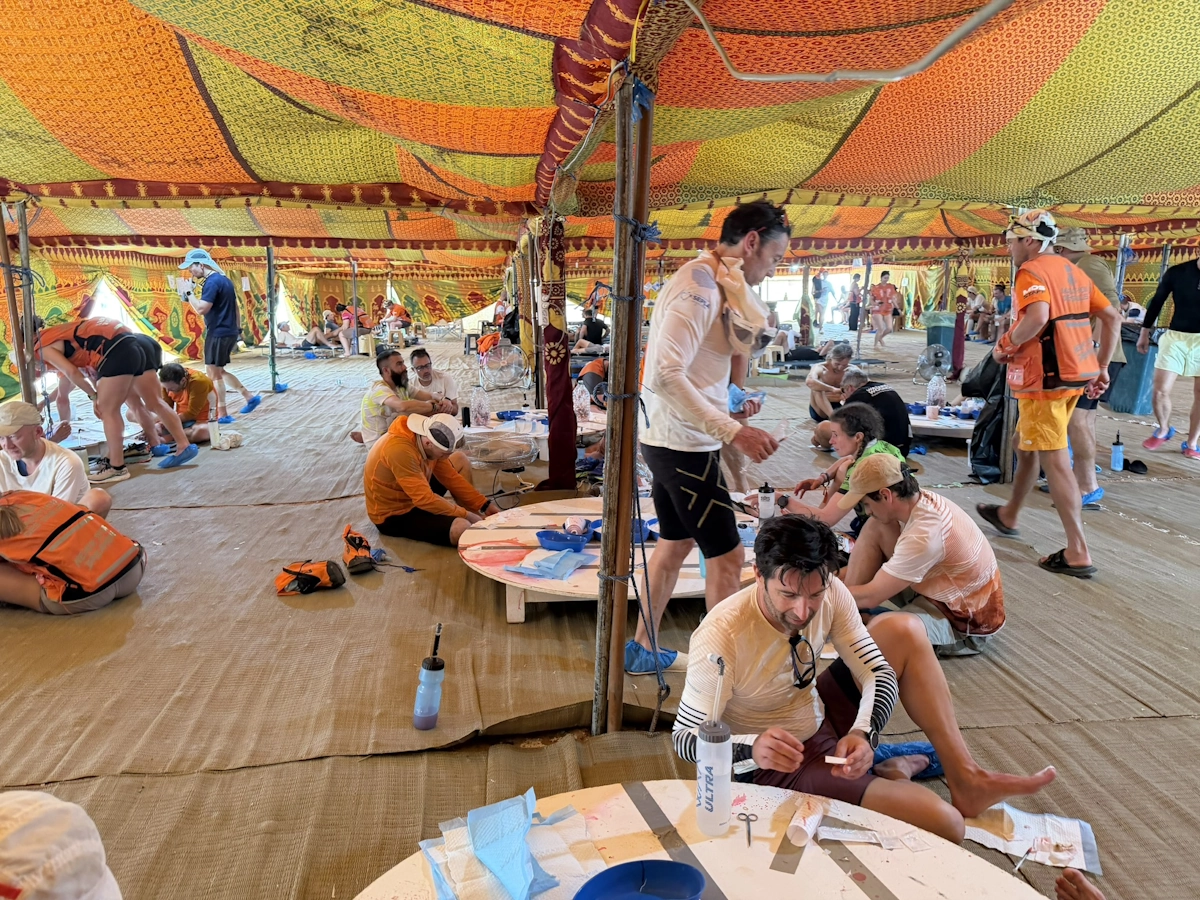
I get many questions about blisters. Yes, they hurt, but you quickly forget them when you are moving through the landscape. The Sahara is not just sand. It is varied, with beetles, desert mice and sharp stones. Blisters are treated in the medical tent. After they have shown you once, you are expected to be able to do it yourself. Believe me, I had to do it often 😉. At this moment in the race it was not even that busy in the medical tent, but you already get a clear idea of what is coming. It is also extremely hot inside this large, fairly enclosed tent.
Was it fun and beautiful?
My answer is a full yes. I have quite a bit to compare it with, from Ironman, the Elfstedentocht, self-organised 10-day cycling trips through Europe and around fifty marathons, but the MDS is the most beautiful sporting event I have ever completed. It is the ultimate combination of physical challenge, deep pain and extraordinary beauty. Seven days in a tent without Wi-Fi, phone or laptop. Just you, the desert and the people around you. You see the most spectacular sunrises and starry skies. The real beauty was also in the people: faces marked by pain, but full of pure determination.
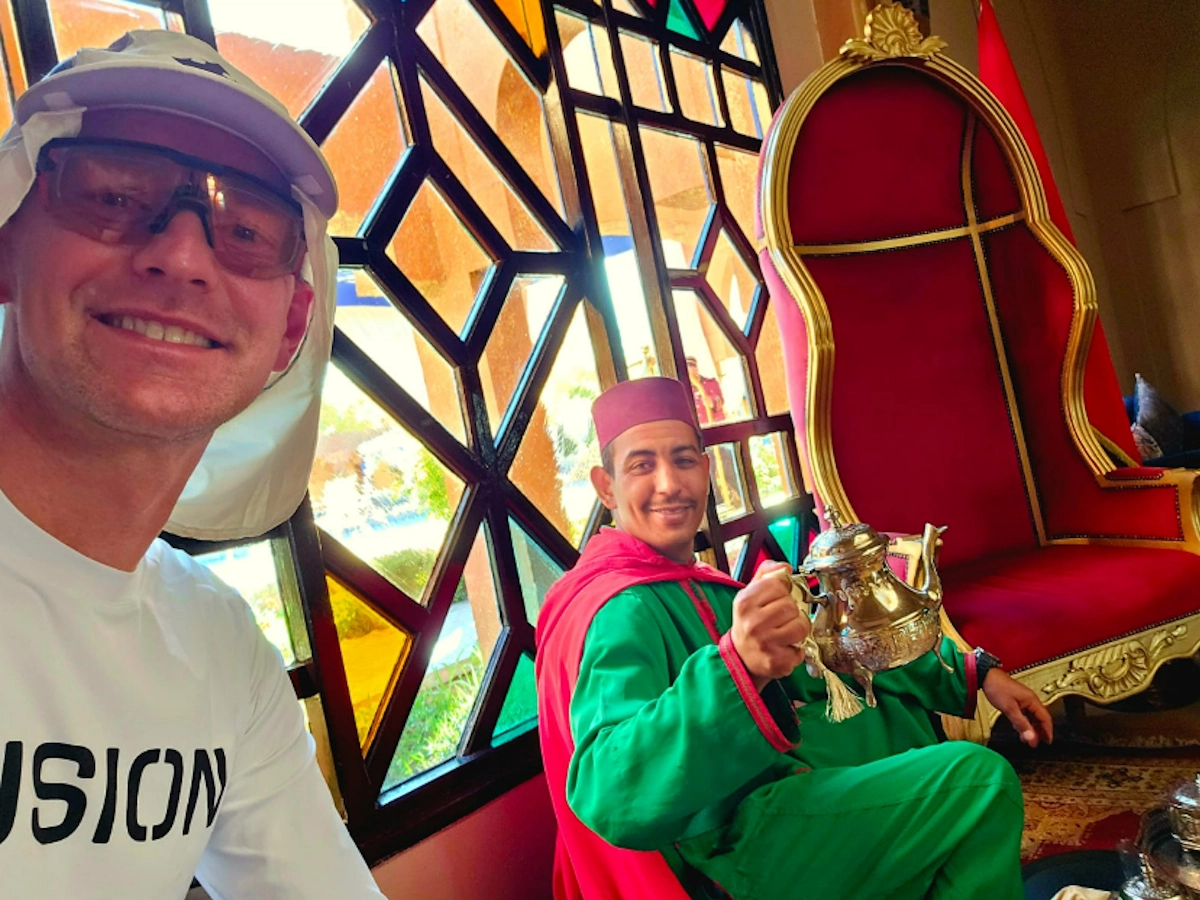
Why is everyone so obsessed with weight?
Every gram has to be carried for 250 kilometres, and in our case 270 kilometres. Heat, a backpack and soft sand are not an ideal combination, so every gram you can save is worth saving. I thought my bag weighed 8.4 kilos at home, but the official measurement on check day was 9.5 kilos. I have no idea where that difference came from, but it was a small mental blow. In our tent, most bags were quite a bit lighter.
What would I change in my gear next time?
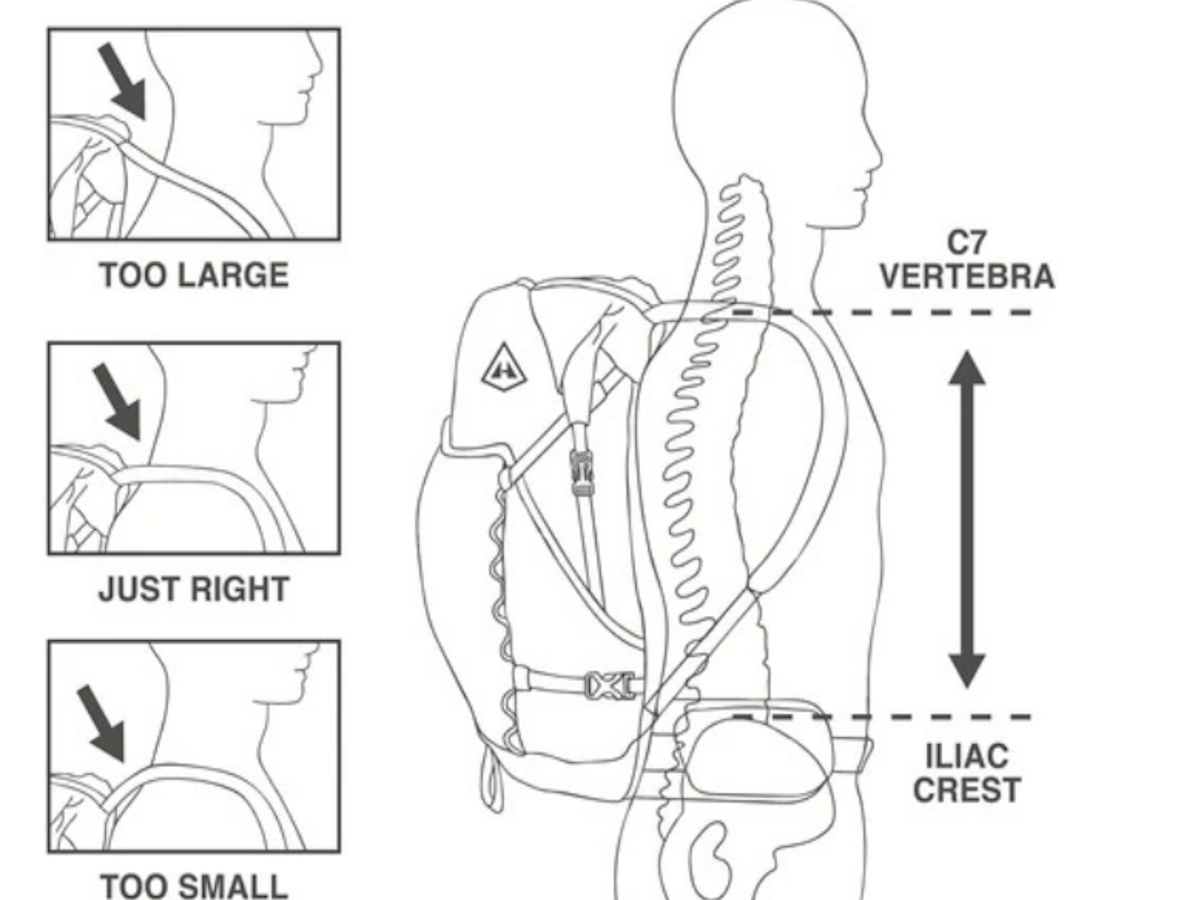
Next time I would buy a different backpack. Mine was luxurious and reasonably comfortable, but I still had wounds on my back. It weighs around 850 grams, while lighter packs with a similar 20 litre capacity weigh around 600 grams and also looked comfortable. Next time I will definitely look for something lighter. I would also replace the peanuts with even more macadamia nuts. That would make the bag slightly lighter again, because macadamias offer more calories for less total weight.
How cold does it get at night?
The nights can be surprisingly cold in the desert. The strange thing is that when you first go to sleep after sunset, very simple desert life, it may still be around 15 to 20 degrees. But during the night and early morning the temperature keeps dropping. You hear fellow runners gradually zipping their sleeping bags further closed and adding extra clothing, slowly turning themselves into mummies.
How do you go to the toilet?
Well, this is a slightly uncomfortable topic. Men pee more or less anywhere, and yes, all tents are open, so there is no real privacy. That also applies to changing clothes and washing yourself. I walked around camp with my mini camera and showed everything, including the brown toilet bags where you have to put a small stone inside. Do not forget the stone, because otherwise you have a big and very dirty problem.
My MDS video
How did you find your tent again?
Honestly? Often I did not. I must have searched for our tent 136 more than ten times. Every tent looks exactly the same, and they all stand in the same circle in the Sahara sand. We were also literally in the very middle, which made it even harder. In daylight this is not such a big problem, because each tent has a small number sign, but late in the evening, in the night or after waking up, it becomes much more difficult. You do not want to shine your headlamp into tents, especially not when people are sleeping. Red headlamp light is less bright, but even then you can wake people up. Below you can see how the number of participants, and therefore the number of tents, has grown over the years.
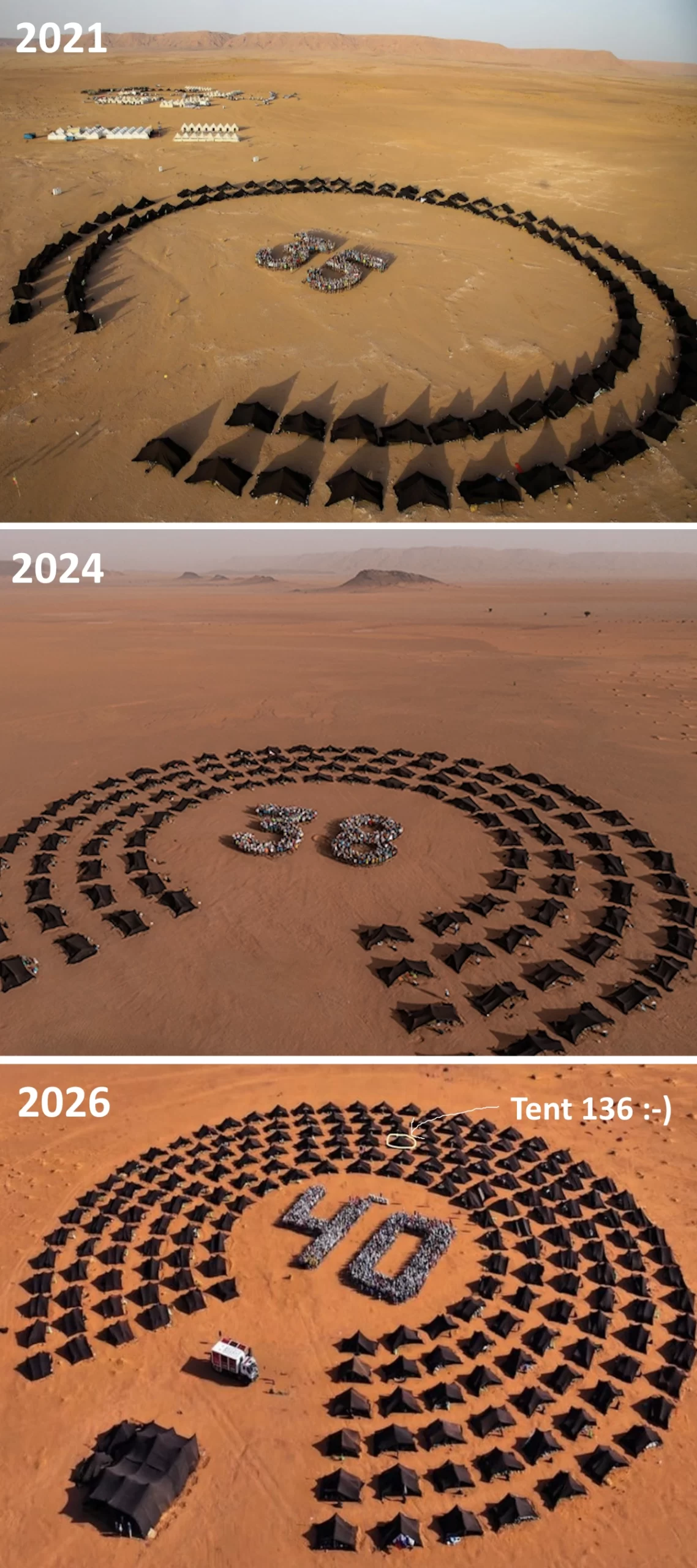
I did come up with a trick, and at night it worked quite well. If I had to leave the tent, I would always walk the exact same route out of camp. After peeing, I would turn around 180 degrees and walk exactly the same way back. It worked, but with so many tents you still have to pay attention. Once you go wrong, you can suddenly start walking in completely the wrong direction and get properly lost.
Hallucinations after running 100 kilometres
Did I hallucinate? Yes and no. In the desert I did not see strange creatures, but after the 100 kilometre stage I did notice something odd. When I finally lay down in the tent, images started flashing rapidly across the inside of my eyes. It was an abstract stream of little figures and morphing shapes that I could not switch off. My brain was still running at an absurd speed while my body was lying still. I knew what a real hallucination felt like from my Elfstedentocht, when I mistook an empty bus shelter for a person, but this was a unique form of mental overstimulation.

Fast descents require courage and control at the same time.
Navigation and following the route
The route flags are easy to follow during the day. Once it gets dark, for runners moving slower than 3.5 kilometres per hour, the flags are placed more frequently. You carry compulsory safety equipment: a compass, route map, headlamp, emergency blanket, fire and a signal mirror. In the Sahara, self-sufficient really does mean that you have to look after yourself completely.
What is the terrain like?
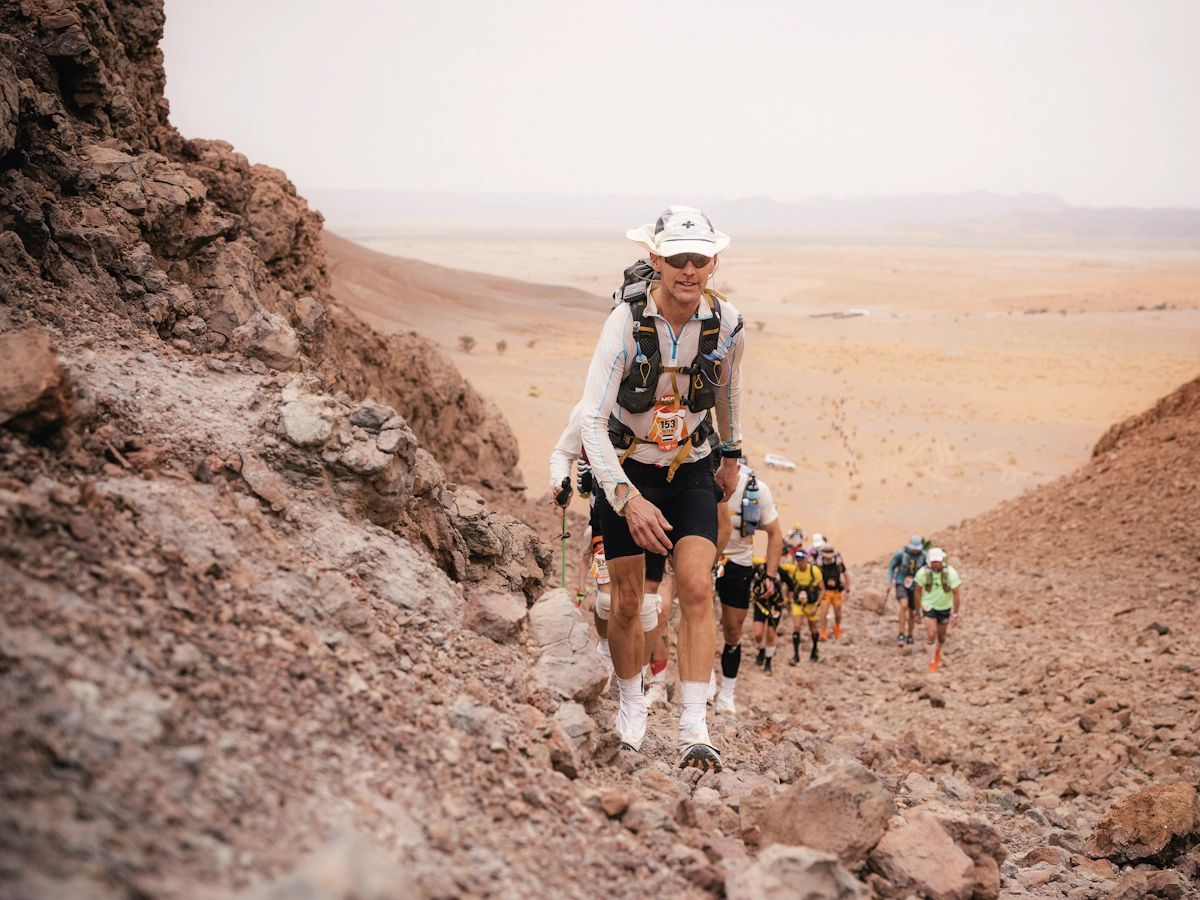
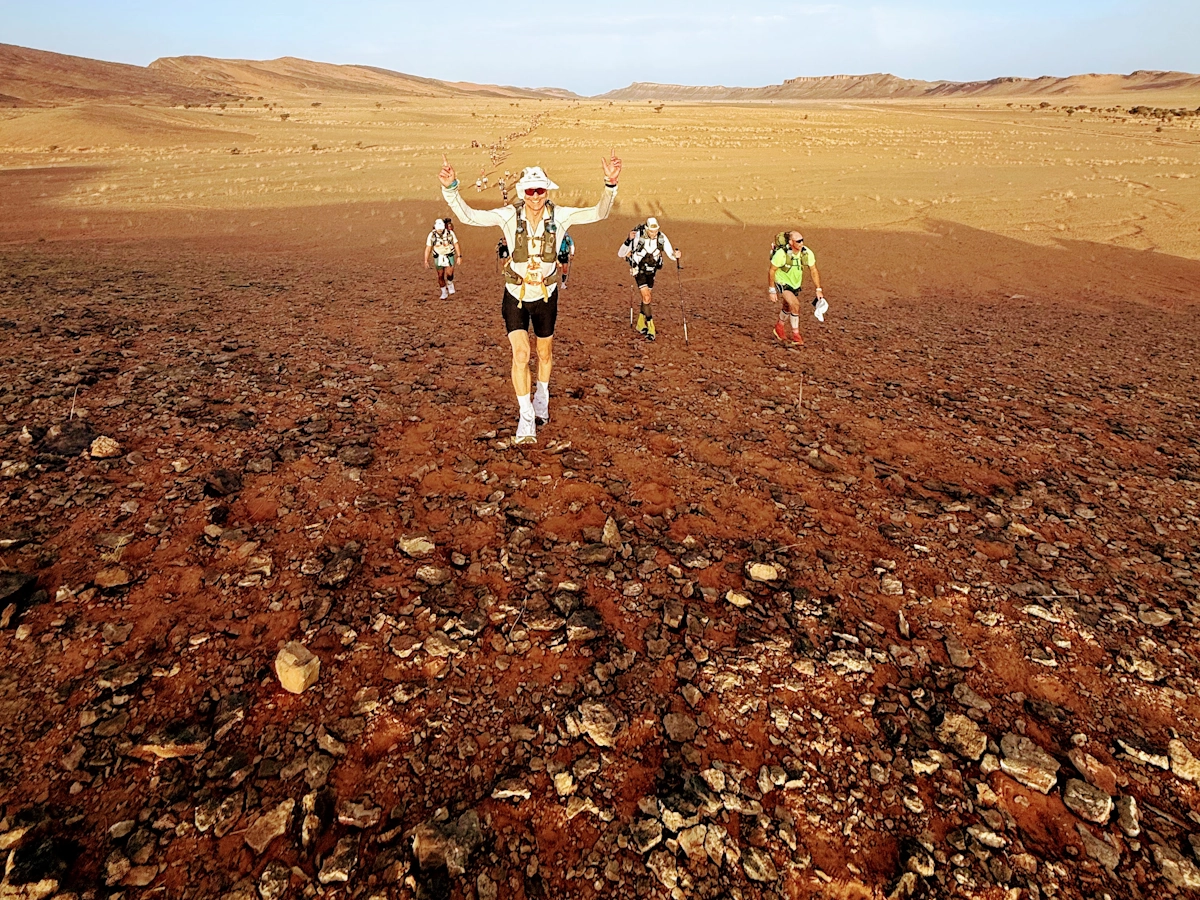
The rocky terrain makes every step more demanding. You constantly have to pay attention and keep lifting your feet properly. Several times someone falls, you help them up, and usually it is no more than scratches, some blood and a moment to recover from the shock. On the big descent from the rocky mountain on day three, however, a few runners fall badly enough to abandon the race. I am one of the cautious runners here and go down carefully, looking closely at my feet. Dropping out in the Sahara was always a possibility, but not because of trying to be tough on a fast descent down a sharp rocky mountain.
How did people at home follow the race?
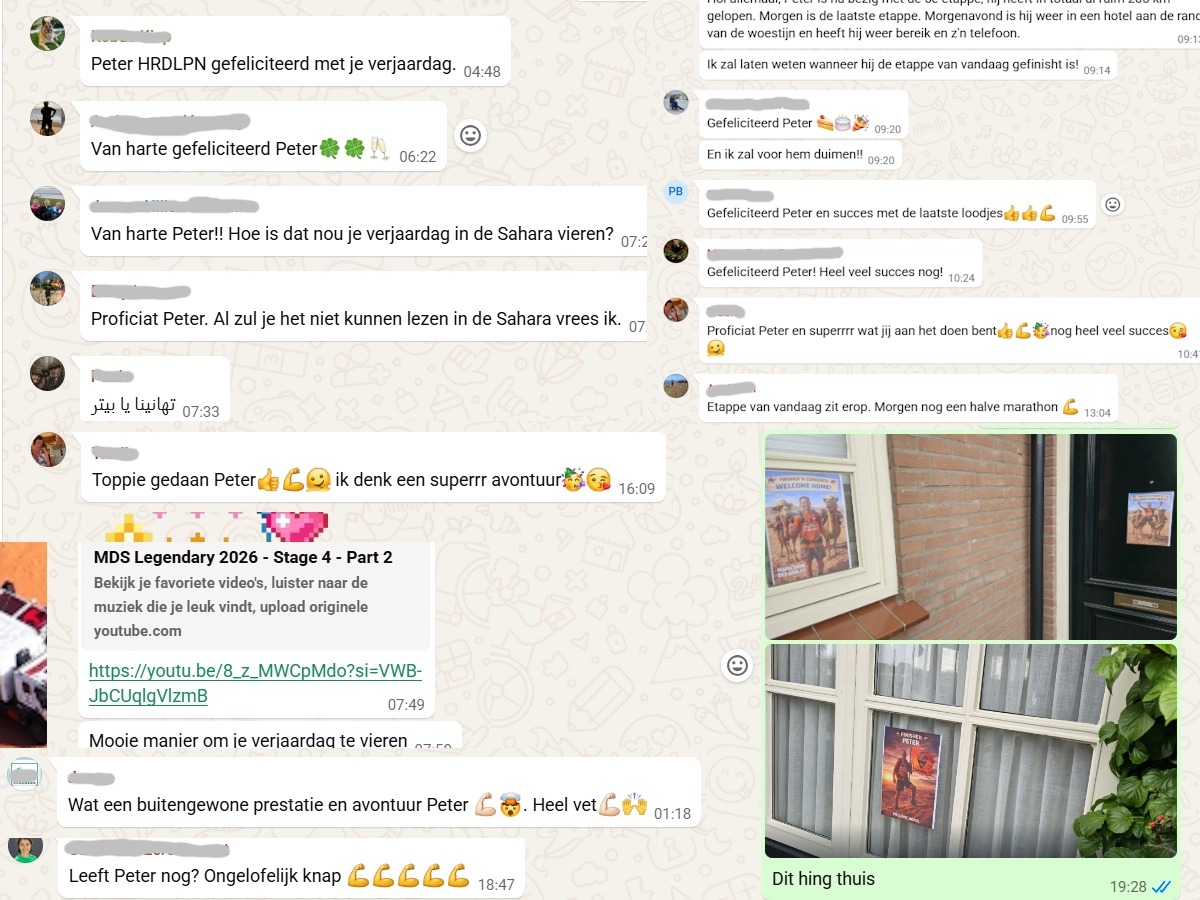
I had created a WhatsApp group for people who wanted to stay updated. I could only read everything afterwards, but these were some of the messages that came through.
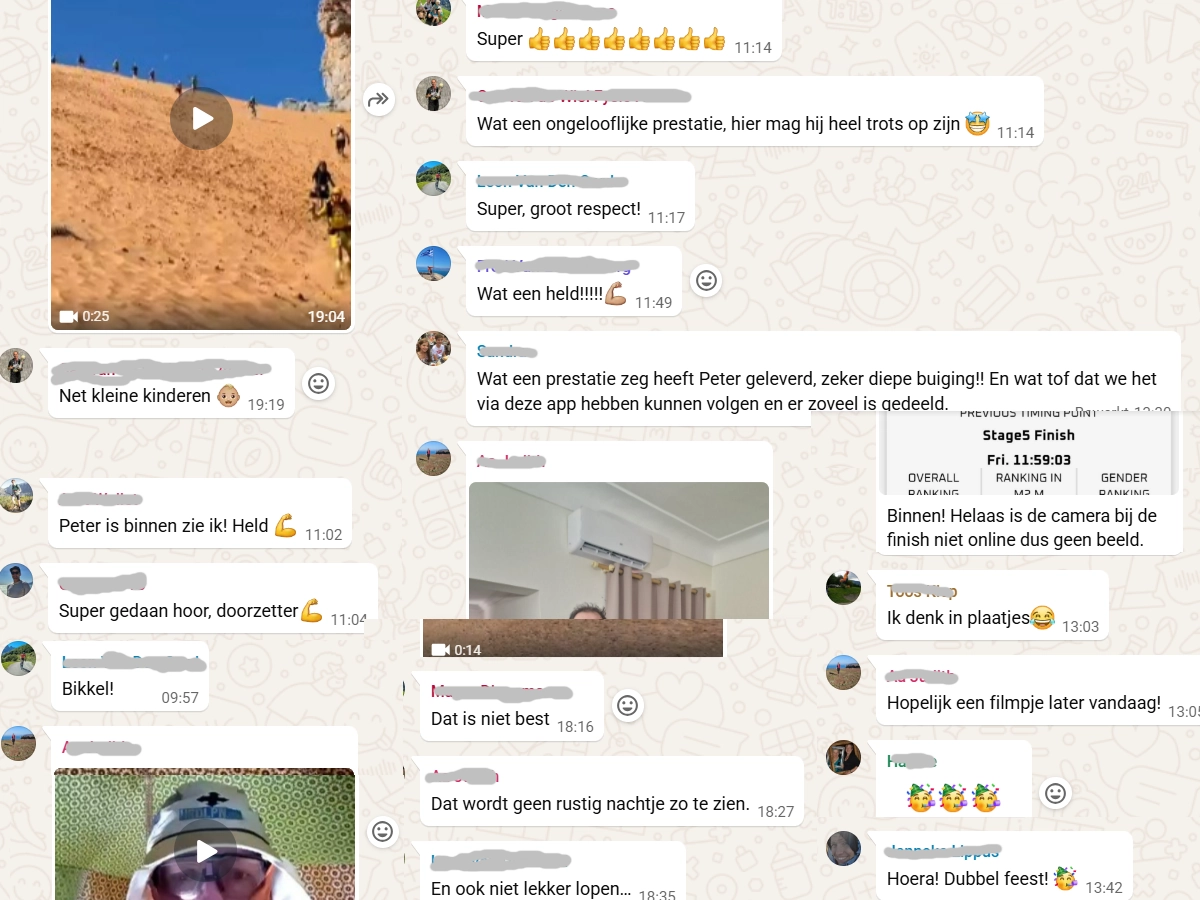
And yes, it continued.
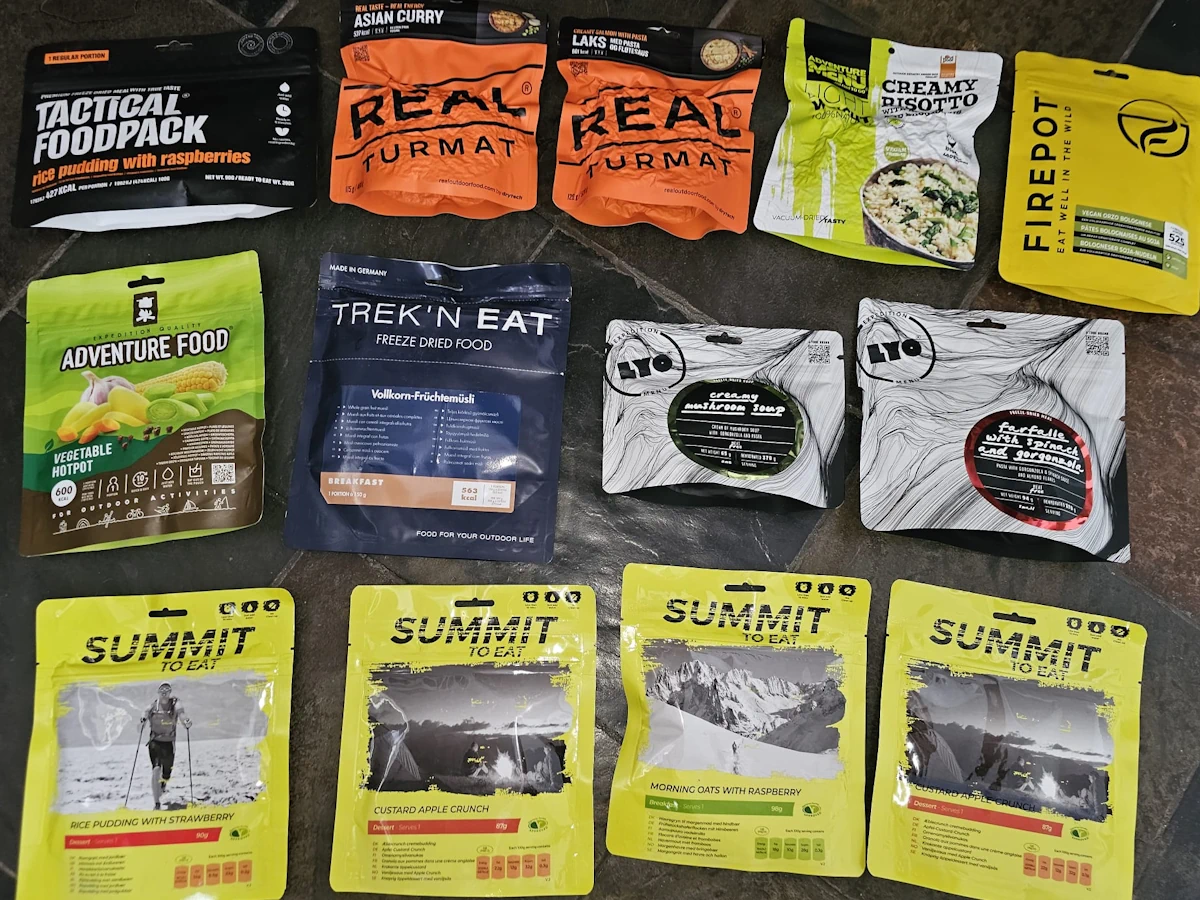
What do you eat during the MDS?
You become a master of energy density.
- Macadamias: The absolute winner. Around 7.5 kcal per gram. This can save kilos in your backpack.
- Adventure Meals: Freeze-dried meals prepared with warm water. Lightweight and useful for recovery.
- Salt cubes: Stock cubes help prevent you from feeling faint due to lack of salt.
The sports medical check is compulsory
Because of the extreme physical load and environmental conditions, the medical check beforehand and the monitoring during the race are among the strictest in sport. I did part of this at a sports medical institute on a treadmill with an oxygen mask. It is compulsory, and I also wanted to know when my fat burning switches to carbohydrate burning. Below the “turning point” in the graph, for me around 135, I can keep going for hours on a bag of nuts and peanut butter. Above that point, the engine eventually runs out. This test is always useful to know, but especially here in the desert.
Clothing and equipment
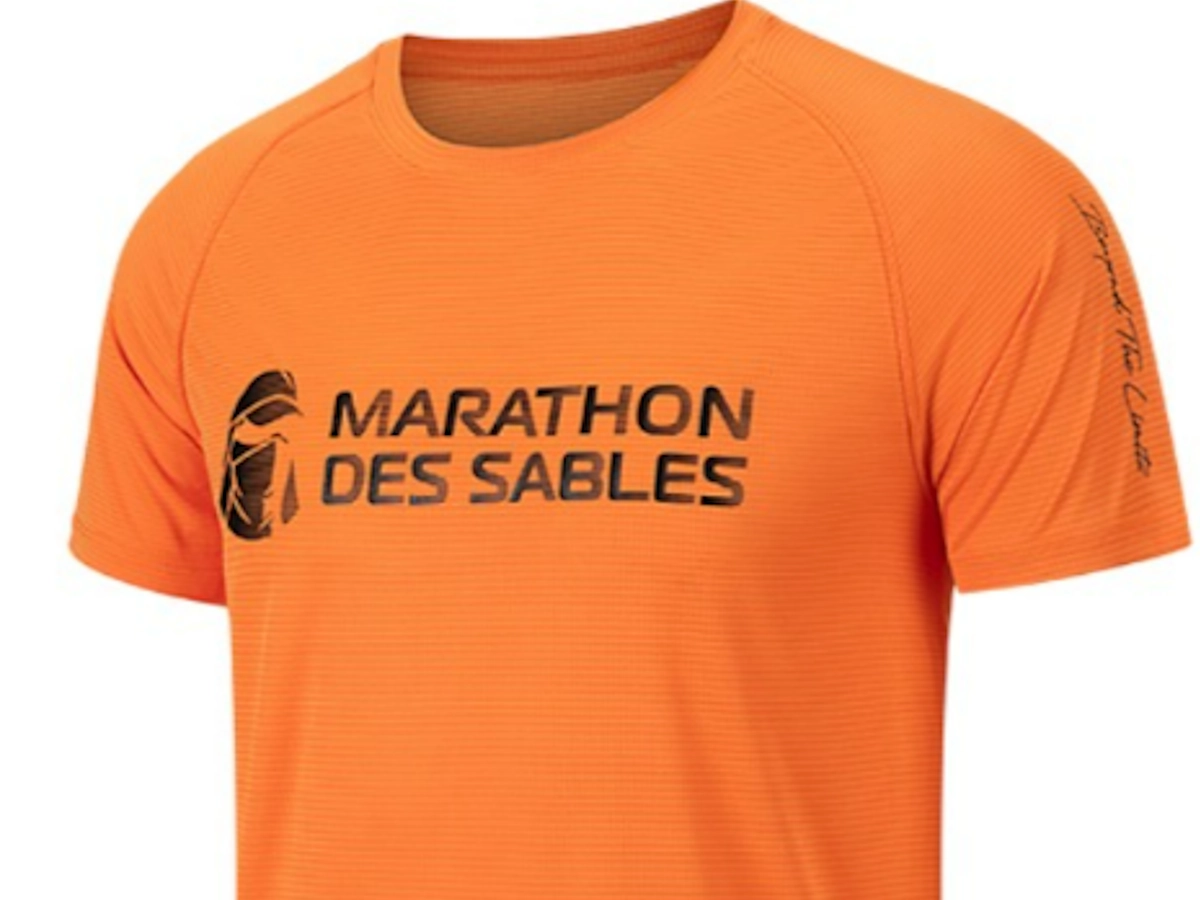
Good clothing is your armour. Think of the best lightweight outdoor trousers, a breathable trail running shirt and a lightweight down jacket for the cold nights.
Backpack tips
My most important advice: every gram counts. After day one, I threw away quite a lot. Train with your backpack, ideally between 5 and 7 kilos, on horse trails, the beach or during a race like the Berenloop. Use a good running weight vest or backpack setup during your preparation.
Charity
Many people connect a charity to their sporting achievements. Of course, there is something slightly hypocritical about that, because people often do these events primarily for themselves. Still, in my humble opinion, there can also be a second goal. Asking for donations for a good cause can raise valuable money for that charity. Win-win, right? Unfortunately, like perhaps you, I have had a lot to do with cancer around me. KWF was therefore the obvious charity for me. I would like to thank everyone again who has donated to KWF, and you still can. Thank you, thank you, thank you.
Conclusion
The Marathon des Sables is harder than an Ironman, but at the same time more beautiful. Life without distraction in the desert brings a kind of peace I had not experienced for years. If you are wondering which marathon to choose and you are looking for a life-changing adventure, then the MDS may be your race. Be prepared for heat, blisters and suffering, but the reward is an experience you will never forget.
More?
Want to read more of my strange adventures? Have a look at the Elfstedentocht, yes, all 11 cities were skateable, my first and for now only Ironman and our self-organised 10-day cycling trip through Europe.
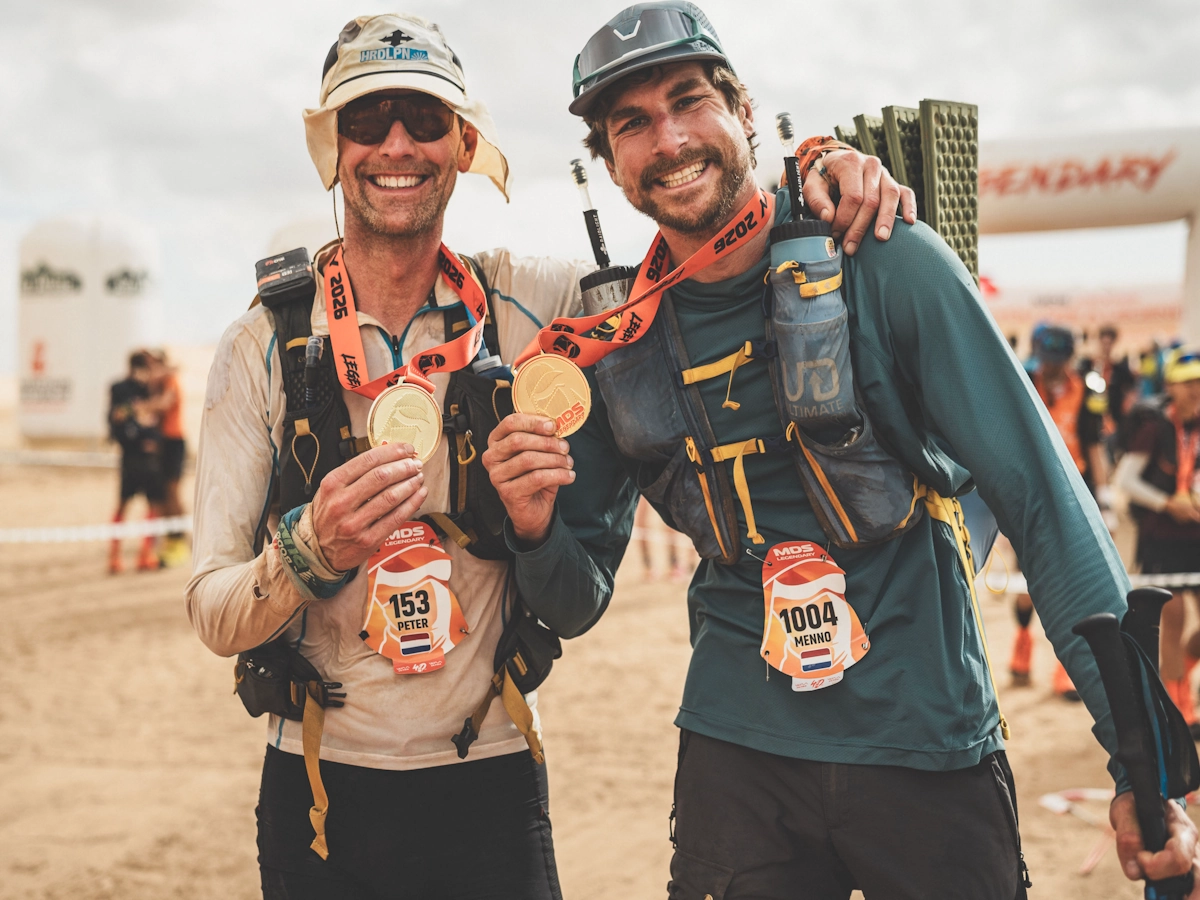
Reaching the finish line brings pure happiness and relief.
Misschien ben je ook geïnteresseerd in: